

How Traffic Enforcement Differs Between NCR Cities
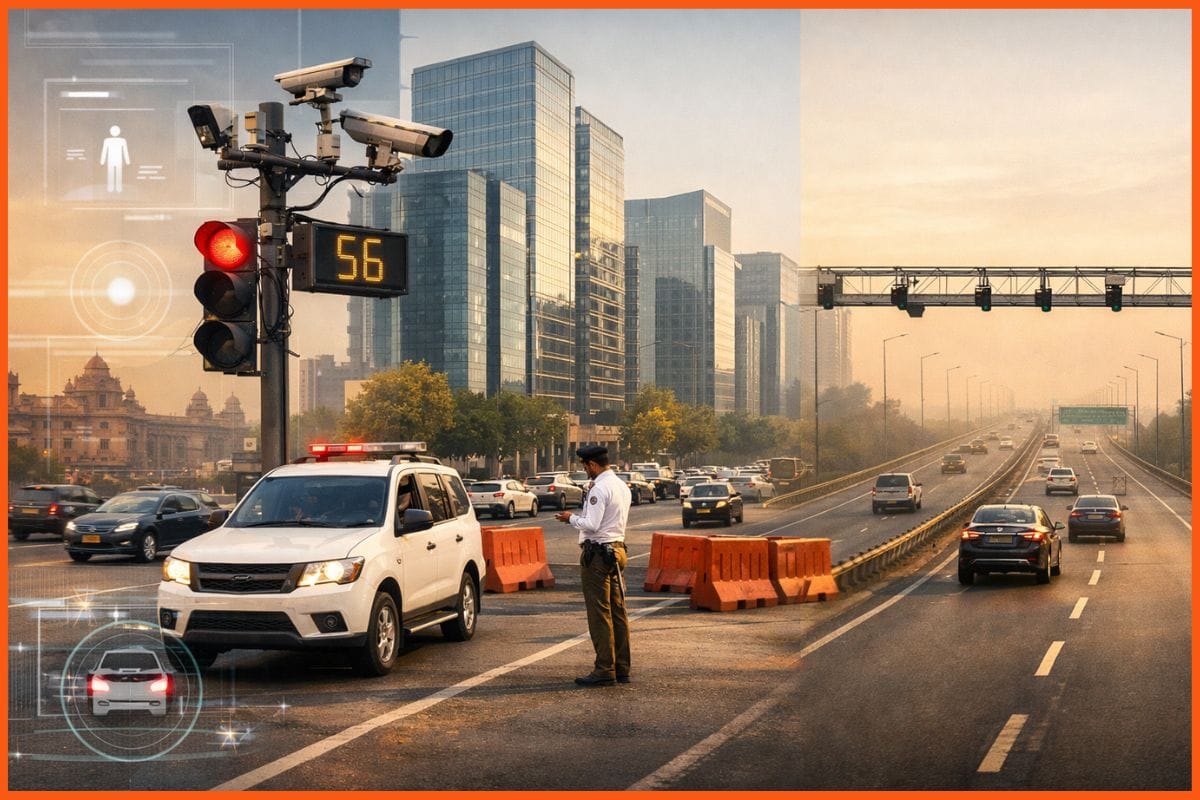
Navigating the National Capital Region (NCR) often feels like driving through a single giant city, yet the transition between Delhi, Gurgaon, and Noida brings a significant shift in how road laws are monitored. For a daily commuter, crossing a border can mean moving from a highly automated camera network to a system that relies more on on-ground manual checks. Understanding the specific traffic rules in Gurgaon is essential because the enforcement style there can be quite different from the strict sensor-based environment of Delhi. Failing to adapt to these local variations often leads to a heavy traffic rules fine that could have been easily avoided with a bit of situational awareness. While the central motor vehicle laws provide a general framework, the local traffic police in each NCR city prioritise different types of violations based on their specific road infrastructure.
The complexity of NCR traffic management lies in its fragmented nature. Each city has its own command centre and its own set of priorities, ranging from speed control on wide expressways to managing heavy congestion at narrow intersections.
Delhi: The Model for Automated Surveillance
Delhi is arguably the most technologically advanced city in India when it comes to traffic monitoring. The city has invested heavily in an Intelligent Traffic Management System that covers almost every major junction.
The Role of Intelligent Cameras
In Delhi, most fines are generated without a police officer ever standing on the road. High definition cameras are programmed to detect over-speeding, red light jumps, and even the use of mobile phones while driving. The system is so precise that it can capture violations even in heavy fog or late at night. This level of automation means that drivers must be disciplined at all times, as there is no room for negotiation once a digital record is created.
Strict Lane Discipline and Bus Lanes
Delhi also places a massive emphasis on lane discipline, particularly regarding bus lanes. Driving a private vehicle in a lane reserved for buses attracts a very high penalty. The enforcement is constant, and the cameras are specifically positioned to catch vehicles that stray into these restricted zones. This strictness is part of the city's plan to encourage public transport and reduce the overall travel time for commuters.
Gurgaon: A Mix of Technology and Manual Policing
In contrast to Delhi, Gurgaon presents a unique blend of enforcement. While the city is modernising its surveillance, there is still a significant presence of traffic personnel at major checkpoints like Cyber Hub and IFFCO Chowk.
Focus on High-Speed Expressways
The traffic police in Gurgaon focus heavily on the city's massive expressways and the Golf Course Road. Speed traps are very common, and interceptor vehicles are often parked at strategic points to catch fast drivers. Because Gurgaon has several wide roads that tempt drivers to speed, the authorities use these mobile units as a visible deterrent.
Managing Corporate Traffic and Wrong-Side Driving
A major challenge in Gurgaon is the sheer volume of corporate traffic during peak hours. The police are often seen manually directing traffic to prevent gridlock. Another area of focus is wrong-side driving, which is a frequent issue on service lanes. Gurgaon authorities have started using tire killers and heavy barricades in certain areas to stop this dangerous practice, making it one of the city's top priorities for road safety.
Noida and Greater Noida: Expressway Management
Noida operates with its own distinct style, largely influenced by the presence of long-distance expressways like the Noida-Greater Noida Expressway and the Yamuna Expressway.
Specialised Fog and Weather Enforcement
During the winter months, the enforcement in Noida shifts toward safety in low visibility. The authorities often lower the speed limits on expressways and use digital signage to warn drivers. They also conduct frequent checks to ensure that vehicles have working fog lights and reflective stickers. This seasonal enforcement is crucial for preventing multi-car pileups that are common on these high-speed corridors.
Digital Integration and E-Challan Systems
Noida has been quick to adopt a robust e-challan system that links directly to the vehicle's registration data. The city has installed cameras that monitor the entry and exit points of the main city roads. This ensures that any vehicle entering from Delhi or Gurgaon is immediately under surveillance. The integration between the Noida traffic portal and the national database is quite efficient, ensuring that violations are recorded accurately.
Key Differences in Fine Collection and Disputes
The process of handling a fine also varies depending on which part of the NCR you are in. While the central portal manages the records, the local traffic branch office is where you must go for disputes or physical hearings.
Virtual Courts in Delhi
Delhi has successfully implemented virtual courts for the quick disposal of traffic challans. If you feel a fine was issued incorrectly, you can present your case online without visiting a physical courtroom. This digital legal process is much faster and more transparent, allowing most minor cases to be settled within a few weeks.
Physical Helpdesks in Haryana and UP
In Gurgaon and Noida, while online payment is the standard, resolving a dispute might still require a visit to the local traffic police headquarters. The physical verification of evidence is more common here. However, both cities are moving toward the virtual court model to keep up with the increasing number of digital fines generated by their new camera networks.
Conclusion
Driving across the NCR requires more than just a valid license; it requires an understanding of how law enforcement changes as you move between cities. Whether it is the relentless camera network of Delhi, the mobile speed traps of Gurgaon, or the expressway-focused policing of Noida, each city has its own way of ensuring road safety. By staying aware of these regional priorities and following the local rules, you can enjoy a smooth commute and avoid the stress of unexpected fines. Being a responsible driver in the NCR means respecting the specific environment of each city you pass through.