

7 profitable land business ideas to explore in the USA
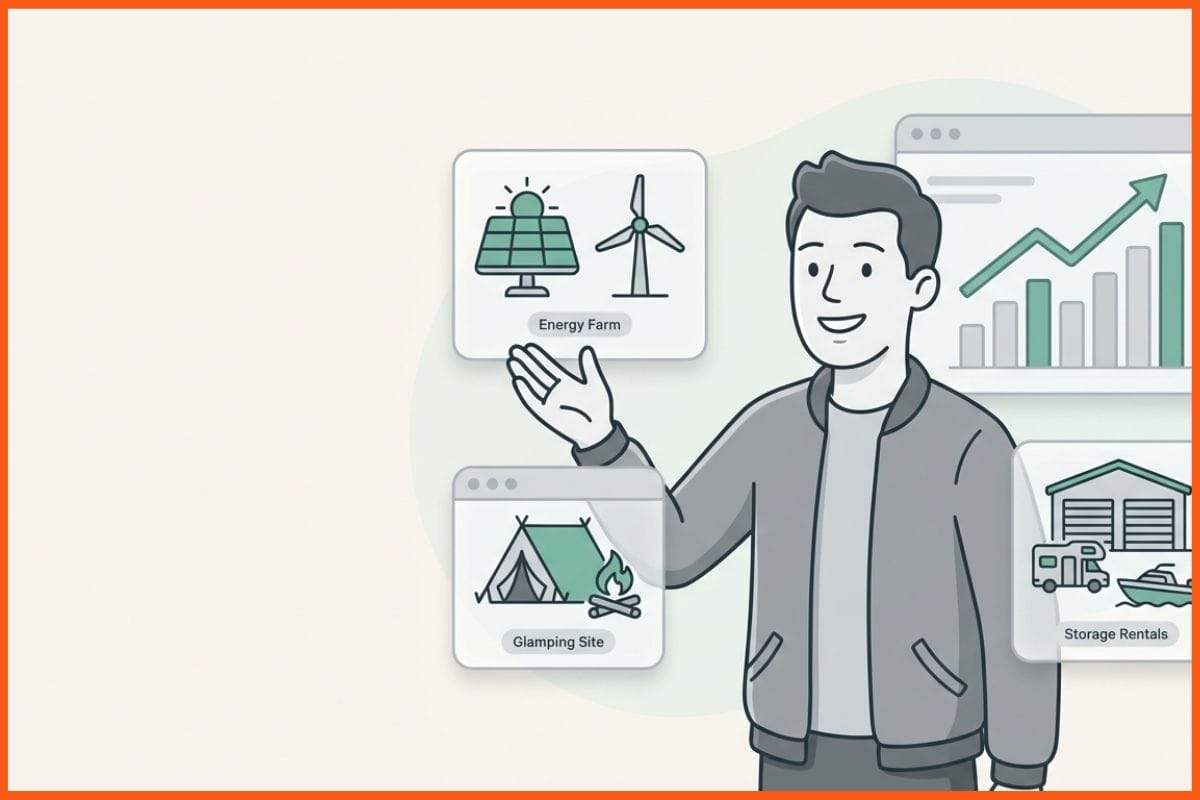
So, you’ve got a piece of land. Maybe it’s a small plot you inherited or a few acres you bought on a whim. Right now, it might just be growing weeds, but what you really have is a blank canvas. That empty lot is an opportunity, a chance to build something that generates income, whether it's a hands-off venture or a full-blown business you can be proud of.
We’ve sifted through dozens of options to bring you a curated list of 7 diverse and profitable land business ideas. We’ll cover everything from low-effort passive income streams to more hands-on projects, all backed by real-world data to help you get started.
What are vacant land business ideas?
In short, these are any commercial ventures you can start on undeveloped or raw land to make money. It’s all about putting your property to work for you.
These ideas can look wildly different depending on what you’re after. On one end, you have low-effort, passive income streams where you’re essentially just renting out your land. Think leasing a corner of your property for a billboard or a large field to a solar company. On the other end, you have active, hands-on businesses that need your direct involvement, like running a trendy glamping site or a U-pick pumpkin patch.
The right idea for you really boils down to your land's location and features, your local zoning laws (this one’s a biggie), and, of course, your own personal and financial goals.
How we selected the best land business ideas
We didn't just pull these ideas out of a hat. We wanted to create a list that was practical, profitable, and genuinely useful for landowners with different goals and budgets. To do that, we focused on a few key factors to narrow down the options.
Here’s what we looked for in our top land business ideas:
- Profitability Potential: We looked for ideas with a proven track record and a solid potential return on investment.
- Market Demand: These aren't just cool ideas; they're businesses that tap into growing trends and what consumers and other companies are actively looking for.
- Scalability: We love ideas that let you start small. You can test the waters and then expand as your business grows.
- Investment Diversity: Not everyone has a massive budget, so we included a mix of ideas with low, medium, and high startup costs.
- Versatility: Whether your land is rural or close to the city, big or small, you’ll find something on this list that could work.
Quick comparison of top land business ideas
To help you get a quick sense of what might be the best fit, here’s a table that breaks down the initial investment and income potential for each idea. It’s a great starting point for figuring out what aligns with your property and your wallet.
| Business Idea | Initial Investment (Landowner) | Revenue Potential | Best For... |
|---|---|---|---|
| Storage Rentals | Medium to High | Medium to High | Passive income seekers with land near residential or industrial areas. |
| Agritourism | Medium | Medium to High | Landowners who enjoy public interaction and have accessible rural land. |
| Renewable Energy Farm | Low to None | High | Long-term investors with large, open rural land seeking passive, sustainable income. |
| Outdoor Event Venue | Medium to High | High | Owners of scenic properties who can manage bookings and event logistics. |
| Specialty Farming | Low to Medium | Medium | Hands-on entrepreneurs with smaller plots who can cater to niche local markets. |
| Campground or Glamping | Low to High | Medium to High | Nature lovers with scenic land looking to enter the booming tourism industry. |
| Billboard Advertising | Low to None | Medium | Owners of land with high visibility along highways or busy commercial roads. |
7 best vacant land business ideas for generating income
Alright, let's get into the details. These seven ideas represent some of the most promising and realistic opportunities for landowners today. We’ve broken down what each one involves, the pros and cons, and what you can expect in terms of investment.
1. Storage rentals (RV, boat, or industrial)
Description: People own a lot of big stuff they can't park in their driveways. With over 11.2 million RV-owning households in the US alone, the demand for storage space is huge and growing. This business involves renting out secure spots on your land for vehicles like RVs, boats, trailers, or even construction equipment.
- Pros: This is a fantastic way to generate reliable, recurring monthly income. Depending on your location and the type of storage you offer, rental rates can range from over $60 to $225 monthly per spot. Once you're set up, the day-to-day management is relatively light.
- Cons: Getting started can be pricey. A top-tier, "Class A" facility with paved surfaces, security fencing, and cameras requires a significant upfront investment. Your profitability is also heavily tied to your location (you need to be near your customers), and navigating zoning laws and getting the right insurance can be a headache.
- Investment Level: Medium to high. Costs for a basic setup with covered canopies can start around $36+ per square foot, while premium, fully enclosed units can run you $56+ per square foot.
2. Agritourism (corn maze, pumpkin patch, or sunflower field)
Description: Agritourism is all about turning your land into a destination. You're creating an experience that people, especially families, are excited to pay for. Think seasonal attractions like a massive corn maze in the fall, a U-pick pumpkin patch for Halloween, or a stunning sunflower field that becomes an Instagram hotspot.
- Pros: This can be incredibly profitable. The US agritourism sector pulled in $1.26 billion in 2022, and the average farm with an agritourism component earned $44,000 in gross revenue. It also opens up multiple revenue streams beyond just admission fees, like selling produce, food, and merchandise.
- Cons: Your income is seasonal and at the mercy of the weather. A rainy October can really hurt a pumpkin patch business. This is also a very active business that requires a lot of work managing crowds, marketing your attraction, and handling all the logistics.
- Investment Level: Medium ($10,000 - $50,000). This covers essentials like seeds, equipment, staffing for the season, insurance, and a good marketing push.
3. Renewable energy farm (solar or wind)
Description: This is one of the ultimate "set it and forget it" land businesses. You lease your land to a solar or wind energy company, they handle the installation and maintenance of the equipment, and you collect a check. It’s a truly hands-off way to generate long-term income.
- Cons: This only works if you have a large, open piece of land, usually in a rural area. Signing a lease is a serious, long-term commitment that ties up your property for decades. It's also important to know that a solar lease triggers tax changes, and you absolutely need to make sure the contract includes a clear plan for removing the equipment at the end of the lease.
- Investment Level: High for the energy company, but low to none for you as the landowner. Your main "investment" is dedicating your land to a single use for a very long time.
Pros: You get a predictable, passive income stream that's often locked in for 20 to 40 years. Solar lease rates can range from $500 to over $4,000 annually per acre, which is often much higher than what you could get from traditional farm rent. Plus, it’s an environmentally friendly use of your land.
4. Outdoor event venue
Description: If your property has a killer view, a cool old barn, or some other beautiful natural feature, you could have the perfect spot for an outdoor event venue. People are always looking for unique locations for weddings, corporate retreats, festivals, and family reunions. You can offer anything from a simple space rental to a full-service package with catering and coordination.
- Pros: The revenue potential here is sky-high. Wedding venues in desirable locations can charge premium fees, especially for weekend dates. It's a versatile business, too, allowing you to host a wide variety of events to keep your calendar full.
- Cons: Let's be real, this is an active business, not passive income. It requires a significant upfront investment in infrastructure like parking, restrooms, power, and maybe even a permanent structure. You'll be heavily involved in marketing, sales, client relations, and the logistics of event day.
- Investment Level: Medium to high ($50,000 - $200,000+). Your startup costs will depend entirely on how many amenities you plan to offer.
5. Specialty farming (niche crops like herbs or mushrooms)
Description: Forget trying to compete with massive farms growing corn and soybeans. Specialty farming is about finding a profitable niche. This means growing high-value crops
b for a specific market, like organic herbs for local restaurants, gourmet mushrooms for the farmers' market, or lavender to be distilled into essential oils. The business model is built on quality and direct relationships with customers.
- Pros: The profit margins on niche crops can be much higher than on traditional commodities. This is a great model for smaller plots of land, and it gives you the chance to build a unique brand that people seek out.
- Cons: This isn't easy farming. It often requires specialized knowledge and is more labor-intensive than large-scale agriculture. Your success really hinges on your ability to find and maintain a consistent market for your unique products.
- Investment Level: Low to medium ($5,000 - $30,000). This would cover things like preparing the soil, buying quality seeds or starters, setting up irrigation, and maybe building a small greenhouse.
6. Campground or glamping site
Description: The experience-based travel industry is booming, and you can tap into it by turning your land into a place for people to stay. This could be a basic campground with simple tent sites or a high-end "glamping" (glamorous camping) destination with fully furnished safari tents, yurts, or tiny cabins that have real beds and other amenities.
- Pros: You're tapping into a huge and growing market. A simple, rustic campground can have very low startup costs, while offering a glamping experience allows you to charge premium nightly rates.
- Cons: Your income can be very seasonal, depending on your climate. This business requires constant upkeep of the sites and facilities, and you'll need to have excellent customer service skills to deal with guests.
- Investment Level: The range here is massive. A basic campground might get off the ground for $5,000 - $15,000. A full-scale glamping business, however, can have startup costs anywhere from $130,000 to over $620,000, with the most luxurious sites costing millions.
7. Billboard advertising
Description: If your land is located along a busy highway or a major commercial road, this might be the easiest money you’ll ever make. You simply lease a small chunk of your property to an advertising company. They pay you a fee, and they handle everything else: building the billboard, finding advertisers, and maintaining the sign.
- Pros: It doesn't get more passive than this. Once the lease is signed, there is virtually no work required from you. The income is consistent, and the billboard takes up a tiny footprint on your property.
- Cons: This idea is 100% dependent on having a prime, high-traffic location. If you’re on a quiet country road, this won’t work. Local zoning regulations can also be very strict and may ban billboards altogether. You also need to watch out for predatory contracts with long, non-negotiable terms.
- Investment Level: Low to none. The advertising company foots the entire bill.
Key factors to consider before starting your land business
It's easy to get excited about an idea, but jumping in without a plan is a recipe for disaster. Before you spend a dime, take a step back and do your homework. Research is your best friend here.
- Zoning and Regulations: This is your absolute first step. Every town, city, and county has its own set of land use and zoning laws that determine what you can and can't do on your property. Your land might be zoned for agriculture, commercial use, or residential, and that dictates everything. A brilliant business idea is completely worthless if it’s not legally permitted. Call your local planning department before you do anything else.
- Location and Accessibility: Your land’s location is the biggest factor in what businesses will succeed. A remote, hard-to-reach plot is perfect for a solar farm but a terrible choice for an RV storage lot that needs to be close to where people live. Think about road access, visibility, and whether you can get utilities like water and electricity to the site.
- Market Research: Don't just assume people will want what you're offering. Validate your idea by checking if there's real demand. Who are your potential customers? Who are your competitors, and what are they doing? Talk to people in your target market to see if they'd actually pay for your product or service. A great land business solves a real need.
- Business Plan and Budget: Even if you're self-funding, a business plan is your roadmap. It forces you to think through your startup costs, ongoing expenses, potential revenue, and your overall strategy. If you plan to get a loan or find an investor, a solid business plan is non-negotiable.
For more inspiration on turning your land into a profitable business, check out this video. It breaks down seven different ways you can start generating cash flow from your property.
Embedded iFrameThis video breaks down seven of the best ways to generate cash flow from a piece of land.
From vacant lot to valuable venture
The biggest takeaway here is that your vacant land isn't just sitting there doing nothing. It's an asset packed with potential. It’s a chance to build a new income stream and turn an empty space into a valuable venture.
We’ve walked through 7 different land business ideas that cover a huge range of interests, investment levels, and day-to-day involvement. Whether you're looking for something totally passive or a hands-on project to pour your passion into, there's an option out there for you.
Ultimately, success comes down to doing your homework. Start by researching your local zoning laws and digging into the market demand for the ideas that excite you most. With careful planning, you can transform that vacant lot into a thriving business.