

Designing the Future of Living: Aishwarya Bansal on Building Smartworld Developers for New-Age Homebuyers
📝InterviewsExplore how Aishwarya Bansal is redefining India’s real estate landscape through Smartworld Developers. From millennial-focused housing to design-led communities, discover insights on innovation, inclusivity, and the future of urban living.
India’s real estate sector is witnessing a strong transformation, driven by millennial and Gen Z homebuyers, evolving lifestyle preferences, and increasing demand for design-led, community-centric living spaces. According to industry estimates, the Indian real estate market is expected to reach $1 trillion by 2030, contributing nearly 13% to the country’s GDP. Post-pandemic, there has been a clear shift toward larger homes, open spaces, and integrated “live, work, play” communities, especially in urban hubs like Gurugram.
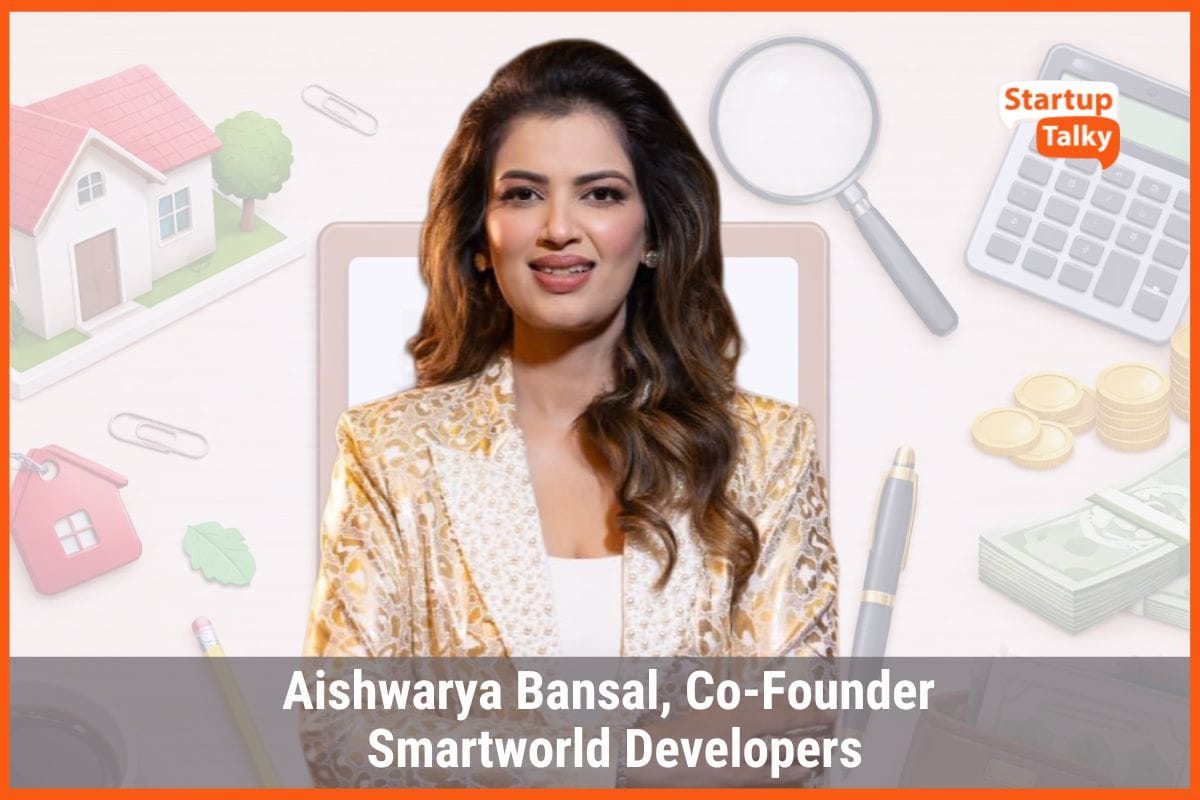
As part of StartupTalky’s International Women’s Day 2026 series, we spoke with Aishwarya Bansal, Co-founder of Smartworld Developers, to understand how the company is reimagining modern housing, building trust in a traditionally complex sector, and aligning real estate with the aspirations of new-age Indian homebuyers.
Building a New-Age Real Estate Brand with Transparency and Speed
StartupTalky: You co-founded Smartworld Developers with a vision to position it as the “Future of Real Estate” in India. What early strategic decisions helped you differentiate the brand in a sector often challenged by trust deficits and delivery delays?
Aishwarya Bansal: When we started Smartworld, we were very clear that the next phase of real estate would be driven by millennial and Gen Z homebuyers. This generation is far more informed, design-conscious, and values transparency and speed in decision-making.
So, some of our earliest strategic decisions were centred around building Smartworld as a professionally run, digitally enabled real estate platform, rather than a traditional developer-led model. We focused strongly on transparency, sharper project execution, and homes designed around evolving lifestyle needs.
Equally important was the idea that a home today is no longer just about ownership. It is about how well a space supports the way people live, work, and connect. That thinking shaped our approach to planning communities that are flexible, design-led, and more aligned with the aspirations of a younger generation of homebuyers. “For the new generation of homeowners, a home is no longer just an asset, it is a lifestyle decision.”
Post-Pandemic Shift: Designing for Privacy, Openness, and Community
StartupTalky: India’s residential real estate market, especially in Gurugram, has seen a strong post-pandemic recovery driven by millennials and first-time buyers. How did you identify this shift, and how have projects like Smartworld Orchard and Smartworld Gems been designed to reflect evolving lifestyle aspirations?
Aishwarya Bansal: The shift became quite visible after the pandemic. A large section of new buyers entering the market were young professionals and first-time homeowners whose expectations from a home were very different from earlier generations.
They were looking for more privacy, more openness, and a stronger sense of community living. Traditional apartment formats did not always meet these expectations.
Our inaugural projects like Smartworld Orchard and Smartworld Gems were designed around this new mindset. Both follow a low-rise independent floor concept with terraces, open greens, and community-centric amenities. The idea was to create homes that feel more personal, more open, and better suited to the lifestyle aspirations of younger homebuyers in Gurugram.
Post-Pandemic Shift: Designing for Privacy, Openness, and Community
StartupTalky: With global exposure and a Harvard education shaping your perspective, what international best practices have you consciously integrated into Smartworld’s planning, execution, and consumer experience model?
Aishwarya Bansal: Global exposure gave me a broader perspective on how cities and communities evolve over time. One clear takeaway was that successful developments are always built on strong planning, disciplined processes, and a deep understanding of the end user.
At Smartworld, we have tried to integrate that thinking across multiple levels. This includes professional governance structures, sharper project management frameworks, and a stronger emphasis on design-led planning and open spaces.
Equally important is the consumer experience. Today’s homebuyers expect clarity, responsiveness, and consistency throughout their journey. Building systems that deliver that experience has been an important part of how we are shaping the Smartworld platform.
Rise of ‘Live, Work, Play’ Communities and Wellness-Centric Living
StartupTalky: The concept of ‘live, work, and play’ communities is gaining traction, particularly among urban millennials. How do you see consumer expectations around design, amenities, and sustainability evolving in India’s premium housing segment?
Aishwarya Bansal: The concept of ‘live, work, and play’ communities is gaining significant traction, particularly among urban millennials. Consumer expectations in premium housing are evolving rapidly. Today’s urban buyers are increasingly looking for communities where living, working, and leisure coexist seamlessly, with a strong emphasis on thoughtful design, wellness, and access to open spaces.
There is also a growing preference for nature-led planning and thoughtfully curated amenities that support everyday convenience and overall well-being. Buyers are no longer evaluating homes purely on square footage; they are placing equal importance on the quality of the environment, community infrastructure, and the lifestyle a development enables.
Our recently launched Smartworld Nature’s Court at Gurgaon International City reflects this forward-looking approach. Built around sports & wellness theme, the development promotes an energetic, outdoor-oriented lifestyle through walkable planning, expansive green landscapes, and dedicated sports infrastructure, including a football arena, cricket ground, tennis courts, jogging tracks, and vibrant community zones. With an emphasis on sustainable design, open-air engagement, and people-first mobility, the project aligns with the evolving preferences of young urban homebuyers who seek balance, well-being and a strong sense of community.
Inclusivity in Leadership: Driving Better Design and Decision-Making
StartupTalky: You advocate the business case for inclusivity in real estate. From your experience, how do gender-balanced leadership teams contribute to better decision-making, urban design thinking, and long-term value creation?
Aishwarya Bansal: Diverse leadership teams naturally bring a wider range of perspectives to the table, which often leads to more thoughtful and well-rounded decision-making.
In real estate, where we design spaces that people interact with every day, understanding different lived experiences becomes extremely important. Gender-balanced leadership teams help broaden the lens through which developments are conceptualised, ensuring that multiple viewpoints are considered in the planning and design process.
Women, in particular, often bring strong empathy and attention to detail, which can positively influence how we think about aspects such as design usability, safety, community interaction, and overall liveability.
When leadership teams are balanced, the conversations around development become more inclusive. In the long run, that leads to communities that are not only better planned but also more relevant to the people who live in them.
Leadership in a Male-Dominated Industry: Building Trust Through Execution
StartupTalky: Real estate remains a traditionally male-dominated industry. What leadership approaches have helped you build credibility, manage large-scale projects, and foster a culture of trust within Smartworld?
Aishwarya Bansal: I believe credibility ultimately comes from clarity of vision and consistency in execution.
At Smartworld, our focus has been on building strong teams, establishing clear processes, and staying closely involved in the details that drive project delivery.
We have also tried to create a culture that values professionalism, collaboration, and mutual respect. Large-scale developments require collective thinking and disciplined execution, and that only happens when teams feel empowered and accountable.
For me, leadership is about creating an environment where people feel confident sharing ideas, taking ownership, and working together to deliver what we promise.
Quote to Remember:
“The future of real estate will not be defined by buildings alone, but by how thoughtfully we design the way people live.”
 Sakshi Jadhav