

Ankur Mittal of Inflection Point Ventures on Backing Fundamentals-First Startups, Navigating India’s Funding Reset, and Shaping Value-Driven Entrepreneurship in 2026
Year End Stories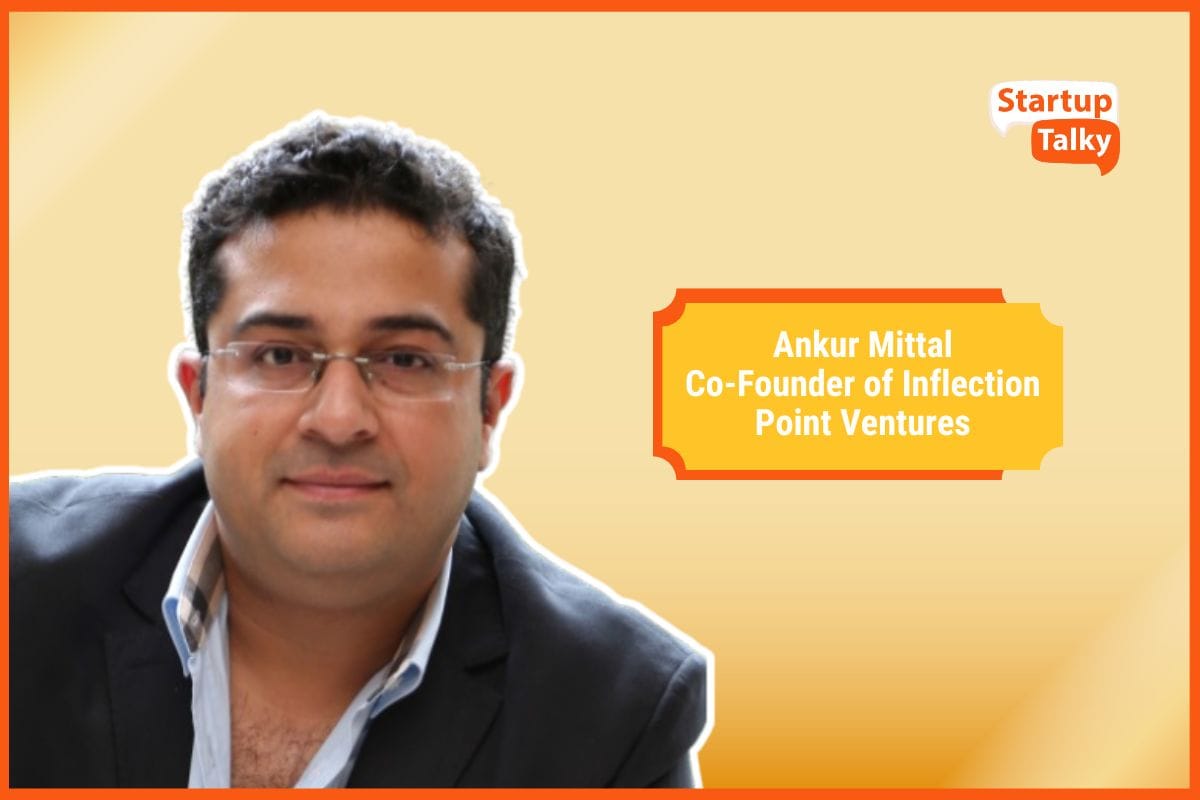
StartupTalky presents Recap'25, a series of exclusive interviews where we connect with founders and industry leaders to reflect on their journey in 2025 and discuss their vision for the future.
India’s early-stage investment landscape is entering a new era of discipline, sharper unit economics, and value-driven scaling. As founders move away from vanity metrics and focus on sustainable growth, investment firms are recalibrating how they evaluate businesses, allocate capital, and support portfolio companies through shifting macro cycles. Inflection Point Ventures (IPV)—one of India’s most active early-stage angel investment platforms—has been at the forefront of this transition, backing companies that demonstrate strong fundamentals, clear capital efficiency, and resilient execution.
In this edition of Recap’25, StartupTalky speaks with Ankur Mittal, Co-Founder of Inflection Point Ventures, who reflects on a pivotal year shaped by valuation corrections, founder mindset shifts, and the growing impact of AI across business models. Mittal discusses the signals that helped IPV identify which startups were ready to scale, the sectors that outperformed expectations, and the metrics that truly matter in a tighter funding environment. He also shares data-backed insights on profitability-focused founders, emerging opportunities in 2026, and the practical discipline required to build durable, value-creating startups in India’s evolving ecosystem.
StartupTalky: Looking back at 2025, what signals helped you identify which portfolio companies would scale well and which ones needed course correction?
Mr. Ankur Mittal: Looking back at 2025, the signals were clear and consistent. We don’t chase vanity metrics; we focus on growth quality and unit economics. In practice, that meant prioritising net revenue retention consistently above 100% and LTV/CAC comfortably above 2x. If customers were not expanding their spend or if churn began to rise, we consciously throttled further investment rather than pushing growth at all costs.
We also kept a close eye on burn multiples and runway. For early-stage SaaS businesses, a CAC payback period of under 12 months was non-negotiable. Beyond the dashboards, execution quality made a material difference. Founding teams with deep domain expertise or prior operating and exit experience tended to navigate challenges far more effectively and course-correct faster when needed.
In essence, when the data reflected repeatable revenue, disciplined capital use, and sound unit economics, we leaned in and supported scale. When it didn’t, the focus shifted to fixing the product, reworking go-to-market, or, where necessary, pivoting. These fundamentals, combined with a clear view of the macroeconomic environment of the sector in which a company operates, consistently helped us distinguish between businesses ready to scale and those that required course correction.
StartupTalky: What was the biggest shift you noticed in India’s startup ecosystem this year in terms of funding, valuations, founder behaviour, or market demand?
Mr. Ankur Mittal: The biggest shift in 2025 was a clear move from hype to hard math. Funding activity in India cooled by roughly 25% in the first half of the year compared to the previous year, and valuations reset accordingly, with megadeals becoming nearly 20% smaller. Investors stepped away from blank-cheque investing driven purely by narratives and started demanding demonstrable fundamentals.
We observed founders responding decisively, cutting burn, prioritising profitable growth, and strengthening governance. With global liquidity tightening and growth multiples compressing, the ecosystem moved into a survival-first mindset. The outcome was a visible transition from growth-at-all-costs to disciplined, sustainable scaling.
Put simply, “hope is not a strategy” became the dominant thinking. Companies that could show real business fundamentals, rather than optimistic projections, continued to attract support, while others were pushed to course-correct. Alongside this, there was increased interest in GIFT City fund structures, valuations in certain pockets revisiting 2021 levels, and a strong focus on AI/ML and deep-tech startups. Founders, overall, became more cautious and frugal, evaluating returns on every rupee spent, which marked a clear and deliberate mindset shift across the ecosystem.
StartupTalky: How did AI change the kind of startups you backed in 2025?
Mr. Ankur Mittal: AI did not change our core evaluation lens, but it did sharpen how we looked at product capability and execution. In 2025, we observed AI being used less as a standalone theme and more as an enabler that made products meaningfully better, improving precision, efficiency, and outcomes for customers.
In that sense, AI did not fundamentally alter our investment approach. Instead, it assisted startups in refining their offerings and strengthening execution. The companies that stood out were not those leading with AI as a headline, but those using AI tools pragmatically to sharpen their products and deliver clearer value.
StartupTalky: Which sector or theme grew faster than you expected this year?
Mr. Ankur Mittal: Two developments stood out clearly. First, healthtech saw a sharp surge in momentum, attracting roughly $828 million in funding in H1 2025 and emerging as the second most-funded vertical after fintech. Digital clinics, diagnostics, and pharma supply platforms moved decisively into the mainstream, driven by post-pandemic behavioural shifts and deeper penetration into non-urban markets.
Second, transportation and logistics technology witnessed a strong upswing, with funding touching $1.6 billion in H1 2025, representing a 104% increase over H2 2024. Put simply, the continued expansion of e-commerce and quick-commerce sustained heightened demand, as both consumers and enterprises invested heavily in delivery infrastructure, warehousing, and supply-chain solutions.
Both sectors benefited from clear tailwinds: rising consumer adoption alongside growing enterprise demand on one side, and supportive technology and regulatory developments on the other. At the same time, deep-tech segments, including space tech and climate tech, continued to make significant progress, reinforcing the broader shift toward fundamentally driven innovation.
StartupTalky: What early trends or market signals make you optimistic about 2026?
Mr. Ankur Mittal: The momentum points clearly toward deep-tech and AI/ML, reinforced by multiple government initiatives aimed at accelerating adoption and capability building across these sectors. While 2025 required a more measured approach, several data points indicate that
India’s startup momentum remains intact. Capital has not exited the ecosystem, funds continue to have deployable capital, particularly for high-conviction opportunities.
This is visible on the ground as well. Funding in October 2025 reached approximately $1.8 billion, rising nearly 60% month-on-month, driven by a handful of large rounds such as Zepto and Uniphore. Climate and clean-tech also gathered pace, with environment focused startups raising around $2 billion between January and October, supported by government incentives and growing ESG-driven demand.
With multiple IPOs and acquisitions expected, alongside increased participation from family offices and new backers, the runway ahead is becoming clearer. Capital is returning in a more selective manner, emerging sectors are heating up, and profitability-focused companies are earning stronger multiples, trends that make us cautiously optimistic about 2026.
StartupTalky: In 2025, many startups focused on profitability and discipline. What did you learn from founders who managed this transition well?
Mr. Ankur Mittal: The successful companies of 2025 were lean and profitable quickly. We learned that strong discipline wins. The best founders cut non-core projects, fixed weak parts of their business, and squeezed every bit of ROI. The numbers prove it: out of 20 top startups, 14 had a net profit in FY25.
Examples like Delhivery and CarTrade demonstrate profits by cutting costs and doubling down on strengths. Even growth-focused firms like Zomato and Awfis had improved their mix to reach profitability. What worked in common was a razor-sharp focus on core unit economics and the discipline to say no to flashy but unprofitable ventures. Bottom line: founders who internalized fiscal discipline early on were able to sustain momentum when funds got tight.
StartupTalky: What is one clear, actionable advice you would give founders entering 2026?
Mr. Ankur Mittal: The focus has to move firmly from valuation to value creation. Fundamentals matter, profitability, clean metrics, and honesty about where the business really stands. The advice is simple: do the math on your business every single day. If your LTV/CAC is below 2 or your CAC payback stretches beyond 12 months, fix that before chasing more growth.
Run the startup like it’s your own money on the line. Track unit economics closely and cut anything that isn’t working. The market has made its position clear, investors are backing real profitability, not just aggressive growth curves.
Engagement without revenue is no longer enough. Don’t hope it will convert; prove that it does. Build businesses that are defensible and generate cash. At the end of the day, skin in the game means knowing exactly where every rupee goes. Do that, and you will stand out in 2026.
Explore more Recap'25 interviews here.