

Anupam Kumar of MiniMines on Building India’s Circular Battery Economy and Scaling Critical Mineral Recycling
📰 News
StartupTalky presents Recap'25, a series of exclusive interviews where we connect with founders and industry leaders to reflect on their journey in 2025 and discuss their vision for the future.
In this edition of Recap’25, StartupTalky speaks with Anupam Kumar, Co-Founder & CEO of MiniMines, a cleantech company that is pioneering India’s circular battery economy. MiniMines transforms end-of-life lithium-ion batteries from EVs, mobile devices, and laptops into high-purity, reusable raw materials, powering the next generation of clean energy technologies.
Anupam shares how MiniMines’ patented Hybrid Hydrometallurgy™ process enables over 96% recovery efficiency and 99% purity with a zero-emissions footprint, while creating a domestic supply chain for critical minerals. He also discusses the growing importance of battery recycling in India, operational and regulatory challenges, strategic partnerships with government and industry, and how MiniMines is positioning itself to meet the surging demand for sustainable energy solutions heading into 2026.
StartupTalky: What does MiniMines do? What was the motivation/vision with which you started?
Anupam Kumar: MiniMines is a cleantech company dedicated to building a circular battery economy for India by turning the country’s growing pile of used lithium-ion batteries into high-purity, reusable raw materials that power tomorrow’s clean energy technologies. We specialise in extracting critical elements such as lithium, nickel and cobalt from spent EV, mobile, and laptop batteries using our patented Hybrid Hydrometallurgy™ process, and then supplying these materials back to battery and materials manufacturers. Our goal is to create a domestic supply chain for critical minerals that India currently has to import at great cost and environmental impact.
The motivation behind MiniMines goes back to a clear problem we saw early on. India's dependence on imported lithium and the environmental toll of traditional mining are major obstacles to scaling EVs and renewable energy sustainably. At the same time, end-of-life lithium-ion batteries were being treated as waste, stacking up on e-waste heaps with precious resources locked inside. That contradiction, scarce critical minerals on one hand and wasted resource potential on the other was the spark for MiniMines.
StartupTalky: What is/are the USP/s of your products?
Anupam Kumar: Our patented Hybrid Hydrometallurgy (HHM™) process is where our most competitive advantages lie because It enables us to achieve over 96% recovery efficiency and 99% purity, while operating at a fraction of the carbon footprint compared to conventional methods and these extracted minerals act as feedstock to battery manufacturers and other industries.. In addition, our core process is designed specifically for sustainability. It is a closed-loop zero emissions system that produces no solid, liquid or gas and can effectively work with almost all chemistries found in lithium battery systems.
Our technology has received validation through grants and active support from Oil India Ltd, along with co-funding and technical backing from UNIDO and ACT for Environment. This demonstrates the industrial validity and strategic significance to the critical minerals ecosystem in India.
StartupTalky: How has the industry you are in changed in recent years and how has your company adapted to these changes?
Anupam Kumar: Globally, the lithium-ion battery recycling market is estimated at roughly USD 16 billion and is projected to reach USD 77.6 Billion by 2034. That being said, in India, the battery recycling industry has evolved significantly from a niche waste management issue into a major national strategic priority, driven by the explosive growth of electric vehicles and clear governmental mandates promoting a circular economy.
In response to this transition, MiniMines is evolving beyond basic recycling toward advanced deep metal refining. We have signed an MoU with the Government of Karnataka to establish a large-scale Giga Critical Minerals Refining Complex in Bengaluru, which will strengthen the domestic supply chain and establish us as a consistent provider of high-purity critical minerals and Rare Earth Elements.
StartupTalky: What key metrics do you track to check the company's growth and performance?
Anupam Kumar: At MiniMines, our growth framework is built around strategic scalability, technology validation, commercial traction, and ecosystem impact.
Operational scaling is a core focus. We track processing capacity and throughput as prime indicators of our execution. Our existing Bengaluru facility operates at a capacity of around 3,000 tonnes per annum, while we simultaneously prepare to scale up through larger industrial units. We have also signed a ₹350 crore MoU with the government of Karnataka for Giga Critical Minerals Refining Complex, marking the next phase of our growth. Strategic and ecosystem indicators are equally important.
These include institutional validation such as grants from Oil India, UNIDO and ACT for Environment to scale process engineering and plant commissioning and partnerships with government and industry players that strengthen India’s critical minerals supply chain. Together, these metrics help us ensure that MiniMines is not just growing in size, but evolving as a critical enabler of India’s circular battery and clean-energy ecosystem.
StartupTalky: What were the most significant challenges your company faced in the past year and how did you overcome them?
Anupam Kumar: The last 12 months were a proving ground in which we moved from technology validation to industrial execution, and that exposed three hard, interlinked challenges: feedstock availability / informal supply chains; scaling the process safely and economically; and access to growth capital tied to regulatory compliance.
First, scaling a lab-proven process to commercial throughput required significant process engineering, optimising reagent use and throughput. Second, getting reliable volumes of end-of-life batteries is hard in India because a large fraction still flows through informal scrap markets. We are addressing this by building formal collection partnerships and aggregator networks, and by investing in battery traceability.
Third, moving from a pilot to a big-scale vision demanded formal partnerships with state and industry stakeholders. We signed an MoU with the Karnataka government to develop a INR 350 crore Critical Minerals Refining Complex, which de-risks land, approvals and downstream offtake planning - a vital step toward industrial scale.
In short, we overcame operational, technical and financing bottlenecks by (a) formalising feedstock channels, (b) using grant funding and process engineering to derisk scale-up, and (c) locking strategic public-private partnerships to secure capacity, compliance and market access. Those moves turned near-term constraints into durable competitive advantages.
StartupTalky: What are the different strategies you use for marketing? Tell us about any growth hack that you pulled off.
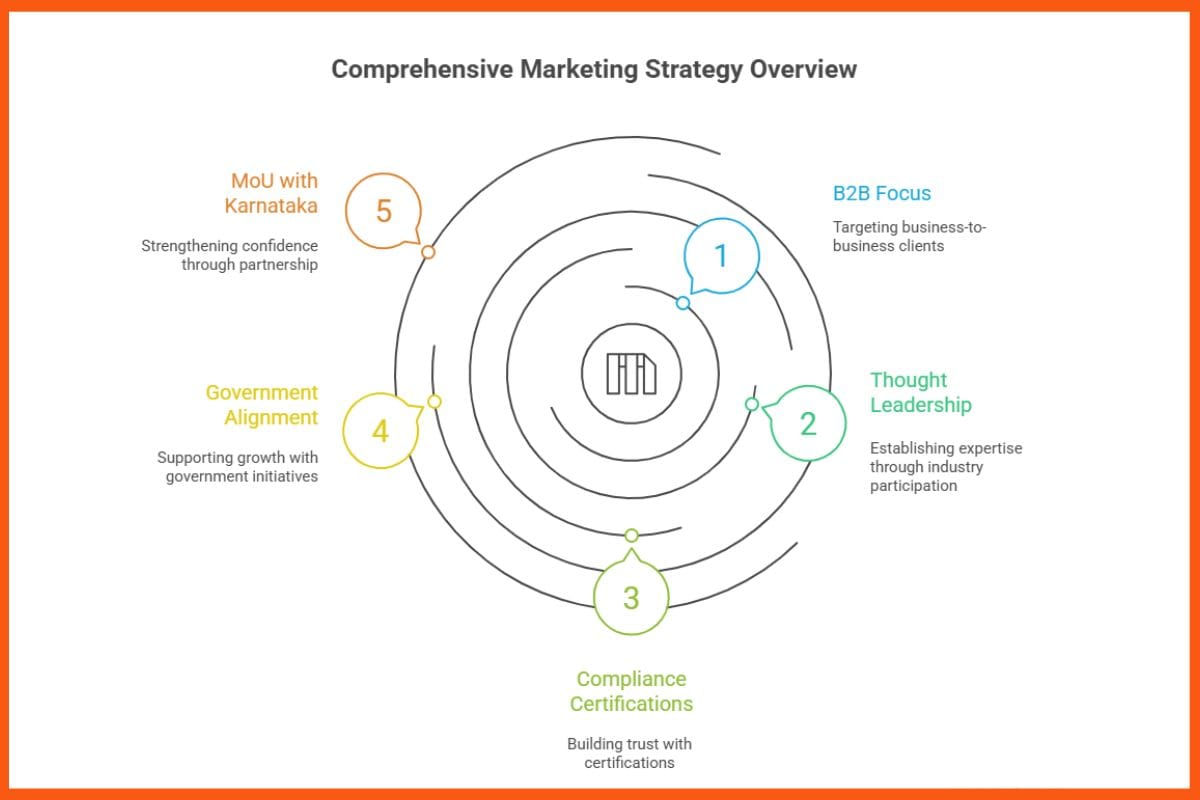
Anupam Kumar: Our marketing strategy is primarily B2B, centered on establishing thought leadership through strategic participation in industry forums and highlighting our critical compliance and CPCB certifications to build trust with large manufacturers who are our main clients. Our growth was supported by close alignment with government priorities and policy initiatives. The MoU with the Government of Karnataka for the refining complex strengthened confidence in our technology and execution approach.
StartupTalky: What opportunities do you see for future growth in your industry in India and the world? What kind of difference in market behavior have you seen within states in India?
Anupam Kumar: Globally, battery recycling as a market is expected to see significant growth from increasing electric vehicle (EV) adoption and energy storage deployments. The industry value will grow substantially over the next decade due in part to lower battery costs and increased quantities of end-of-life batteries being recovered for recycling purposes.
In India, there are strategic and economic opportunities. Industry reports suggest that by 2030, the Indian circular battery economy will be worth USD ~3.5 billion, resulting in the creation of tens of thousands of green jobs, and reducing carbon emissions.
Government initiatives such as the Battery Waste Management Rules (2022) and Extended Producer Responsibility (EPR) programme combined with a new INR 1,500 crore incentive scheme for recycling critical minerals, enhance the growth potential for this market by creating stronger collection systems and reducing investment risk for recyclers.
Interestingly, the growing market for recycling batteries in India shows varying degrees of activity between the different States. States with well established economies of scale and significant EV penetration such as Karnataka, Maharashtra, Gujarat, and Tamil Nadu have adopted a more proactive approach toward developing formal battery collection, recycling infrastructure, and collaborative relationships between the public and private sectors, compared to states with less developed infrastructure. As regulations develop and as reverse logistics systems are improved, battery recycling will contribute to a growing supply of critical minerals from within India, building a sustainable foundation for a domestic clean energy economy.
StartupTalky: How do you plan to expand the Customers, product, and team base in the future?
Anupam Kumar: Our future expansion plan is focused on scaling across three fronts: expanding our customer base to include global battery cell manufacturers and major producers of cathode active materials, diversifying our product offerings beyond lithium-ion into the recovery of other valuable streams like rare earth magnets (through our HydroMag REE Loop technology), and substantially growing our team by investing in a new research and development and training center to nurture the technical talent required to operate our new large-scale refining complex.
StartupTalky: One tip that you would like to share with people reading this article who want to get into entrepreneurship?
Anupam Kumar: The most valuable piece of advice I can share with aspiring entrepreneurs is to wholeheartedly focus on and commit to solving a critical, undeniable problem rather than becoming too attached to a single product or initial solution. If your passion is rooted in solving a core issue, such as resource scarcity or climate change, that deep conviction will provide the necessary resilience and flexibility to continually adapt your product or business model until you successfully achieve the meaningful impact you set out to create.
Explore more Recap'25 interviews here.