

Best AI Warehouse Management Tools: Features, Pricing and Use Cases
lists-rankings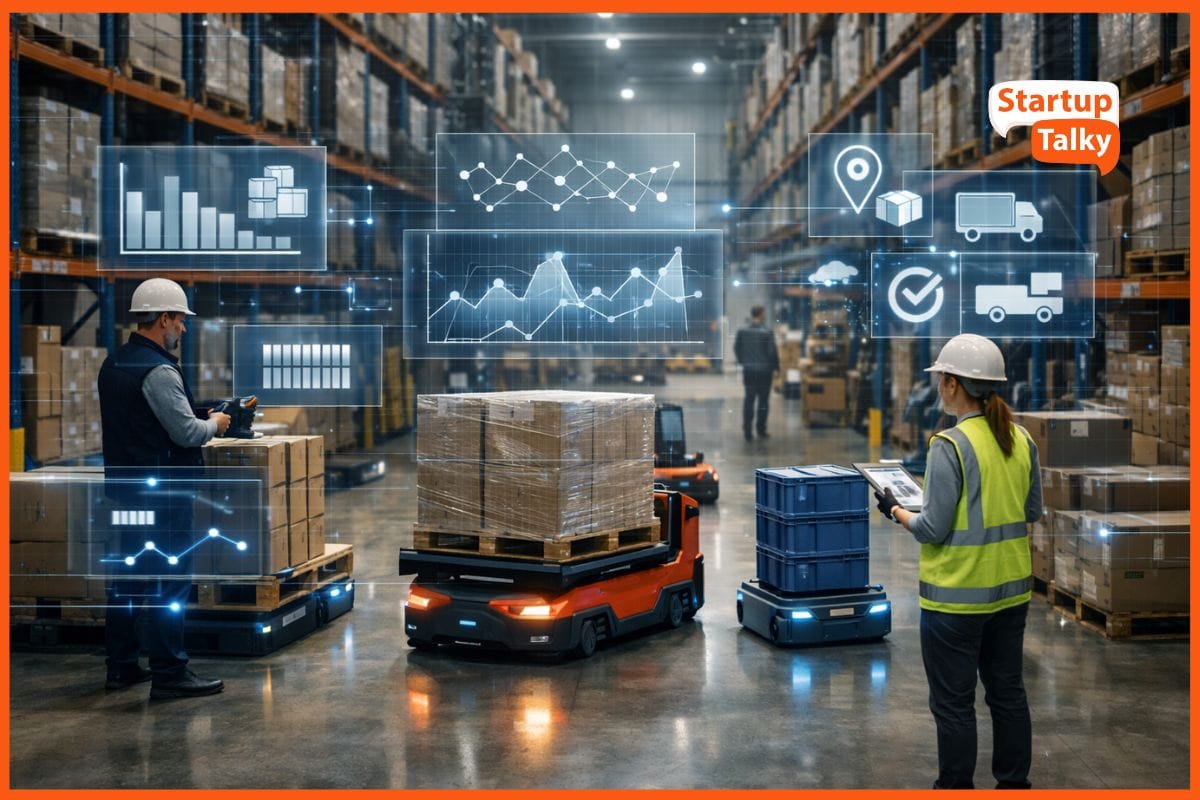
Running a warehouse can often feel like you're trying to solve a puzzle with pieces that keep changing shape. You're wrestling with inventory counts that don't match up, fulfillment delays that leave customers unhappy, and the rising costs of doing things by hand. It's a lot to juggle. But what if you could move from constantly reacting to problems to proactively controlling your operations?
That's the promise of AI warehouse management tools. They're helping businesses turn their warehouses from simple cost centres into smart, efficient hubs. This article is designed to help you navigate the options. We’ve looked at what’s available and put together a straightforward review of the top 5 intelligent WMS tools on the market. Our aim is to help you find the right platform for your business, whatever its size or industry.
What Are AI Warehouse Management Tools?
At its heart, a Warehouse Management System (WMS) is the software that directs the day-to-day operations in a warehouse. It manages everything from when goods arrive to when they're shipped out the door. It's the central nervous system of the facility.
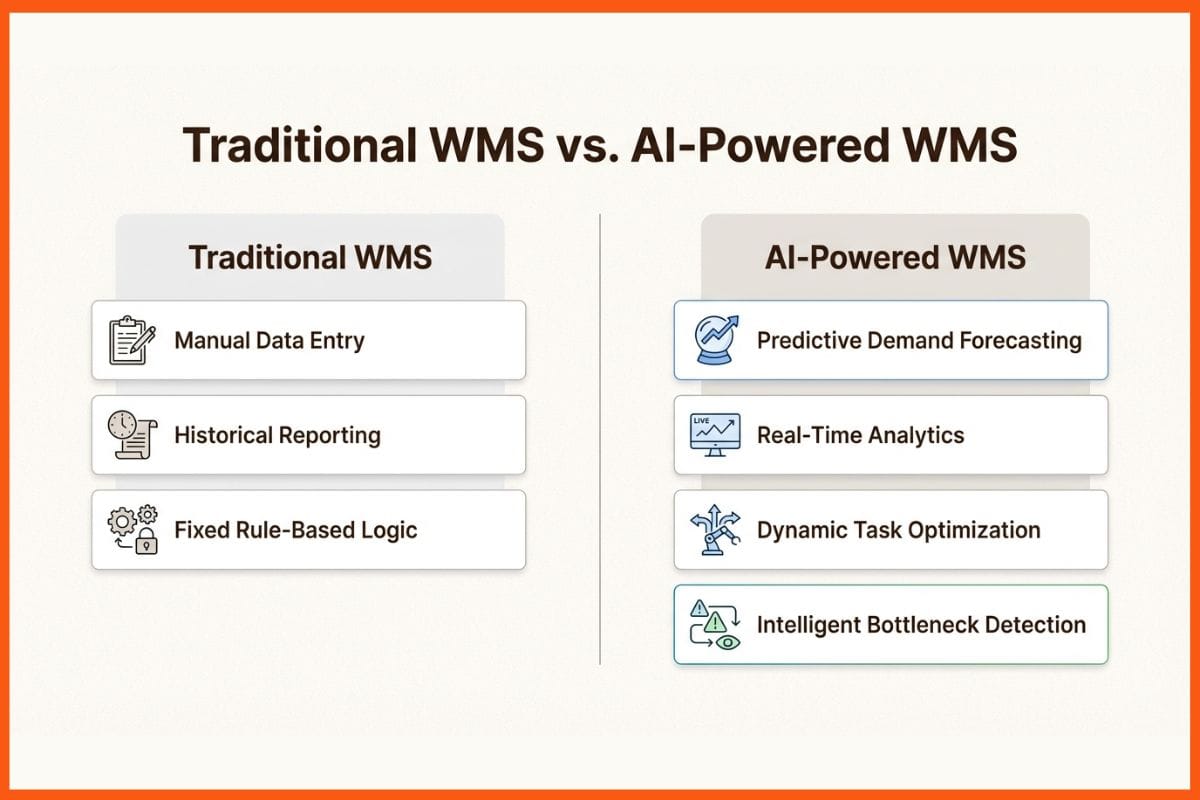
So, what does AI add to the mix? It enhances a standard WMS, making it predictive instead of just reactive. Instead of only tracking what has happened, it helps you anticipate what’s about to happen. Think of machine learning algorithms that can forecast customer demand with surprising accuracy, or AI that assigns tasks to workers and robots in the most efficient sequence. It can even run analytics to spot potential bottlenecks before they cause a logjam in your operations.
These intelligent warehouse solutions do more than just make things faster. They significantly cut down on picking errors, help your team get more done, and provide a live, real-time view of your entire operation. A warehouse with AI isn't just a storage space; it's a strategic part of your business.
How We Chose the Best AI Warehouse Management Tools
To create this list, we used a clear set of criteria to make sure we were only looking at tools that offer real value. Here’s a quick look at what we focused on.
Core WMS functionality and AI capabilities
First, any tool had to be great at the basics. That means solid, dependable features for tracking inventory and managing orders. But we were looking for more. We concentrated on platforms where AI was a core component, offering genuine optimisation rather than just simple automation.
Integration and scalability
A new tool that can't connect with your existing technology is a headache waiting to happen. We gave priority to solutions that could easily integrate with key systems like ERPs (QuickBooks or NetSuite). We also looked for tools that can scale with your business, whether you're managing one warehouse or expanding to a global network.
Usability and security
Powerful software is only effective if your team can use it efficiently. We sought out software with a clean, intuitive design that works just as well for managers in the office as it does for staff on the warehouse floor. On top of that, strong security was a must. Your operational data is valuable, and it needs to be kept safe.
Comparison of the Best AI Warehouse Management Tools
To give you a quick overview, here’s a table that breaks down our top five picks.
| Tool | AI Capabilities | Best For | Key Features | Platforms Supported |
|---|---|---|---|---|
| Finally | AI-powered robotics, real-time inventory forecasting, predictive analytics | Omnichannel grocery stores and retailers needing flexible, rapid-deployment automation | Modular robots, goods-to-person system, 3-month deployment, reduces labor costs by 65% | Cloud-based, integrates with existing flat-floor warehouse infrastructure |
| Microsoft Dynamics 365 SCM | Demand forecasting, Inventory Visibility Add-in, IoT intelligence | Enterprises standardized on the Microsoft ecosystem | Power Platform extensibility, integrated ERP/WMS, real-time inventory tracking | Cloud-based, Mobile |
| Blue Yonder WMS | Robotics orchestration, prescriptive task interleaving, ML-powered recommendations | Large, highly automated distribution centers with multi-vendor robotics | Luminate® Robotics Hub, advanced task management, AI agents | Cloud-native (Microsoft Azure) |
| NetSuite WMS | Mobile RF barcode scanning, intelligent pick/pack strategies, cycle counting automation | Businesses already using the NetSuite ERP | Native ERP integration, real-time visibility, wave release, Smart Count | Cloud-based, Mobile |
| Fishbowl Inventory | AI-driven reorder points, demand forecasting, AI assistant (Athena) | Small to mid-sized businesses using QuickBooks or Xero | Deep QuickBooks integration, mobile barcode scanning, manufacturing orders | On-premise, Hosted Cloud |
List of Top AI Warehouse Management Tools
Now, let's get into the details of what makes each of these platforms a strong contender.
1. Finally
Finally has made a name for itself as a leading intelligent warehouse solution for omnichannel grocery stores and retailers. Its key strength is its ability to turn regular flat-floor spaces into high-tech fulfillment centres in under 3 months. You don't need to build a massive, custom facility. The system uses a fleet of AI-powered modular robots to automate the entire fulfillment process, from storage to picking. The results show they can cut labour costs by up to 65%, reduce the number of pickers needed by 70%, and achieve 98% order accuracy. They offer several models for different needs, including InstoreSFC™, Dark StoreDSFC™, and Distribution Ctr.DFC™.
- Pros: The deployment speed is a notable feature. Transforming a standard warehouse into a fully automated one in three months is a key benefit. The potential cost savings are also significant, with fulfillment costs potentially dropping to just 5 cents per item. It's also very scalable, with solutions for spaces as small as 450m², and staff can be trained in only 15 minutes.
- Cons: It's a highly specialized solution. For businesses in the grocery or omnichannel retail space, it's a suitable option. However, it might not be the best fit for other sectors, like heavy industrial manufacturing.
- Pricing: Pricing is available upon inquiry and is customized based on warehouse size, number of robots, and specific operational needs.
 Vivek Dev Jacob
2. Microsoft Dynamics 365 Supply Chain Management
For larger companies, particularly those already invested in the Microsoft ecosystem, Dynamics 365 SCM is an intelligent WMS tool. Its most notable feature is the Inventory Visibility Add-in, a scalable microservice that gives you a real-time, global view of your inventory. Another benefit is the flexibility of the Power Platform, which allows you to build custom apps and automate workflows with minimal coding, tailoring the system to your specific processes.
- Pros: A key strength is the smooth integration with other Microsoft products like Azure and Power BI. This creates a single, connected environment for all your operations. The real-time inventory visibility provides useful analytics for making better decisions.
- Cons: The implementation can be a complex undertaking, often requiring specialist consultants and a significant setup period. The enterprise-level pricing also makes it inaccessible for most smaller businesses.
- Pricing:
- Supply Chain Management Plan: Starts at £161.50 per user/month.
- Additional AI capabilities and agents are available with premium add-ins and Copilot Credits.
3. Blue Yonder Warehouse Management
Blue Yonder is a popular AI logistics tool for large, highly automated distribution centres that use a mix of robots from different manufacturers. Its standout feature is the Luminate® Robotics Hub. This vendor-agnostic platform lets you manage different robot fleets through one unified system, instead of having to deal with multiple interfaces. Its Warehouse Execution System (WES) also uses machine learning to offer prescriptive recommendations, telling both human workers and robots what to do next to maximize efficiency.
- Pros: The robotics orchestration is a notable feature, used in large-scale deployments with logistics companies like DHL. The AI-driven task optimization can deliver significant productivity improvements in complex settings.
- Cons: This is a premium, enterprise-grade solution with a price to match. To get the most from it, you need to have already invested heavily in a multi-vendor robotics strategy. It’s more than what smaller, less automated operations would need.
- Pricing: Pricing is not publicly listed and is provided upon request, tailored to enterprise-scale deployments.
4. NetSuite WMS
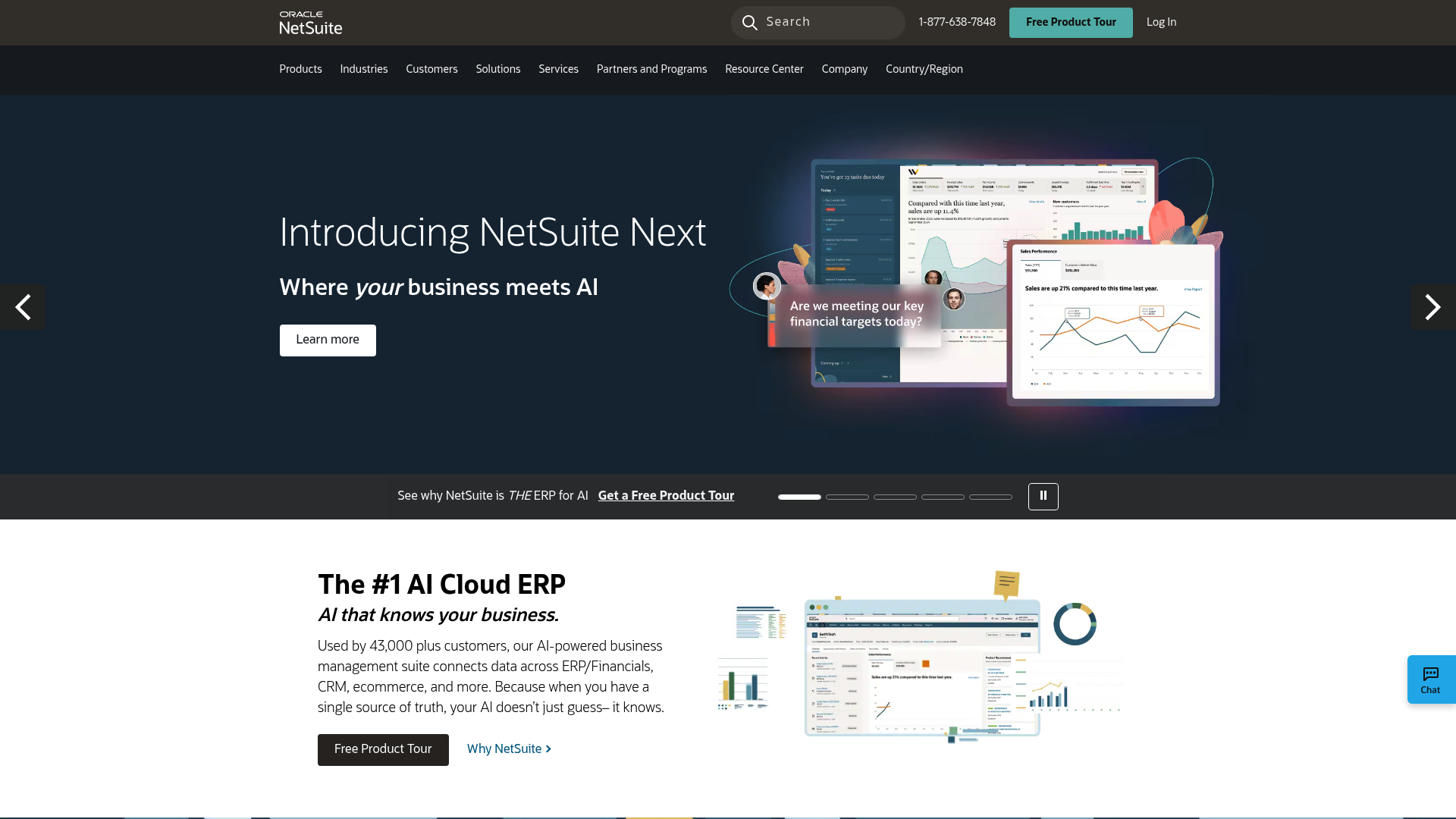
If your business already runs on the NetSuite ERP, then NetSuite WMS can be a suitable choice. Its main advantage is that it’s built on the same platform. It avoids complex integrations and data syncing issues. Your WMS and ERP use a single data model, giving you one source of truth for everything from inventory and sales to finance. It adds all the essential warehouse functions you'd expect, like mobile RF barcode scanning, intelligent wave release for picking multiple orders simultaneously, and an inventory counting feature called Smart Count.
- Pros: The native integration with NetSuite ERP is a key benefit. It can reduce data sync errors and helps reduce the total cost of ownership. The user experience is consistent across both systems, making training and adoption much simpler.
- Cons: Its value is almost entirely dependent on you being a NetSuite ERP user. If you use a different ERP, this isn't the right tool. It’s also not built for the kind of complex, multi-vendor robotics management that a specialized system like Blue Yonder handles.
- Pricing:
- NetSuite WMS is available as an add-on module to a NetSuite ERP subscription. Pricing is customized based on user count and warehouse size.
5. Fishbowl Inventory
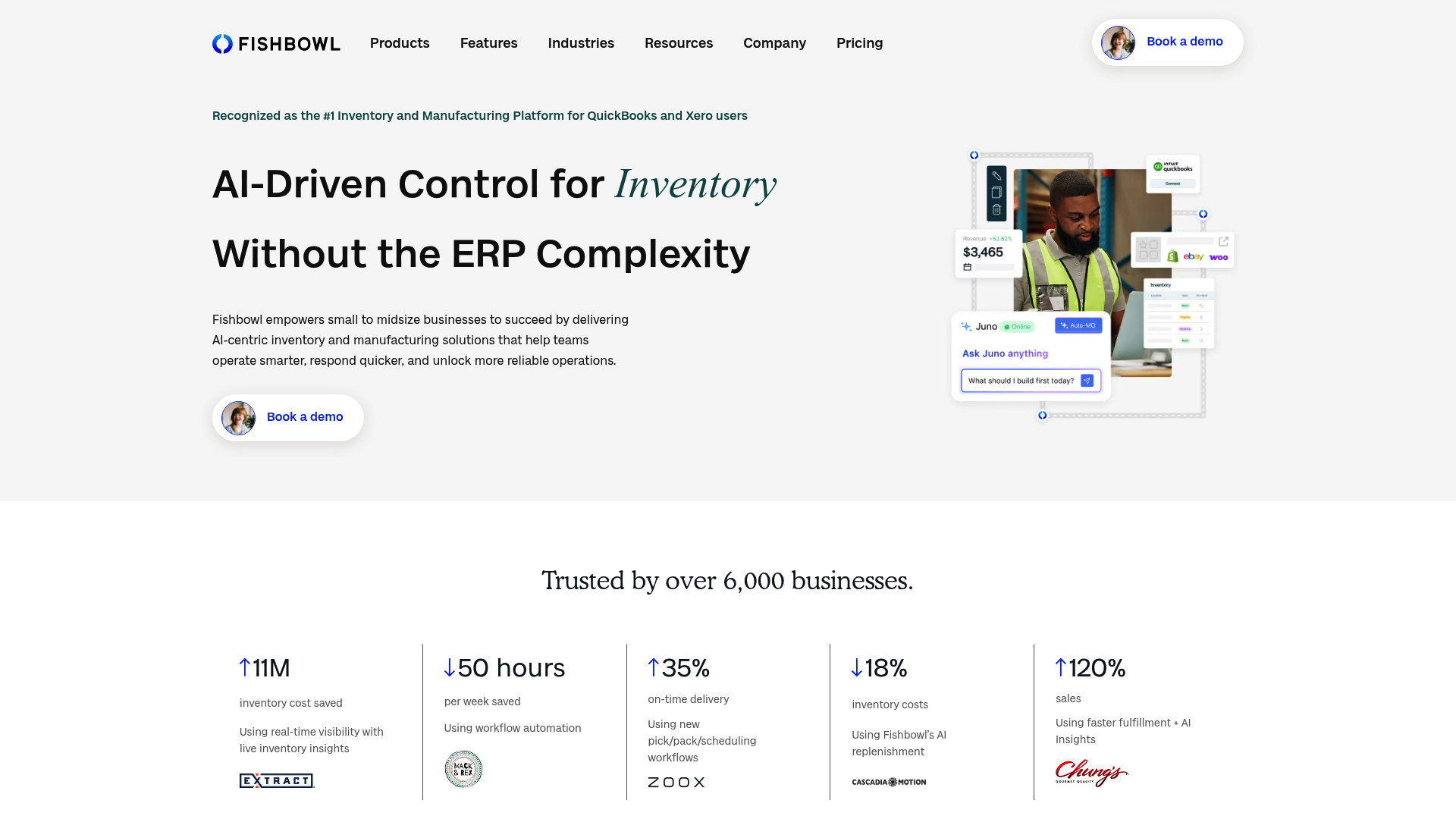
Fishbowl is a popular warehouse AI software for small to mid-sized businesses (SMBs) that use QuickBooks or Xero for their accounting. It is known as an inventory platform for QuickBooks users. It essentially adds the WMS and manufacturing capabilities that QuickBooks doesn't have, like mobile barcode scanning for your warehouse team. It also includes some smart AI features, such as AI-driven demand forecasting to set better reorder points and an AI assistant named Athena that provides plain-language insights on your stock trends.
- Pros: The deep, reliable integration with QuickBooks is a key feature. It automates data entry and can save businesses time on manual work. The pricing is transparent and tiered, offering a clear and quick return on investment for SMBs.
- Cons: It’s designed for the SMB market. While it’s designed for that segment, a fast-growing enterprise might eventually need the more advanced global supply chain features found in systems like Dynamics 365.
- Pricing:
- Fishbowl offers clear, tiered pricing, billed annually:
- Essentials: $229 USD/month for 2 users.
- Growth: $429 USD/month for 5 users.
- Scale: $729 USD/month for 10 users.
- An implementation package is required with purchase.
StartupTalky Official
How to Choose the Best AI Warehouse Management Tools for Your Business
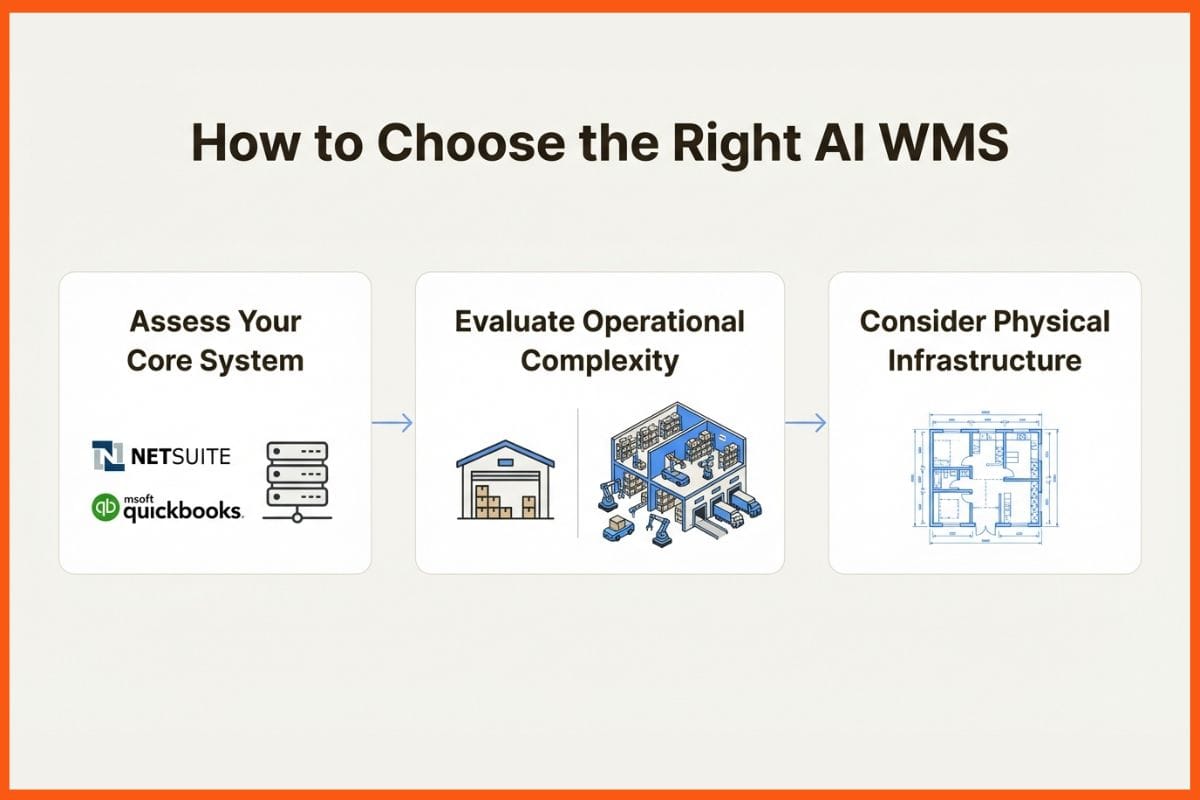
So, you’ve seen the top options. How do you pick the one that’s right for your business? It really comes down to three main questions.
Start with your core business system
Your ERP or accounting software is the central hub of your business, so your WMS must connect to it without causing problems. You have a couple of options here. You can choose a native WMS that’s part of your existing ERP suite (like NetSuite WMS for NetSuite users) for streamlined integration. Or, you can pick a best-of-breed system (like Fishbowl for QuickBooks users) that adds powerful, specialized functions to the platform you already know and use.
Match the tool to your operational complexity
Be honest about what you really need. An SMB using QuickBooks has very different needs from a global enterprise orchestrating a fleet of robots from five different vendors. The large enterprise would get immense value from a sophisticated platform like Blue Yonder, but for the SMB, it would be an expensive and overly complicated choice.
Consider your physical infrastructure
Some solutions require major changes to your physical warehouse, while others are built for flexibility. This is a big deal. For example, a solution like Finally can be deployed directly into an existing 450m² flat-floor space. This offers a practical route to high-level automation without the need to build a new facility from scratch.
FAQs
What are the key benefits of using the best AI warehouse management tools?
They help reduce errors, improve inventory accuracy, forecast demand more effectively, and optimize labour and robot workflows. This leads to lower operational costs and faster fulfillment times for your customers.
How do I determine which are the best AI warehouse management tools for a small business?
For a small business, focus on tools that integrate smoothly with your current accounting software, like QuickBooks or Xero. Solutions such as Fishbowl Inventory are designed specifically for this purpose, offering powerful features without an enterprise-level price tag.
Can the best AI warehouse management tools integrate with my existing ERP system?
Yes, integration is a critical feature. Some tools, like NetSuite WMS, are native to their own ERP. Others, like Microsoft Dynamics 365, are part of a larger tech ecosystem, while specialized systems like Fishbowl are built to connect with popular third-party platforms. Always confirm compatibility before you commit.
How long does it take to implement the best AI warehouse management tools?
The timeline can vary quite a bit. A complex, enterprise-wide system could take several months to fully implement. However, more modern, modular solutions like Finally can automate an existing warehouse in under three months, offering a much faster path to seeing a return on your investment.
Are the best AI warehouse management tools only for large, automated warehouses?
Not at all. While some platforms like Blue Yonder are built for massive, robotics-heavy operations, many tools are scalable. There are plenty of [solutions tailored for small to mid-sized businesses](https://www.fishbowlinventory.com/blog/reorder-point-calculator) that provide AI-driven forecasting and inventory control without requiring a huge investment in automation.
What kind of ROI can I expect from the best AI warehouse management tools?
The return on investment comes from several areas: reduced labour costs (sometimes by over 65%), higher order accuracy, less wasted inventory, and improved overall productivity. The exact return depends on your operation, but the efficiency gains are usually significant.