

Best Cloud Data Integration Tools for Enterprises
Collections 🗒️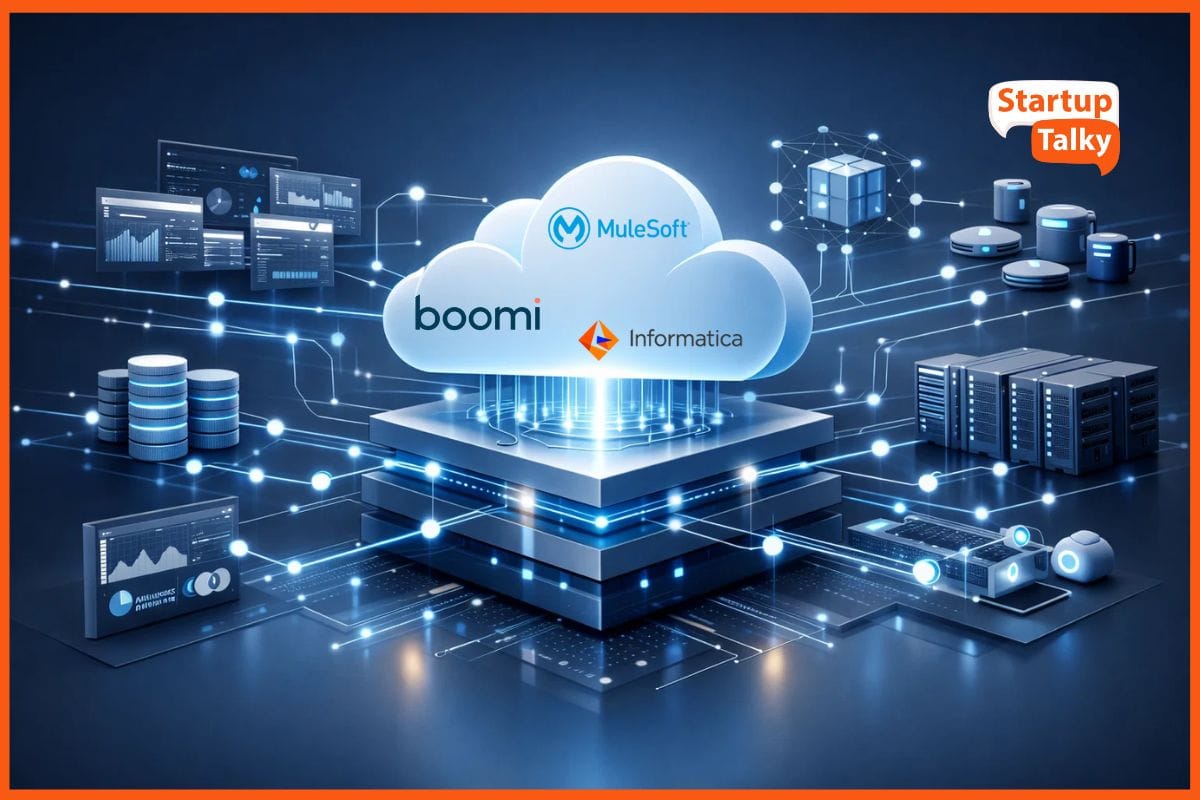
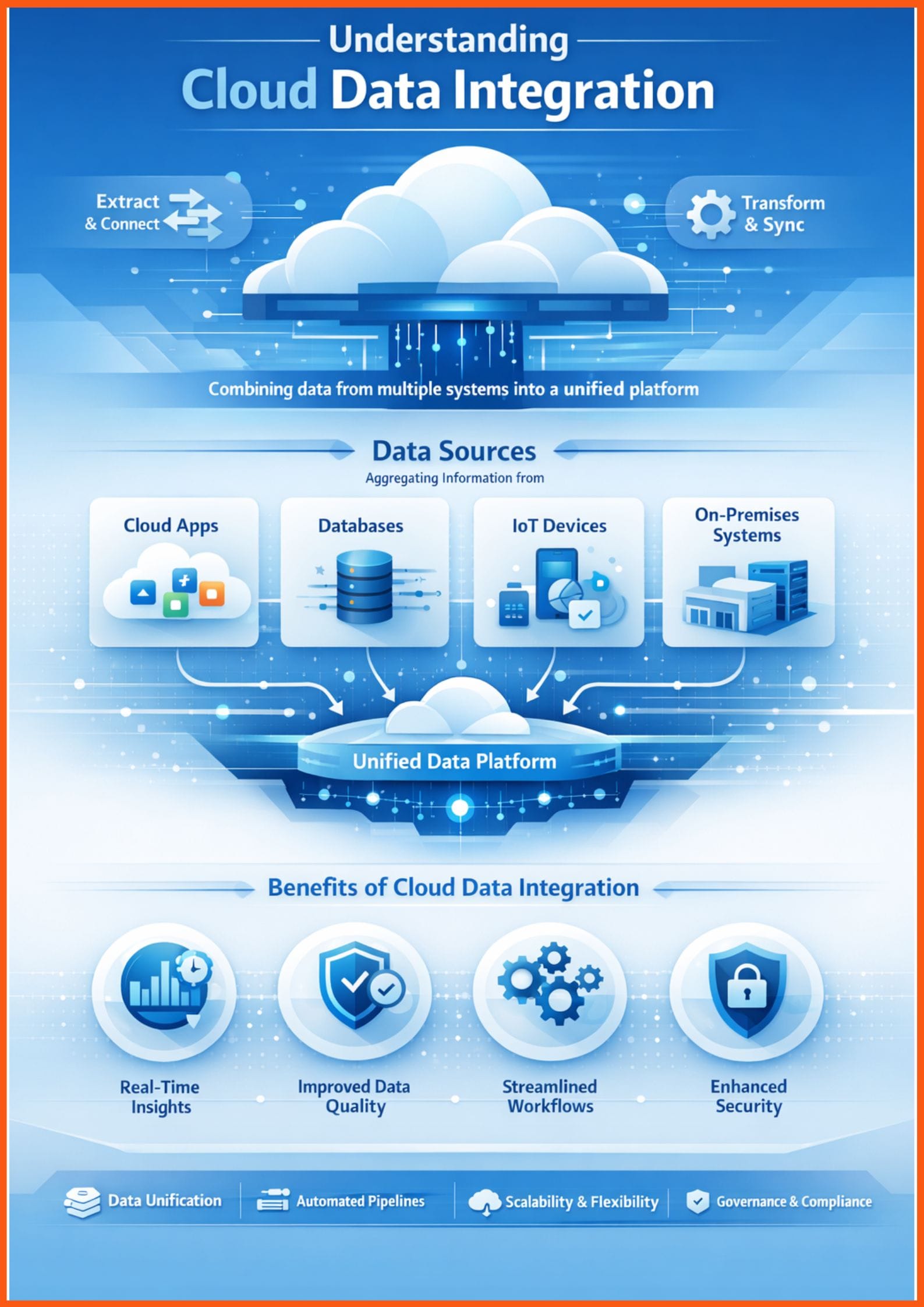
In 2026, cloud data integration is no longer just an IT function, it has become core enterprise infrastructure. As organisations operate across multi-cloud, hybrid, and on‑premise environments, data is increasingly fragmented across SaaS platforms, internal systems, data warehouses, and operational applications. Without a strong integration architecture, this data remains siloed, underutilised, and strategically ineffective.
Modern cloud data integration tools in 2026 enable enterprises to unify structured and unstructured data, build reliable data pipelines, support real‑time analytics, and power AI‑driven decision systems. For CIOs, CTOs, data leaders, and enterprise architects, choosing the right enterprise data integration solution directly impacts business intelligence, regulatory compliance, customer experience, and digital transformation outcomes.
This guide presents a structured, enterprise‑grade analysis of the best cloud data integration tools for enterprises, covering platforms designed for ETL/ELT pipelines, API‑led integration, AI‑driven automation, governance‑first architectures, and large‑scale data ecosystems.
Why Cloud Data Integration Matters
Enterprise data environments are now distributed by design. Business operations span multiple cloud providers, SaaS ecosystems, IoT platforms, ERP systems, and AI services. This complexity makes data integration a strategic capability rather than a technical task.
Cloud data integration enables:
- Real‑time decision intelligence through live data pipelines
- AI and machine learning readiness via clean, unified data layers
- Regulatory compliance through governed data flows and lineage
- Operational efficiency by eliminating manual data handling
- Scalable analytics across business units and geographies
Enterprises that fail to modernise integration infrastructure face data latency, compliance risks, poor analytics quality, and limited AI scalability.
Summary Comparison Table: Top Enterprise Cloud Data Integration Tools
| Tool | Best Enterprise Use Case | Core Capabilities | Pricing Model | Deployment |
|---|---|---|---|---|
| Informatica IDMC | Governance‑first enterprise data platforms | ETL/ELT, DQ, MDM, governance, AI automation | Consumption‑based (IPUs) | Multi‑cloud, hybrid, on‑prem |
| MuleSoft Anypoint | API‑led enterprise integration | API management, microservices, connectors | Subscription + usage | Multi‑cloud, hybrid |
| Boomi | Low‑code enterprise integration | iPaaS, B2B, app integration | Tiered subscriptions | Cloud, hybrid |
| Talend Data Fabric | Data quality‑centric integration | ETL/ELT, governance, data fabric | User + volume based | Multi‑cloud, hybrid |
| Fivetran | Analytics‑focused ELT pipelines | Automated ingestion, ELT, connectors | Usage‑based (MAR) | Cloud‑native |
| SnapLogic | AI‑driven automation | Low‑code pipelines, AI suggestions | Subscription | Cloud, hybrid |
| Cleo Integration Cloud | B2B & supply‑chain ecosystems | EDI, API, file integration | Enterprise subscription | Cloud, hybrid |
Best Cloud Data Integration Tools for Enterprises
Informatica Intelligent Data Management Cloud (IDMC)
Informatica IDMC is one of the most comprehensive enterprise‑grade cloud data platforms in the market. It combines ETL/ELT, data governance, data quality, master data management, metadata management, and API integration into a single AI‑powered platform. Built for complex enterprise ecosystems, IDMC supports large‑scale analytics, regulatory frameworks, and multi‑cloud architectures.
Enterprise Use Cases
- Enterprise data governance frameworks
- Regulatory compliance pipelines
- AI‑ready data platforms
- Centralised enterprise data lakes
Key Features
- AI automation via CLAIRE engine
- End‑to‑end data governance
- Enterprise‑scale ETL/ELT
- Metadata management and lineage
- Hybrid and multi‑cloud support
Best For: Large enterprises with governance‑heavy data environments and regulatory requirements
 StartupTalky Official
MuleSoft Anypoint Platform
MuleSoft Anypoint Platform is a leader in API‑led connectivity and application integration. It enables enterprises to connect applications, services, data, and devices through reusable APIs. Rather than focusing purely on ETL, MuleSoft excels at building enterprise integration networks through microservices and API ecosystems.
Enterprise Use Cases
- API‑first architectures
- Microservices orchestration
- Salesforce ecosystem integration
- Application modernisation
Key Features
- Enterprise API management
- Integration templates
- Hybrid deployment
- Strong security and access control
Best For: Enterprises building API‑centric digital platforms
Boomi
Boomi is a mature integration platform as a service (iPaaS) focused on low‑code enterprise connectivity. It enables rapid integration across applications, data sources, and B2B systems using visual development tools and pre‑built connectors.
Enterprise Use Cases
- Hybrid cloud integration
- SaaS application connectivity
- B2B integration
- Master data synchronisation
Key Features
- Low‑code interface
- Extensive connector ecosystem
- Cloud‑native architecture
- Enterprise scalability
Best For: Mid‑to‑large enterprises needing fast, low‑code integration
StartupTalky Official
Talend Data Fabric (Qlik)
Talend Data Fabric provides a unified platform for data integration, data quality, governance, and analytics enablement. It is well‑suited for organisations that require strong data quality controls alongside complex ETL pipelines.
Enterprise Use Cases
- Data quality governance
- Enterprise data platforms
- Analytics transformation
- Regulatory compliance
Key Features
- ETL/ELT pipelines
- Data quality management
- Governance tooling
- Flexible deployment
Best For: Enterprises prioritising data trust and quality
Fivetran
Fivetran is designed for modern analytics‑driven enterprises. It automates data ingestion into cloud data warehouses and lakes using ELT architecture, enabling fast analytics without heavy engineering overhead.
Enterprise Use Cases
- Data warehousing
- Business intelligence
- Analytics platforms
- AI model training
Key Features
- Fully managed pipelines
- Automated schema changes
- Large connector ecosystem
- Cloud‑native design
Best For: Enterprises focused on analytics and AI pipelines
SnapLogic
SnapLogic combines low‑code integration with AI automation. Its Iris AI engine assists users in building pipelines and integrations, reducing development time and complexity.
Enterprise Use Cases
- Intelligent automation
- Rapid integration deployment
- Hybrid data pipelines
Key Features
- AI‑assisted pipeline design
- Low‑code interface
- Real‑time and batch support
Best For: Enterprises prioritising speed and automation
Cleo Integration Cloud
Cleo Integration Cloud specialises in B2B ecosystems, supply‑chain integration, and EDI‑driven data exchange. It enables enterprises to integrate partners, suppliers, and logistics networks into unified digital platforms.
Enterprise Use Cases
- Supply‑chain digitisation
- B2B integration
- EDI modernisation
Key Features
- EDI/API/file integration
- Partner onboarding
- End‑to‑end visibility
Best For: Manufacturing, logistics, retail, and supply‑chain enterprises
Niku Mandal
How to Choose the Right Cloud Data Integration Tool
Enterprises should evaluate integration platforms based on business architecture, not just technical features.
Key decision factors:
- Data ecosystem complexity (multi‑cloud, SaaS, legacy systems)
- Integration type (ETL, ELT, API, streaming)
- Security and compliance requirements
- Scalability needs
- Operational cost predictability
- Governance and data quality controls
- AI and analytics readiness
Cloud ETL vs ELT for Enterprises
- ETL suits governance‑heavy, compliance‑driven environments
- ELT suits analytics‑driven, cloud‑native architectures
Modern enterprises increasingly adopt hybrid models, combining ETL for regulated data and ELT for analytics workloads.
Future Trends in Cloud Data Integration
- AI‑driven autonomous data pipelines
- Data fabric architectures
- Data mesh models
- Real‑time streaming analytics
- Zero‑copy data integration
- Composable enterprise data stacks
Final Verdict
There is no single “best” cloud data integration tool for every enterprise. The right platform depends on business architecture, compliance needs, analytics maturity, and digital strategy.
- Governance‑first enterprises align with Informatica IDMC and Talend
- API‑driven organisations fit MuleSoft
- Low‑code enterprises benefit from Boomi and SnapLogic
- Analytics‑first businesses scale with Fivetran
- Supply‑chain ecosystems succeed with Cleo
In 2026, cloud data integration is no longer a support layer, it is the foundation of enterprise intelligence, automation, and AI‑driven growth.
Vivek Dev Jacob
FAQs
What are cloud data integration tools?
Cloud data integration tools are platforms that connect, collect, and unify data from multiple cloud services, on-premise systems, SaaS applications, and enterprise platforms into a central data environment. They enable businesses to build automated data pipelines for analytics, business intelligence, AI systems, and operational processes, ensuring data consistency, governance, and real-time accessibility across the organisation.
Which is the best cloud data integration tool for enterprises?
There is no single best cloud data integration tool for all enterprises in 2026. Large, compliance-driven organisations typically prefer platforms like Informatica IDMC and Talend Data Fabric for governance and regulatory control. API-driven enterprises choose MuleSoft, analytics-first companies rely on Fivetran, low-code integration teams use Boomi and SnapLogic, while supply-chain and B2B ecosystems benefit from Cleo Integration Cloud. The best choice depends on architecture, compliance needs, and data strategy.
What is the difference between ETL and ELT in cloud data integration?
ETL (Extract, Transform, Load) processes data before loading it into a data warehouse, making it ideal for regulated, governance-heavy enterprise environments. ELT (Extract, Load, Transform) loads raw data first and transforms it inside cloud platforms, making it faster and more scalable for analytics and AI workloads. Modern enterprises now increasingly use a hybrid ETL-ELT model to balance compliance, performance, and scalability.