

AMP’s Day 0 Journey: Bharat Bala on Premium EV Subscriptions and Intelligent Mobility at Scale
📝Interviews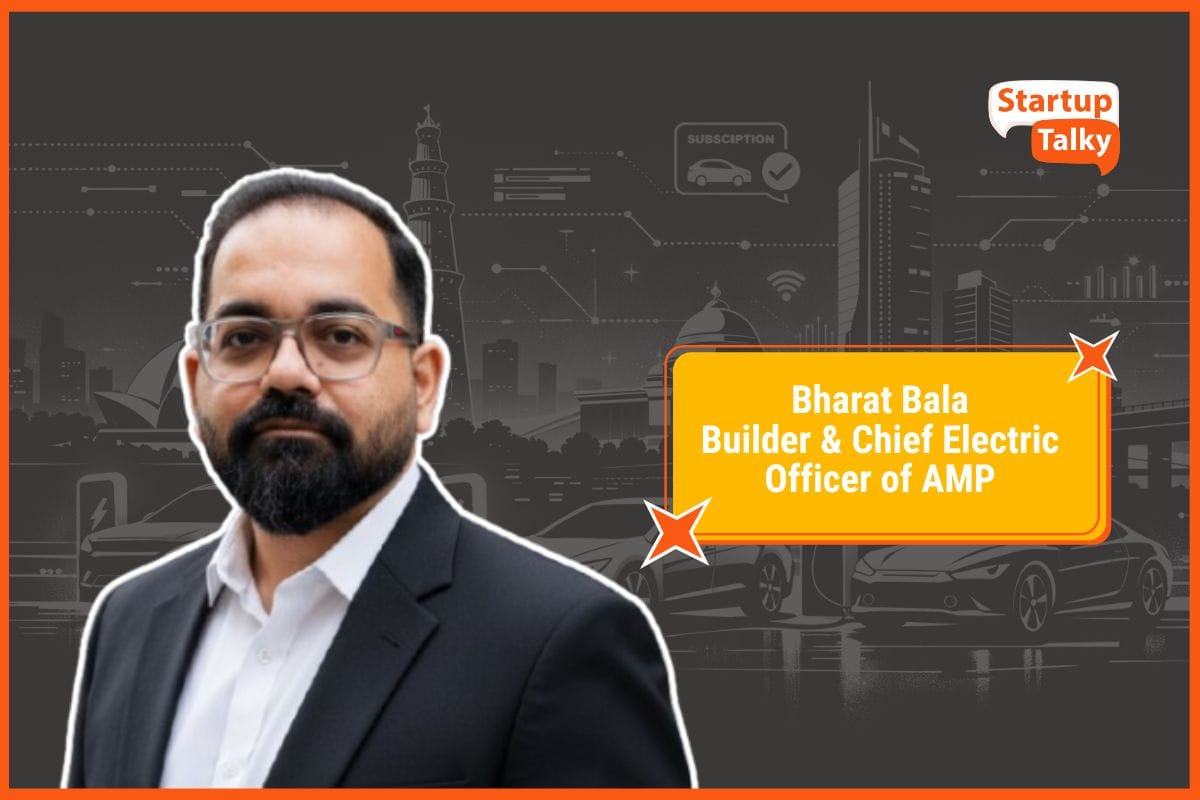
StartupTalky presents Recap'25, a series of exclusive interviews where we connect with founders and industry leaders to reflect on their journey in 2025 and discuss their vision for the future.
In this edition of Recap’25, StartupTalky speaks with Bharat Bala, Builder & Chief Electric Officer of AMP, who reflects on a foundational year that marked the company’s transition from concept to real-world deployment. Bala describes 2025 as “Day 0” for AMP — the year the company incorporated, launched India’s first asset-light, tech-enabled premium EV subscription platform, and began live operations in NCR. He shares how AMP reimagined vehicle access for salaried professionals and MSMEs through subscription-led financial engineering that removes upfront costs, ownership risks, and depreciation challenges. The conversation explores AMP’s early traction, ecosystem partnerships, and deployment roadmap, along with insights into navigating trust barriers, EV taxation complexity, and charging infrastructure gaps. Bala also outlines how AI, telematics, and battery intelligence are shaping AMP’s roadmap, the growing shift toward financially intelligent EV adoption, and the company’s long-term vision to build India’s most trusted, scalable premium EV mobility platform as it prepares for multi-city expansion in the years ahead.
StartupTalky: How would you sumarise AMP's company’s journey in 2025? What key milestones, product updates, or deployments made this year special?
Bharat Bala: 2025 was DAY 0 for AMP, marking our transition from inception to market momentum and real-world deployments. This year, AMP incorporated itself, built operations and launched India’s first asset-light, tech-enabled premium electric vehicle (EV) subscription platform, making high-performance EVs accessible and fundamentally reimagining vehicle access for salaried professionals and MSMEs. The core innovation was AMP’s subscription and financial engineering, which eliminated traditional ownership barriers, including high upfront costs, maintenance risks, depreciation, and financing hassles and offered a tax-efficient, practical solution that resonated with users and businesses alike.
The company launched operations in the National Capital Region (NCR) with a deployment target of 200 premium EVs in the next 12 months, on the back of strong initial traction and a scalable expansion plan. Execution of partnerships with charging networks, service providers, and insurers are underway to boost the platform’s ecosystem readiness. AMP’s model has definitely unlocked recurring income opportunities for MSMEs by enabling vehicle assets to generate annuity-style returns instead of depreciating on balance sheets. Overall, 2025 has laid the foundation for AMP’s positioning as a scalable, financially intelligent mobility platform, blending premium experience, digital convenience, and sustainable EV adoption and the first steps for a multi-city full stack expansion in the coming years.
StartupTalky: What were the biggest challenges you faced in the EV and mobility sector this year, and how did your team navigate them?
Bharat Bala: Over this year AMP encountered several real-world challenges typical of any category-creating model. We had to build trust around a subscription-led approach, address concerns about the long-term reliability of premium EVs, and navigate India’s uneven and evolving charging infrastructure. Many early users were understandably hesitant to move away from traditional vehicle ownership, while MSMEs struggled with the complexity and ambiguity of EV-related taxation.
We responded with focused customer education, strengthened our ecosystem through strategic charging and service partnerships, and introduced a transparent, tax-efficient leasing framework that simplified decisions for both salaried professionals and businesses. By staying agile through early frictions, and calibrating a compliant, yet user friendly framework, the team converted uncertainty into momentum, generating early wins for premium EV adoption to be seamless, predictable, and financially intelligent.
StartupTalky: How has demand for electric two-wheelers / last-mile mobility changed in the past 12 months? Any shifts in adoption, customer segments, or use cases?
Bharat Bala: While not our segment, our exposure to the industry gives us the belief that demand for electric two-wheelers and last-mile mobility has accelerated over the past year, driven by high fuel costs, congestion, and expanding charging availability. But the bigger shift is who is choosing EVs and why they are choosing them. What was once a category dominated by gig workers and delivery fleets has now broadened to include MSMEs, small business owners, and daily commuters who want predictable operating costs and low-maintenance mobility.
MSMEs in particular are moving parts of their fleet to EVs to reduce running expenses, improve route efficiency, and gain more control over monthly costs. Use cases have also expanded, from hyperlocal deliveries to retail distribution networks, field-service teams, and urban professionals who want reliable, cost-efficient, and downtime-free mobility. Overall, the market is moving from early experimentation to purpose-driven, financially intelligent adoption, where cost savings, operational efficiency, and long-term reliability are the core decision drivers, perfectly aligned with AMP philosophy of predictable, asset-light mobility.
StartupTalky: How is technology, especially AI, telematics, and battery intelligence, shaping your product roadmap?
Bharat Bala: At AMP, technology isn’t an add-on, it is the operating system that powers asset-light access, premium mobility-as-a-service, and predictable, financially intelligent returns. AI, telematics, and battery intelligence will form the backbone of our product roadmap, enabling us to scale efficiently while keeping risk low. Telematics provides deep visibility into driving patterns, range behaviour, utilisation, and charging needs. This intelligence allows us to maintain 85–90% asset utilisation, optimise vehicle underwiring, and ensure near-continuous uptime, a core pillar of the AMP Model. Battery intelligence is equally foundational. By monitoring degradation, analysing charging cycles, and predicting long-term performance, we protect asset health, strengthen user trust, and safeguard investor yield.
It ensures every vehicle remains a dependable, revenue-generating asset throughout its target lifecycle. AI will tie various unrelated data sets together - underwriting, pricing, risk scoring, lifecycle management, and secondary-market rotation, converting every EV from a static product into a dynamic performing digital asset over time. AI enables us to predict better outcomes for users and our asset partners.In essence, technology is what will turn AMP into a high-performance frictionless system, intelligent, scalable, and financially optimised for both mobility users and asset owners.
StartupTalky: What operational or manufacturing learnings helped you improve performance, cost efficiency, or reliability this year?
Bharat Bala: Our strongest operational learnings came directly from real-world intelligence. User Telematics gave us clarity on how EVs perform across conditions, range variation, peak-hour load, charging stress, and utilisation cycles. These insights allowed us to strategize and design protocols for deployment, and maintenance, for consistently high uptime while managing servicing costs. We can strengthen lifecycle management by analysing battery health patterns, enabling us to preserve residual value and improve long-term asset efficiency. Streamlined user onboarding, deeper insurance integrations, and stronger lending, charging and service partnerships will further improve reliability. Together, these learnings help AMP plan for higher utilisation, predictable operating costs, and a consistently premium, low-friction experience for every user.
StartupTalky: What partnerships, collaborations, or ecosystem developments played a key role in your company’s growth in 2025?
Bharat Bala: This year we initiated partnerships to power AMP’s value-first mobility model. Our collaborations with OEMs, Lending partners, Insurers, Dealers and Distributors allowed us to widen our reach for securing dependable supply channels at scale. Deeper integration with our leasing partners, NBFCs, and banking networks will streamline access to tax-efficient mobility plans digitally.
Our engagement with sustainability groups and EV ecosystem has advanced broader conversations around electrification and responsible mobility especially for our GCC partnership executions. Collectively, these partnerships have reinforced AMP’s Model from DAY 0, enhancing our scope for scale, reliability, and operating efficiency.
StartupTalky: What metrics matter the most to you when evaluating product success and market fit in the EV mobility space?
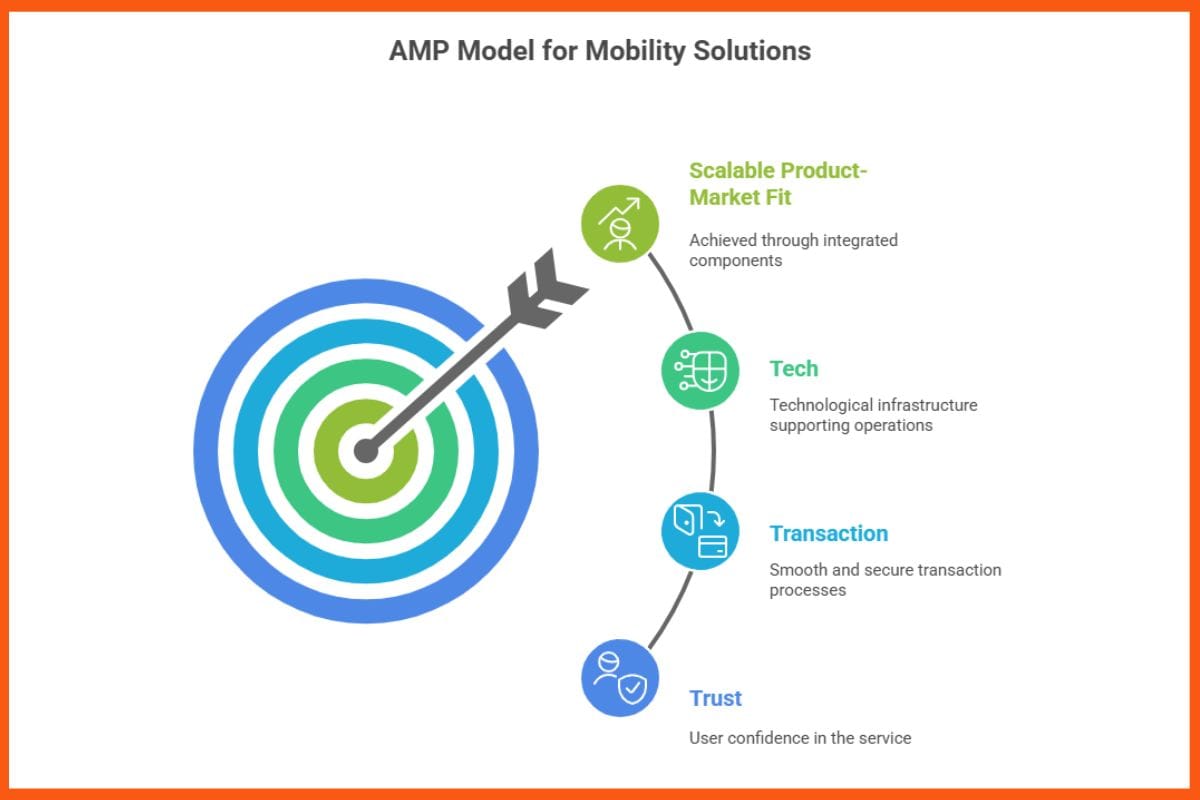
Bharat Bala: Our metrics are not performance indicators, they are signals of user trust and operational discipline within our asset-light mobility model. Total Cost of Ownership (TCO) is central; our model must consistently deliver lower, more stable lifetime costs/savings than traditional ownership. Risk from a legal, compliance, insurance, Motor vehicle act and driver-related, must be mitigated continuously through continuous engagement and analytical intelligence.When Trust, Transaction and Tech are integrated in sequence it is the first steps to a scalable product-market fit. The AMP Model is delivering exactly that – one car at a time.
StartupTalky: Looking ahead to 2026, what opportunities do you see emerging in India’s EV and last-mile mobility market?
Bharat Bala: By 2026, India’s EV landscape will be driven by affordable access, digital native- experiential first adoption, and a more dependable charging ecosystem. As infrastructure strengthens beyond metros, Tier-2 and Tier-3 cities will also emerge as EV adoption corridors creating EV friendly regions for e.g. extended NCR. MSMEs and micro-fleets will increasingly consider EVs for Low Capex, predictable Opex and low operational risk. Sectors like last-mile logistics, e-commerce, and corporate mobility will fast-track electrification due to the clear advantages in cost efficiency, compliance, and ESG requirements. Advancements and standardisation in battery design, Analytics, intelligence, telematics, and lifecycle management will enhance confidence in EV assets and reduce long-term uncertainty. For AMP, these shifts will create more opportunities and scale for our premium flexible and financially intelligent mobility solutions.
StartupTalky: What is your long-term vision for the company, and what strategic steps are planned for the next phase of growth?
Bharat Bala: Our long-term vision is to build India’s most trusted, intelligent, and scalable premium EV mobility platform, a future where access-based mobility becomes more rewarding and financially smart than ownership. We are creating a nationwide ecosystem where EVs operate as efficient, high-uptime, yield-generating assets for both users and investors. Where with the right partnerships and integrations EVs can be accessed at the click of a button in real-time. The next phase of growth focuses on deeper expansion into NCR, followed by MMR and Hyderabad along with the extended Tier-2 and Tier-3 markets surrounding these metro regions, strengthening our enterprise MSME solutions, and advancing our technology stack across analytics, telematics, and lifecycle management. We are also focussed on expanding our premium EV portfolio by forging stronger OEM and infrastructure partnerships. This roadmap we hope puts AMP as a leading enabler of India’s transition toward flexible, premium, and financially intelligent EV mobility.
StartupTalky: What practical advice would you give to founders building in India’s EV ecosystem today?
Bharat Bala: Founders building in India’s EV ecosystem need focus, patience, and an obsession with ground-level execution. My biggest lever: prioritise reliability, predictability in generating trust, these matter far more than futuristic ideas that don’t solve India’s immediate adoption barriers.Build strong phygital models that combine on ground operational understanding with online digital workflows. Invest time in understanding the EV ecosystem , they influence 70% of your challenges and your opportunities. Scale will ultimately be defined by the depth of your partnerships.
Above all, stay agile. India’s EV landscape evolves fast. Founders who adapt quickly, stay disciplined on basics, and listen closely to users are the ones who’ll build companies that last
Explore more Recap'25 interviews here.