

Dr. Kamal Chhabra of KC GlobEd on How Personalised, Data-Driven Learning Shaped Global Finance Education
📝Interviews
StartupTalky presents Recap'25, a series of exclusive interviews where we connect with founders and industry leaders to reflect on their journey in 2025 and discuss their vision for the future.
In this edition of Recap’25, StartupTalky speaks with Dr. Kamal Chhabra, Founder and CEO of KC GlobEd, on how the company shifted its focus from rapid feature expansion to building a more personalised, learner-centric education experience in 2025. Reflecting on changing student expectations, Chhabra explains how predictable study paths, data-backed progress tracking, and vernacular learning support became central to helping learners stay consistent and confident throughout their preparation journey.
He goes on to discuss how KC GlobEd revamped its global finance certification programs—including US CPA, US CMA, US EA, and UK ACCA—to align with evolving international standards and learner behaviour. The conversation explores the growing demand for global certifications among students from Tier 2 and Tier 3 cities, the rise of working professionals seeking career mobility, and the role of AI-driven analytics and mentorship in improving engagement, retention, and outcomes. Chhabra also shares his perspective on how personalised learning, quiet AI integration, and global accessibility will define the next phase of EdTech growth.
StartupTalky: Looking back at 2025, what were the most significant milestones or improvements your company achieved in platform features, content, or learner engagement?
Dr. Kamal Chhabra: 2025 was a year where we focused less on adding features and more on improving how students learn on a daily basis. The biggest shift came from strengthening our personalised learning engine. Students now receive study plans that adjust to their pace and behaviour in a more accurate way. We also expanded vernacular learning support because many learners from smaller cities were struggling with English-heavy content.
On the content side, we rebuilt large parts of our US CPA, US CMA, US EA and UK ACCA prep material to match the latest global blueprints. Students responded well to shorter videos, cleaner notes, and exam-style questions. The change was visible in engagement numbers, doubt sessions, and the consistency with which students followed their plans. We also saw strong participation in mentorship sessions, especially from working professionals who wanted guidance on exams and career navigation. That personal connection made a big difference in how students stayed motivated through tough chapters.
StartupTalky: How did learner behaviour and expectations evolve this year? Were there any notable trends in engagement, course selection, or skill demand?
Dr. Kamal Chhabra: Student behaviour changed sharply in 2025. Learners nowadays want more predictability in their preparation. They want to know how much time a chapter needs, if they are improving, and what they should focus on next. We saw a strong shift toward data-driven learning. Students relied on analytics far more than previous years, which pushed us to improve progress tracking. Another clear trend was the rise in demand for global finance certifications. Interest in US CPA and US CMA grew the fastest, especially among those working in GCCs and multinational firms. Many students reached out with very specific career goals. They were asking about roles in US taxation, audit, FP&A, and global compliance.
We also saw younger learners joining earlier. Final-year students, and sometimes even second-year undergraduates, were starting their international credential journey. They wanted a head start and clearer visibility on global opportunities.
StartupTalky: Technology and AI are increasingly shaping digital education. Which tools or innovations had the biggest impact on learning outcomes, personalisation, or operational efficiency in 2025?
Dr. Kamal Chhabra: The biggest impact came from better learner analytics. When a platform understands how a student learns alongside knowing what they repeat, and where they lose confidence, it becomes easier to support that student. Our internal tools became far more reliable this year, which helped us personalise the experience at scale. AI also made doubt-resolution smoother. Students could raise a question directly from the module, and the system routed it to the right academic expert. That reduced response time and improved clarity.
Another major shift happened in content design. AI helped us organise reading material in a cleaner way, especially for regulations, tax laws, and heavy theory sections in US EA. It saved the team time, which they used to improve student support sessions and mock exam reviews. The role of technology was simple i.e., to remove friction and make the learning path clearer.
StartupTalky: The EdTech sector saw shifts in enrolment patterns, regional adoption, and digital accessibility this year. What patterns stood out to you?
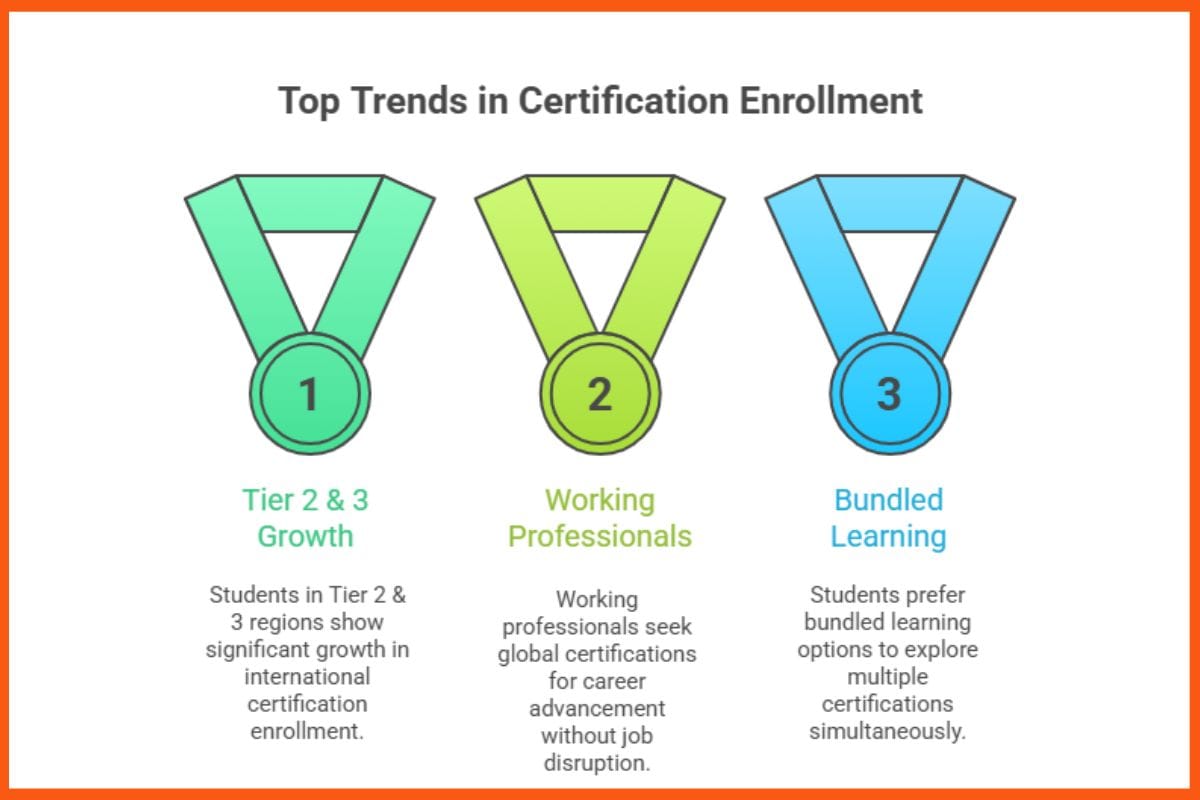
Dr. Kamal Chhabra: We noticed a clear growth coming from Tier 2 and Tier 3 regions. Students there were more confident about choosing international certifications. Better internet access and mobile-friendly learning made that possible. Many learners from smaller cities joined weekend batches and self-paced tracks because they were balancing jobs, family responsibilities, or college work. Enrollments from working professionals also went up. People in audit, accounting, and taxation wanted a way to move into better roles without leaving their jobs. Global certifications gave them that path. Another trend was students choosing bundled learning options instead of single courses. They wanted to explore US CPA, US CMA, US EA, and UK ACCA under one roof to understand which path suited them best.
StartupTalky: What challenges, whether in content delivery, learner engagement, or technology adoption, did your team face in 2025, and how were they addressed?
Dr. Kamal Chhabra: The biggest challenge was managing learner drop-offs in long chapters, especially in taxation and auditing sections. Students often lost momentum during heavy theory. We solved this by restructuring lessons into shorter blocks, adding checkpoints, and increasing mentor interaction. Engagement improved steadily after that. Another challenge was related to working professionals. Many of them studied late at night, so they needed faster doubt support. We expanded the academic team and built internal tools to route doubts more efficiently.
Technology adoption among first-time online learners from smaller towns also needed attention. Our team introduced onboarding walkthroughs and personal orientation calls, which helped students settle in comfortably. Every challenge pushed us to strengthen the support system around the learner, not just the content.
StartupTalky: Looking ahead to 2026, which learner segments, courses, or technologies do you see growing fastest, and why?
Dr. Kamal Chhabra: Two groups are growing sharply: fresh graduates who want global mobility and working professionals who feel stuck in routine roles. Both groups see certifications like US CPA, US CMA, US EA, and UK ACCA as pathways to better jobs. In terms of courses, US CPA and US CMA will continue to lead because GCCs and multinational firms are expanding heavily in India. Demand for US EA will rise too because global tax work is shifting to India in a big way. On the technology front, personalised learning will grow faster than anything else. Students want platforms that understand how they study and guide them accordingly. AI tutors, analytics-driven study plans, and vernacular support will shape the next phase.
StartupTalky: From your experience, what long-term changes do you anticipate in the EdTech landscape, particularly around AI, personalised learning, and global accessibility?
Dr. Kamal Chhabra: EdTech is moving toward a model where learning feels more personal and less overwhelming. AI will play a strong role, but not in a flashy way. It will sit quietly in the background and help students stay consistent, understand better, and track progress without stress. Personalised learning will become the norm because no two learners study the same way. Platforms will rely more on behavioural data, learning patterns, and confidence levels to guide preparation. Global accessibility will expand. Students in smaller towns will choose international certifications with the same confidence as those in metros. As hiring becomes borderless, global exams will become part of mainstream career planning, not a niche choice.
Explore more Recap'25 interviews here.