

Ethical Consumption Moves Mainstream: What It Means for India’s Next Wave of Entrepreneurs
✍️ Opinions
This article has been contributed by Mr Haresh Mirpuri - Founder of Essensai067 & Aranyani
India’s consumption landscape is changing in ways that are more structural than cyclical. While incomes rise and aspirations expand, a parallel shift is taking shape in how people evaluate the products and services they bring into their lives. Consumers are asking sharper questions about origins, impact and accountability. This change is no longer confined to niche segments or premium markets. It is becoming part of mainstream buying behaviour and it is reshaping what it means to build and scale a business in India.
Conscious entrepreneurship, once considered a moral choice, is turning into a strategic one. As values begin to influence purchase decisions, founders and businesses are being asked to rethink not only what they sell but also how they create, distribute and communicate.
Several studies show that Indians are now factoring sustainability into their buying decisions. A recent Bain & Company report notes that close to 80% of consumers are worried about environmental impact, and around 60% are willing to pay extra for products made responsibly. Another recent study says: about 76% of people say they value honest, transparent communication from brands. Put together, it’s clear that value-driven consumption is no longer a niche idea, it’s becoming part of everyday behaviour.
How Entrepreneurs are Responding
A new generation of Indian entrepreneurs is beginning to position responsibility at the core of business design. Their focus is not limited to product features. It extends to sourcing, supply chains, human resource practices and the long-term impact of what they create.
This is visible across sectors. Retail brands are trying out circular design ideas, using recycled materials and slowing down their fashion cycles instead of chasing constant churn. In hospitality and real estate, a lot of developers are leaning toward models that focus on wellbeing — things like bringing nature into built spaces and creating areas where people can connect with one another. Even in tech, companies are starting to think more seriously about data ethics, fairness in algorithms and designing user experiences that are open and easy to understand.
These shifts reflect a fundamental realisation. Consumers are no longer buying only efficiency or convenience. They are buying alignment with their values. Trust, credibility and clarity increasingly influence brand loyalty and willingness to pay.
Changing Consumer Logic in a Rapidly Urbanising India
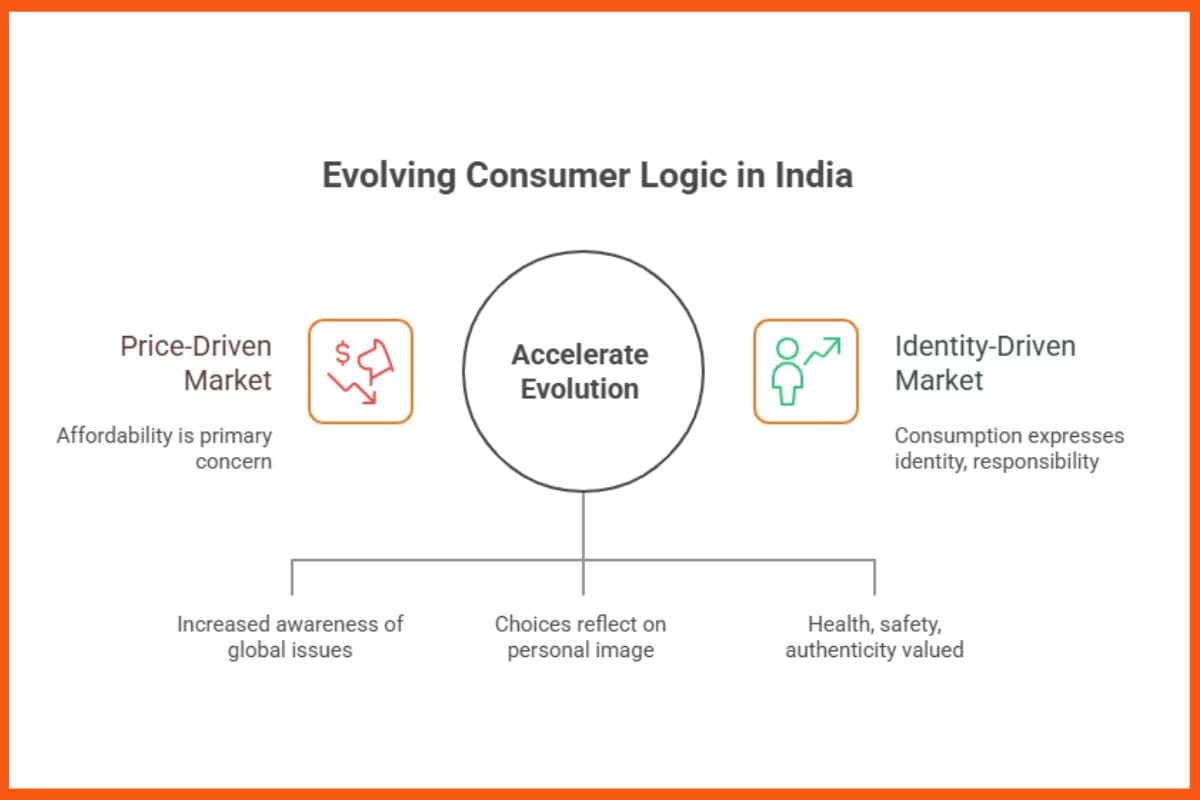
India’s identity as a price-driven market is evolving. While affordability still matters deeply, the considerations shaping purchase decisions have broadened. Younger consumers, especially in Tier 1 and Tier 2 cities, view consumption as an expression of identity and responsibility.
Three forces are accelerating this evolution.
First, exposure to global conversations around climate, work conditions, ethical production has increased sharply.
Second, social media has made what we buy far more visible: almost everything can be traced back, and that naturally makes people think twice about how their choices reflect on them.
Third, there’s a noticeable cultural shift toward health, safety and a sense of authenticity in what people bring into their homes.
Put together, these forces are shaping a market where transparency earns trust and anything vague or unclear is quickly questioned. Brands that communicate clearly about their practices are gaining stronger traction.
Solving the Intention–Action Gap
The real challenge now isn’t awareness. The harder part is helping them act on it. If conscious consumption is to grow, entrepreneurs have to build systems that make responsible choices feel simple, affordable and easy to trust.
A lot of this comes down to practical decisions. Working with local suppliers, for instance, can cut down transport waste and make supply chains more predictable. And tools that show where a product comes from — even in small ways — give consumers the confidence that what they’re buying is genuinely responsible.
Reworking packaging can reduce costs and environmental footprint simultaneously. Even small interventions in product design and distribution can create large cumulative impact.
Reimagining how we design retail spaces in a rapidly urbanising India will play a huge role in the way ethical consumption grows. People aren’t just picking products differently anymore; they’re also paying attention to the kind of environment they step into — whether a shop, a neighbourhood market or a large community space. They want places that feel healthier, calmer and a little more mindful.
In practice, this can mean many things: walkable lanes instead of cramped footpaths, shared amenities that cut down on individual resource use, stores or malls that bring in natural light and proper ventilation, and areas that nudge people to interact instead of rushing in and out. When these elements come together, conscious choices don’t feel like an extra effort. They simply become part of the flow.
And once retail spaces evolve in this way, people respond almost automatically. They tend to waste less, share more and stay connected to their surroundings. Entrepreneurs who pick up on this link between physical spaces and buying behavior usually spot new opportunities earlier — whether they’re building for retail, real estate, hospitality or neighborhood services.
Toward a More Intentional Consumer Economy
India seems to be moving past a few one-off “green” brands and into something bigger - an ecosystem where responsibility quietly slips into everyday business decisions. One can already see this shift playing out, and it’s likely more companies will adopt conscious practices simply because people now expect it. The ones that will really stand out are those that treat responsibility as part of how they work — how they source, how they build, and how they treat their users. At its core, it’s about building something people can trust. Conscious entrepreneurship is no longer a passing mood, it’s slowly becoming the way India builds, innovates, and shapes its consumption habits.
 Damini Bhandary