

Kamaldeep Singh of Dealshare on Building Bharat’s Savings Platform, 2-Hour Grocery Delivery, and Value-First Commerce
📝Interviews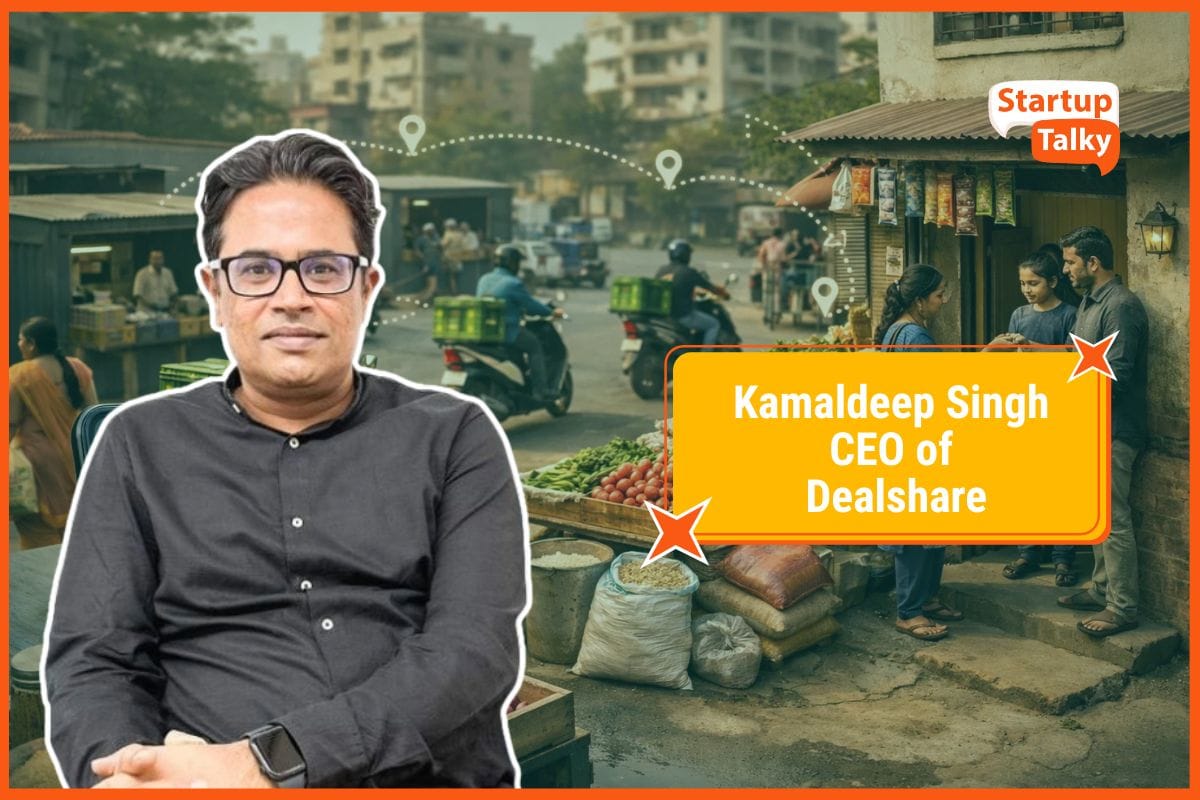
StartupTalky presents Recap'25, a series of exclusive interviews where we connect with founders and industry leaders to reflect on their journey in 2025 and discuss their vision for the future.
In this edition of Recap’25, StartupTalky speaks with Kamaldeep Singh, CEO of Dealshare, about transforming value commerce for India’s middle-income households. He shares how Dealshare 2.0 marked a strategic reset in 2025 — shifting from a deals-led platform to a hyperlocal, full-basket grocery model built on affordability, private labels, and a reliable 2-hour delivery promise.
Singh discusses the operational overhaul behind this transformation, including dark-store expansion, cold-chain infrastructure, and tighter regional sourcing partnerships that helped strengthen both margins and customer trust. He also explains the deeper insight behind serving “Bharat” — where aspiration is rising, but affordability, familiarity, and consistent value still define daily shopping behaviour. The conversation further explores lessons from his Big Bazaar journey, Dealshare’s focus on private brands and regional ecosystems, and the company’s 2026 priorities around deeper market penetration, tech-enabled efficiency, and building long-term trust with value-conscious families.
StartupTalky: To begin, could you briefly share your journey and what led you to take on the role of CEO at Dealshare?
Kamaldeep Singh: I have spent over two decades working in the retail and consumer goods sector. Over this period, I have seen many categories grow, new brands and retail formats emerge, and customer behaviour evolve with the rise of e-commerce and now quick commerce across regions and income segments. While organised retail and ecommerce has grown multifold in India, the market is large, and it presents great opportunities to grow and make lives better for millions of customers. Bharat is very large segment of the market. At Dealshare, our mission is to serve.
The size of the opportunity is significant, with scope to build new brands, categories, and platforms specifically for Bharat. Taking on the CEO role at Dealshare is an opportunity that is both challenging and larger enough to create impact at scale. Our network design, technology, assortment, private brand portfolio is designed to uniquely serve under-served middle income families. With our low prices, quality, private brands and consistent 2 Hour delivery, we are well positioned to fulfil aspirations of our customers by providing them with affordability and access.
StartupTalky: Dealshare is built for India’s middle-income, price-sensitive households. What core insight about “Bharat” shaped this value-led model?
Kamaldeep Singh: India today is young, connected, and increasingly aspirational. With deep mobile penetration and widespread digital access, consumers across geographies are informed, aware, and engaged, tracking trends, comparing products, and making considered choices through their phones.
But aspiration alone does not define Bharat. Affordability and accessibility remain the real determinants of everyday consumption. DealShare 2.0 was built around this reality, with a simple belief that products should feel aspirational, purchases should feel rewarding, and prices should remain firmly within reach.
Unlike, affluent customers who often prioritise speed or premium positioning, Bharat households seek value, assured quality, and access. That’s why curated assortment of private and regional brands, and convenience of home delivery are at the centre of Dealshare’s model. Private labels such as Chemko (home care), Khao Piyo (snacks), Sampoorti (staples), and Swaccha and LyfGlow (personal care) now account for close to 40 percent of our assortment, with around 55 percent customer penetration. This is supported by strong regional brand partnerships, a full grocery basket, pricing benchmarked below general trade, and a reliable two-hour delivery experience with no hidden fees.
StartupTalky: 2025 has been a transformative year for Dealshare with the launch of Dealshare 2.0. What were the key new initiatives, operational changes, and milestones achieved this year that reshaped the business, especially the shift to a 2-hour delivery model?
Kamaldeep Singh: 2025 was truly transformative for us with the launch of Dealshare 2.0. We executed a complete operational and strategic reset, repositioning ourselves as Bharat’s premier savings destination for middle-income households. This shift moved us from a deals-led platform to a hyperlocal grocery platform offering daily essentials at everyday low prices, backed by a 2-hour delivery promise.
As part of this transformation, we began with a comprehensive supply chain overhaul. We redesigned our network around dark stores located closer to demand centres to drive efficiency. WMS-enabled warehouses now manage inventory with greater precision, while cold storage reliably supports fresh, chilled, and frozen products. Our assortment has expanded into a full-basket grocery offering, anchored by private labels alongside strong regional and local brands. Staples are benchmarked directly to wholesale markets.
The most significant operational shift was our commitment to a consistent 2-hour delivery model. This is powered by a scalable rider network, automated last-mile management, and smart order bundling, enabling dependable service without delivery fees. In parallel, we upgraded the customer experience with app and web platforms designed specifically for Bharat.
We relaunched in priority markets including Jaipur, Lucknow, Kolkata, and Ghaziabad, seeing strong early traction. Jaipur delivered 40% order growth post-relaunch, with 60% coming from repeat customers. Lucknow saw 75% growth with 65% repeats. These efforts also strengthened partnerships with regional and local suppliers such as Lakdaji, Miraj, Shree Ram, Pawan in Jaipur; Nourish, Parijat Spices in Lucknow; and Meri Chai, Sobisco, City Gold in Kolkata.
The year closed on a strong note with our Mehnat Ki Kamayi, Haq Se Bachao campaign, which brought our value-first promise to life by celebrating the dignity of saving smartly and protecting hard-earned income for value-conscious families.
StartupTalky: What were the biggest operational or execution challenges you faced during the 2025 transformation?
Kamaldeep Singh: The core challenge was to reimagine and build a platform that provides convenience and quality while providing value. This required going beyond lower-cost sourcing or margin negotiations. We invested in building a network, technology, infrastructure, and investing in creating private brands that promise quality at affordable prices. This meant overhauling our supply chain end to end. We repositioned dark stores closer to demand centres, implemented WMS-enabled warehouses for precise inventory management, added cold storage to support fresh and frozen categories, and rolled out a reliable 2-hour delivery model.
For Bharat’s value-conscious households, even small inconsistencies break trust. Building repeatable processes that delivered reliable quality at scale, without increasing costs, was the most demanding part of the transformation. Our teams adapted quickly to new automated last-mile systems, rider models, and upgraded app features that improved tracking and customer support. Throughout the transformation, strict cost discipline and tight cross-functional coordination were non-negotiable, because trust in our value proposition depended on it.
StartupTalky: How have dark stores, dense delivery clusters, and cold-chain-enabled warehouses improved speed, cost control, and customer trust in 2025?
Kamaldeep Singh: Our 2025 infrastructure upgrades were true game changers for speed, cost efficiency, and customer trust. By positioning dark stores closer to demand centres and building dense delivery clusters, we now consistently guarantee 2-hour deliveries through shorter routes and optimized order bundling.
In Jaipur, eight dark stores supported by 10 Dealshare Marts, along with six dark stores in Lucknow and sixteen in Kolkata, have significantly reduced transportation costs and handling damage. These efficiencies allow us to keep prices lower with no hidden fees, reinforcing our value promise.
Cold-chain-enabled warehouses have further enabled a reliable expansion into fresh, chilled, and frozen categories without compromising quality. Combined with WMS-driven inventory precision and real-time app tracking, this infrastructure powers our full-basket grocery platform across private labels and regional brands.
The result is not just faster delivery and better economics, but consistent, dependable service that strengthens long-term customer confidence.
StartupTalky: What role do local sourcing and regional demand play in serving cities like Jaipur, Lucknow, and Kolkata?
Kamaldeep Singh: Local sourcing and regional brands sit at the heart of Dealshare’s value proposition. They allow us to closely align our assortments with local tastes, preference, and consumption habits, while also helping small and home-grown businesses scale their reach sustainably.
In Jaipur, we partner with trusted regional players such as Saras Dairy, Krishna, Goras, Oswal, Laxmi Bhog, Bikaji, Chambal, Parampara, Pawan, and Shyam Spices. In Lucknow, staple producers and regional favourites including Bail Kolhu, Gyan, Nourish, Ghadi, Parijat, Ashok Spices, and Kumud Rice form a meaningful share of our assortment. These partnerships ensure customers access familiar, trusted products at affordable prices, supporting planned, value-driven household shopping.
We follow the same approach in Kolkata through partnerships with brands like Meri Chati, Sobisco, and City Gold. Across all markets, a deep understanding of seasonality, vernacular preferences, and basket behaviour is critical to driving relevance, repeat usage, and long-term customer loyalty.
StartupTalky: What lessons from your time at Big Bazaar have helped you scale Dealshare’s value-commerce strategy?
Kamaldeep Singh: My time at Big Bazaar shaped three core beliefs that directly guide how we have built Dealshare.
First, think India-first. Bharat is not one market, but a collection of micro-markets shaped by region, language, seasons, and household cash cycles. At Big Bazaar, success came from respecting this diversity rather than forcing standardisation. That thinking continues at Dealshare, where assortments, pricing, and sourcing are designed locally. A Bharat-first lens is an operating principle, not a slogan.
Second, a customer first mindset is essential to win. A customer-first mindset means putting the customer's needs, preferences, and experience at the centre of every business decision, shifting focus from just products to creating genuine value and trust throughout the entire customer journey. We have worked customer backwards in building Dealshare2.0. Our belief in putting value first without compromising on quality and convenience.
Third, always think different. Big Bazaar taught us that scale alone is not enough. What matters is offering something meaningfully different. At Dealshare, that differentiation comes from a sharp value proposition built on local sourcing, private labels, and hyperlocal execution. We are not trying to be everything to everyone, but deeply relevant to middle-income Indian households.
Together, these lessons shaped a value-commerce strategy rooted in respect for the Indian consumer, disciplined execution, and trust built at scale.
StartupTalky: Looking ahead to 2026, what are the top priorities for Dealshare in terms of expansion, technology, or customer experience?
Kamaldeep Singh: Looking ahead to 2026, our priorities are centred on disciplined, sustainable growth.
We plan to deepen network density in existing markets, expand private labels, and strengthen regional partnerships to enhance full-basket availability, including fresh categories. Customer experience remains the anchor, predictable savings, prices consistently lower than general trade, reliable 2-hour delivery with no hidden fees, and a simple, intuitive platform.
Consistency, relevance, and trust will guide how Dealshare grows in the years ahead.
Explore more Recap'25 interviews here.