

Building AI That Gets Work Done with Keshav Agarwal of Aurjobs AI
📝Interviews
In this Year-End Exclusive Interview, StartupTalky speaks with Keshav Agarwal, CEO of Aurjobs AI, who reflects on a year defined by a deeper shift in how businesses adopt Artificial Intelligence from insight-driven experimentation to execution-led impact. Agarwal shares why execution has emerged as the biggest bottleneck in AI adoption, how early learnings from hiring teams shaped Aurjobs AI’s evolution, and what it truly means to trust AI agents with real responsibility. He also discusses building beyond traditional AI categories, balancing automation with human control, and his vision for 2026, where AI moves from a support tool to a trusted execution partner quietly driving outcomes across everyday business operations.
StartupTalky: For readers discovering Aurjobs AI for the first time, how would you describe what the company is building and the larger problem it aims to solve?
Keshav Agarwal: Aurjobs AI is building an AI execution platform focused on one simple idea: helping businesses move from intent to outcomes with far less operational friction. Most organizations today already know what they want to achieve - whether it’s scaling teams, driving growth, or keeping operations running smoothly. Yet progress often slows not because of poor decisions, but because execution gets fragmented across tools, processes, and hand-offs.
Aurjobs AI is designed to remove that complexity. Rather than asking teams to manage another system, it enables a more natural way of working with Artificial Intelligence - where intent is clearly expressed and execution happens quietly in the background. Aurjobs AI reflects a shift in how companies think about AI. Instead of using AI only for ideas, analysis, or support, it explores what it means to trust AI Agents with real responsibility. By bringing together multiple AI capabilities into a single execution-focused platform, Aurjobs AI aims to change how work gets done — making organizations faster, lighter, and more focused on what truly matters.
StartupTalky: The AI market is crowded today. What gap did you feel was still unsolved when you started building Aurjobs AI?
Keshav Agarwal: What we noticed early on was that AI had become powerful, but using it in real business environments was still surprisingly hard. Companies had access to intelligent systems, but turning those capabilities into consistent results required constant human involvement.
The missing gap was ownership of execution. Artificial Intelligence tools could suggest actions, generate content, or analyze data - but someone still had to chase follow-ups, move tasks forward, and ensure outcomes were delivered.
Aurjobs AI was built to close that gap. Rather than creating another dashboard or point solution, we focused on enabling AI to take responsibility for execution. That shift - from AI as a helper to AI as a doer - is what sets Aurjobs AI apart and why it opens up a very different opportunity in the AI landscape.
StartupTalky: Why do you believe execution has become the real bottleneck in AI adoption for businesses?
Keshav Agarwal: Most organizations today aren’t short on insights. They’re short on time and focus. Even when teams know exactly what needs to be done, execution slows down because work is spread across multiple tools, people, and processes. Valuable ideas lose momentum simply because coordination is hard.
Execution is the bottleneck because intelligence alone doesn’t drive growth - completed actions do. Aurjobs AI was built on the belief that Artificial Intelligence should not stop at recommendations, but help ensure work actually gets finished. When AI can carry execution forward, businesses see real gains in speed, consistency, and scale. This is why we believe the future of AI adoption is not about smarter answers, but about reliable execution.
StartupTalky: Hiring was an early use case for Aurjobs AI. What did work with hiring teams teach you?
Keshav Agarwal: Hiring teams gave us a very real view into operational complexity. They work under constant pressure, with multiple stakeholders, tight timelines, and disconnected systems.
What we learned was simple but powerful: hiring teams didn’t need more reports or suggestions. They needed help with the repetitive, coordination-heavy work — sourcing, screening, follow-ups, scheduling, and updates.
That insight shaped everything we built afterward. It made us realize that the real value of Large Language Models (LLMs) AI is not in telling teams what to do, but in reducing the workload required to do it. Those learnings helped Aurjobs AI evolve beyond hiring into a broader execution platform that applies to many business functions.
StartupTalky: In 2025, where did Aurjobs AI create the most measurable impact?
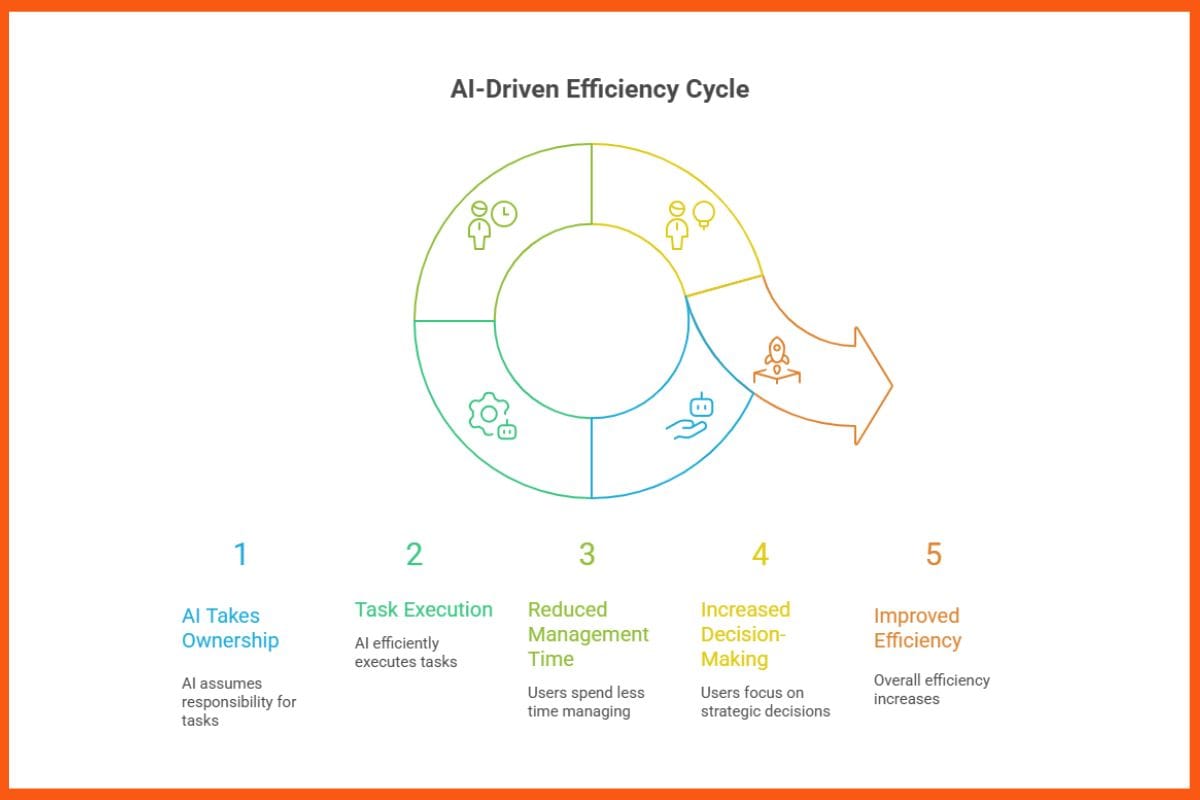
Keshav Agarwal: The biggest impact came in areas where work was repetitive, time-consuming, and coordination-heavy. Tasks like hiring operations, outbound communication, internal follow-ups, and routine workflows improved significantly once Generative AI was allowed to take ownership of execution. Users spent less time managing systems and more time making decisions.
What mattered most wasn’t the department - it was the type of work. Wherever execution complexity was high, Aurjobs AI delivered clear gains in speed and efficiency.
StartupTalky: As AI takes on more responsibility, how does Aurjobs AI think about trust and fairness?
Keshav Agarwal: Aurjobs AI approaches responsible AI in a very practical way. Trust comes from clarity - clear goals, clear outcomes, and clear accountability.
The platform is designed to rely on structured, role-relevant information rather than subjective assumptions, which helps reduce inconsistency as AI operates at scale. Just as importantly, teams maintain visibility into outcomes and can guide direction when needed.
For us, responsible AI isn’t about removing humans - it’s about ensuring AI works in a way that businesses can trust over time.
StartupTalky: How does Aurjobs AI balance automation with human control?
Keshav Agarwal: Aurjobs AI is built on a simple belief: automation should reduce effort, not take away ownership.
Users begin by defining intent - what they want to achieve, what success looks like, and what matters most. From there, Aurjobs AI takes on the responsibility of execution, allowing work to move forward without constant human coordination. What makes this approach different is transparency without micromanagement and Human-in-the-loop approach.
Progress and outcomes remain visible, but users aren’t forced to manage every step. When priorities change, direction can be updated instantly - without technical intervention or operational complexity.
By removing friction instead of control, Aurjobs AI enables a more confident relationship with automation. Users stay in charge of decisions and direction, while AI quietly handles execution in the background. The result is work that feels lighter, faster, and more focused - empowering people rather than replacing them.
StartupTalky: What was the biggest challenge you faced in 2025 while building Aurjobs AI?
Keshav Agarwal: The hardest challenge was building something that didn’t fit neatly into existing categories. The enterprise AI market is full of tools, platforms, and point solutions, and expectations are often shaped by those patterns.
Aurjobs AI intentionally avoided that path by focusing on execution rather than features. Communicating this idea - especially in a crowded market - required patience and clarity.
That challenge ultimately strengthened our positioning and confirmed that there is real demand for a different way to use AI.
StartupTalky: What common mistakes do companies still make when using AI?
Keshav Agarwal: One of the most common mistakes companies make is assuming that adopting AI automatically leads to transformation. In reality, many organizations introduce AI tools but continue working in the same old ways, using AI only for small or surface-level tasks while keeping core execution manual.
Another frequent issue is treating AI as a standalone tool rather than part of daily operations. AI is often used in isolation - for reports, content, or analysis - without being connected to how work actually flows inside the business. As a result, insights are generated, but follow-through still depends heavily on people.
Many companies view AI as an experiment rather than a long-term capability. They test tools but don’t redesign how work gets done. The organizations that see real impact are those that treat AI as a system for outcomes, not just a technology to try.
StartupTalky: Looking ahead to 2026, how do you see AI changing everyday business operations?
Keshav Agarwal: By 2026, AI will move from being a support function to becoming a trusted execution partner inside organizations. Work will be guided less by managing tools and more by clearly defined intent.
Aurjobs AI wants to play a foundational role in this shift - helping businesses operate with fewer hand-offs, faster execution, and greater focus on what truly matters. The long-term vision is simple: allow teams to spend less time managing work and more time building, deciding, and growing - while AI reliably handles execution in the background.
Explore more Recap'25 interviews here.