

Mahimm Gupta of PPMS Group on Tech-Driven Merchandising, Execution Excellence, and Scaling Retail Impact Across India
👨💻 StartupTalkers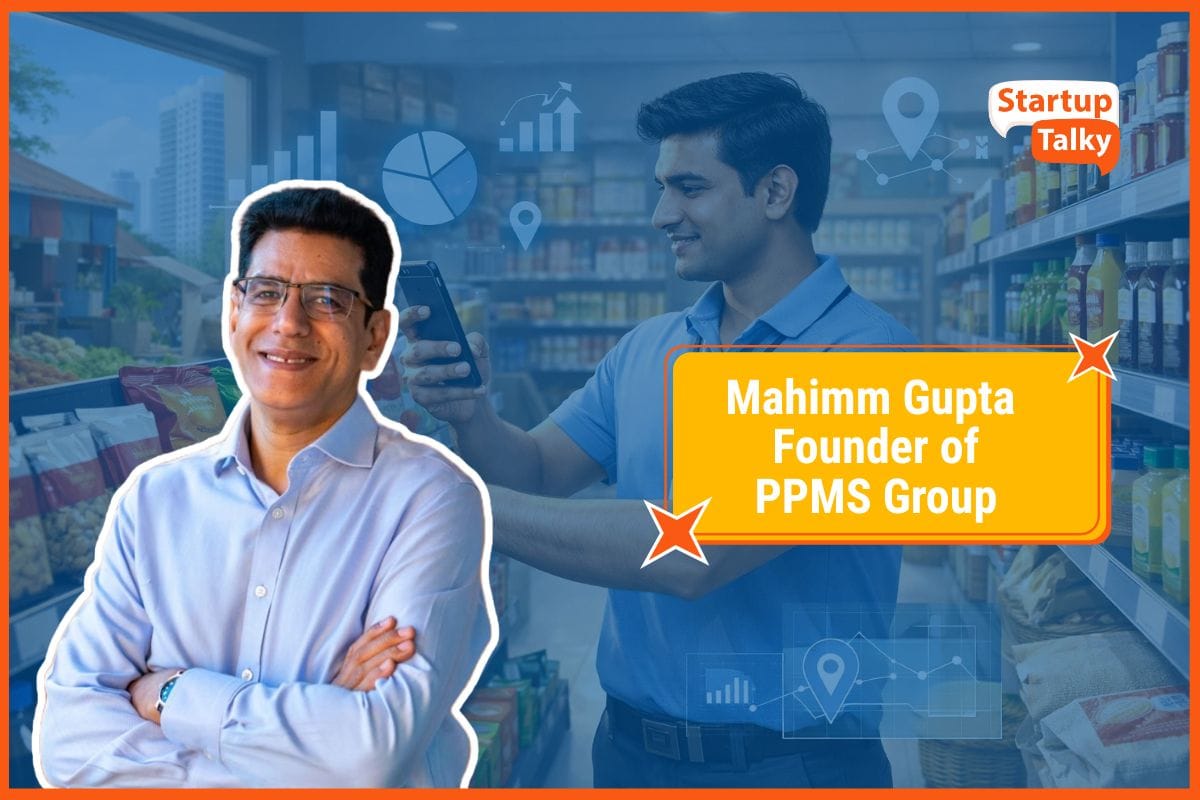
StartupTalky presents Recap'25, a series of exclusive interviews where we connect with founders and industry leaders to reflect on their journey in 2025 and discuss their vision for the future.
In this edition of Recap’25, StartupTalky speaks with Mahimm Gupta, Founder of PPMS Group, who shares insights on formalising India’s merchandising ecosystem through technology-led field execution, transparency, and data-driven accountability. He reflects on how in-store visibility, compliance, and real-time intelligence have become mission-critical as brands compete for shelf space across an increasingly complex and omnichannel retail landscape.
Gupta explains how PPMS’s proprietary platform FRAMe has evolved from a basic mobile reporting tool into a full-scale analytics and AI-enabled execution engine, processing millions of store images and enabling predictive compliance scoring for brands. The conversation explores how PPMS uses image recognition, automation, and dashboards to improve field productivity, optimise retail performance, and convert store-level data into actionable business insights. He also shares key learnings from 2025 and PPMS’s roadmap for 2026, including deeper AI integration through FRAMeAi and FRAMeIQ, enhanced learning tools, and expanded digital payout systems aimed at driving execution excellence and turning shoppers into buyers.
StartupTalky: To start, can you briefly explain what PPMS does and the problem it was originally built to solve in India’s retail and merchandising ecosystem?
Mahimm Gupta: Prior to 1999, merchandising was purely dependent on distributors with possibly 80% or more of the spends made without any visibility outcomes. The problems PPMS solved were anchored on 3 pillars of field execution – getting the visibility up, in time, and bringing absolute transparency in what was done. This led to the formalization of merchandising through our initiatives and the creation of a new service industry in India.
Starting with paper reporting and photos through cameras, digital and mobile-based reporting was introduced in 2008. The result has been a demonstrated 18-25% same-store sales growth across our customer base.
StartupTalky: How did 2025 turn out for PPMS in terms of scale, technology adoption, and demand from brands across General Trade and Modern Trade?
Mahimm Gupta: In 2025, PPMS services its clients through a deeply tech-enabled ecosystem of about 15,000 trained merchandisers and promoters who reach out to 170,000 stores a month, making 1.5 million store visits, across over 1,200 towns, and capturing over 30 million photos. A deeply technology-enabled PPMS deploys various tools that capture data, manage employees and make DBT payouts to retailers. Its analytic tools and image recognition capabilities enable PPMS to deliver client outcomes that are quality first, and delivered in full.
The retail ecosystem is fluid but still deeply dependent on physical retail. And PPMS continues to support our clients' in-store executions above benchmark to ensure our clients' brands perform better and win in the stores.
StartupTalky: With operations across 1,200+ towns and 170,000 stores, what systems or processes help PPMS maintain consistency, compliance, and execution quality at scale?
Mahimm Gupta: Our fully owned tech stack, built around FRAMe with geotagging, image-recognition audits, and automated scoring, lets us verify compliance in real time across more than 170,000 outlets. SEDEX certification and a spotless 26-year record back our ethical standards. Validated scoring through audits validates our performance. An integrated HRMS and focused training programs support our “Get It Done” culture, ensuring consistent execution across more than 1,200 towns with no reliance on third parties.
StartupTalky: FRAMe has been a key part of PPMS’s technology stack. How has this platform evolved, and what real business impact does it deliver for brands today?
Mahimm Gupta: Founded in 2008 as a mobile reporting system, FRAMe has transformed into an in-house technology platform with full integration of image recognition, live dashboard capabilities, and advanced analytics for audit summaries. In total, approximately 30 million photographs are processed through this platform each month, yielding high levels of compliance generating 18-25% increase in Same Store Sales. Clients achieve a predictive score of field data and access real-time intelligence that converts field data into actionable insights, improving their product availability on shelves and increasing the percentage of shelf share within a competitive retail environment.
StartupTalky: As retail becomes more omnichannel, how is PPMS helping brands bridge physical stores with digital and data-driven decision-making?
Mahimm Gupta: Field data captured through merchandisers allows brands to monitor store metrics such as availability and promotion performance on a real-time basis. This in turn enables them to connect the information into their sell-out infrastructure to drive higher availability and promo compliance. Tracking of digital offtakes allows brands to map assortments to territories where gaps exist and drive availability in gap markets.
Clients use past sell-in and merchandiser data to improve predictive ordering and ensure availability of must-sell SKUs in stores. Data enables frontline salesmen and category leaders to drive better outcomes for sell-in to stores.
In-store visibility is led by photo validations and payouts are made based on audits and not hearsay. PPMS REDIPAE helps brands make direct transfers to retailer bank accounts for market development activities that they do, eliminating shrinkage altogether.
StartupTalky: What role are AI, analytics, and automation now playing in improving field productivity and shopper engagement, especially in 2025?
Mahimm Gupta: In 2025, AI-driven image recognition and predictive analytics have been employed for automated audits, resulting in greater field productivity. There is a greater drive to adopt image recognition and PPMS’s FRAMeAi will be leading this effort. Analytics tools such as FRAMeIQ are helping merchandisers and teams to view and assess their work on the go. Clients and PPMS managers are able to view snapshots of the market action through FRAMeIQ dashboards and visualization is allowing for speedier action replacing Excel sheets.
StartupTalky: Looking ahead to 2026, what changes do you expect in in-store execution and field marketing, and how is PPMS preparing for that shift?
Mahimm Gupta: In 2026, in-store execution will emphasize higher quality of execution and advanced analytics. FRAMeAi and FRAMeIQ will play an important part in how we capture data and report on outcomes. Speedier assessments will drive faster actions in-store and help us maintain the edge for our client brands. Driving learning through our Pariksha tool will help build stronger teams and deeper penetration of REDIPAE will allow us to manage market development spends to more retailers transparently.
In an ever-evolving retail ecosystem, we will continue to enable our clients to ensure that their brands stand out in stores and perform at their best in front of shoppers. In the end, our mantra is Execution Excellence in Every Call and Turning Shoppers Into Buyers. We will steadfastly drive these in the coming and every year thereafter.
Explore more Recap'25 interviews here.