

Manav Jain of OnGrid on Building Digital Trust at Scale, AI-Powered Verification, and the Future of Privacy-First Identity Infrastructure
Year End Stories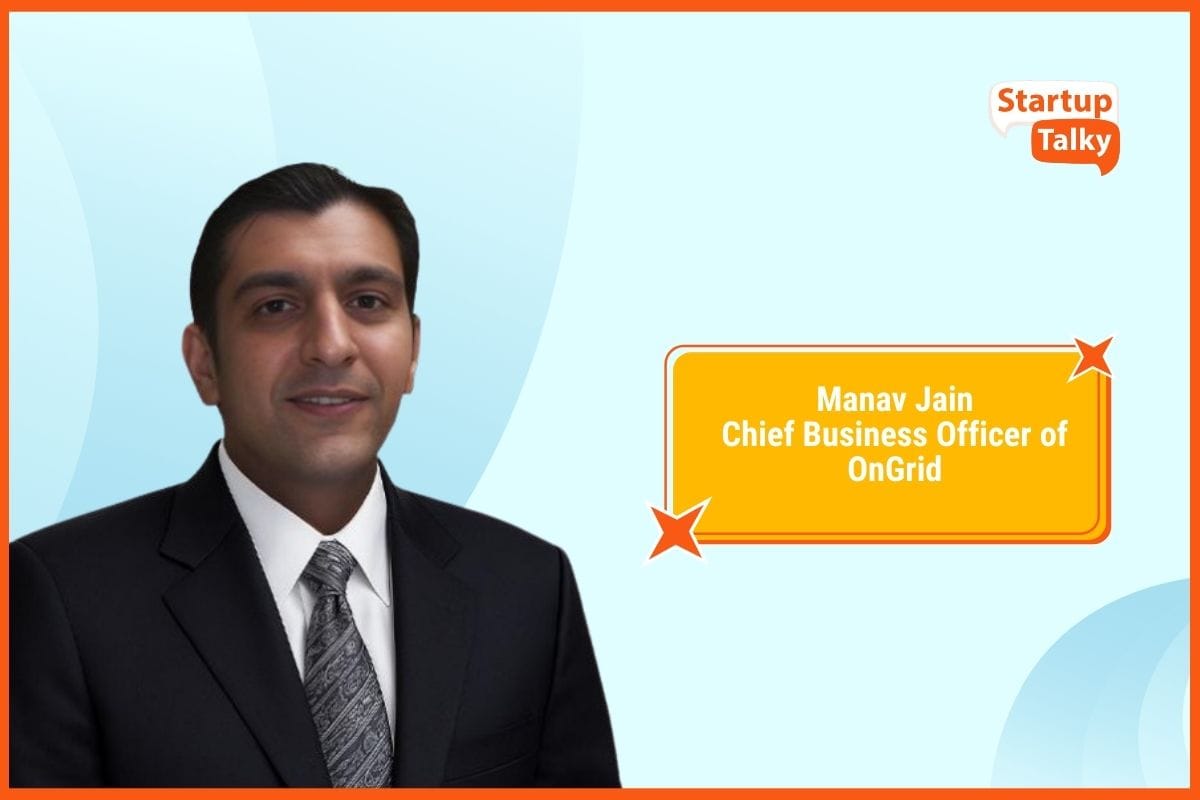
StartupTalky presents Recap'25, a series of exclusive interviews where we connect with founders and industry leaders to reflect on their journey in 2025 and discuss their vision for the future.
In this edition of Recap’25, StartupTalky speaks with Manav Jain, Chief Business Officer of OnGrid, who reflects on a milestone year for India’s digital trust and verification ecosystem. Jain shares how OnGrid crossed 1 billion lifetime verifications, scaled its enterprise footprint, and strengthened trust infrastructure through innovations like Instant BGV, DeepSight, and verified credential portability via eLockr Merit. He discusses how client expectations shifted toward speed with certainty, the growing importance of privacy-first compliance under DPDP, and the role of AI in building adaptive, role-centric verification systems. Jain also outlines the emerging opportunities shaping digital trust in 2026 and his vision for a standardized, intelligent, and privacy-aligned verification backbone for India’s workforce and enterprises.
StartupTalky: OnGrid has completed over 500 million verifications and serves 3,000+ clients. Reflecting on 2025, what were the most significant milestones or innovations your team achieved?
Mr. Manav Jain: 2025 was a defining year for trust infrastructure. We crossed 1 billion lifetime verifications, expanded to 4,000+ enterprise clients, and saw significant adoption of Instant BGV, KYC, and DeepSight, our unified trust and intelligence layer that converts fragmented user data into coherent, actionable profiles. We also introduced Merit by eLockr, enabling verified career credentials for ex-employees. Together, these advances strengthened India’s ability to onboard workers, customers, and partners with speed and clarity at scale.
StartupTalky: How did client expectations and adoption patterns evolve this year for digital identity verification, KYC/KYB, and background checks across industries?
Mr. Manav Jain: Across India, the shift was clear: speed with certainty.
Companies started demanding pre-offer checks, instant BGV before candidates even join, and frictionless onboarding for both blue and white-collar roles. We also saw rising attention to moonlighting patterns, with cases like “141 jobs in 7 years” becoming cautionary tales. Demand grew around drug testing, skip tracing, and low-bandwidth video KYC for distributed or frontline workforces. Finally, our NSR Gold empanelment signalled how seriously enterprises now take privacy, security, and vetted data partnerships.
StartupTalky: Technology and automation are core to digital trust. Which AI tools, APIs, or platform innovations had the biggest impact on verification accuracy, speed, or customer experience in 2025?
Mr. Manav Jain: Two innovations stood out this year:
- DeepSight: A single mobile number now unlocks a 360° trust profile combining identity, PAN, tax, employment, banking, telecom, and behavioral signals. The unified view drastically reduces ambiguity and improves decision-making for banking, fintech, gig, staffing, and mobility clients.
- Instant BGV: Powered by real-time checks and structured workflows, verification time dropped from days to minutes without compromising quality. Together, these tools helped enterprises onboard users with far greater clarity, contextual intelligence and lower friction than
StartupTalky: The digital verification space is influenced by regulatory, privacy, and security standards. Which trends or challenges shaped OnGrid’s strategy this year?
Mr. Manav Jain: Interestingly, OnGrid didn’t experience the uncertainty many organizations felt around compliance because we’ve always operated with those guardrails. Being ISO certified, SOC 2 Type II compliant, and NSR-empanelled meant that the arrival of DPDP didn’t require a strategic reset. Our data minimization, retention, access control, and audit practices were already aligned. This foundation allowed us to scale rapidly across industries without the operational turbulence that typically accompanies new regulation.
StartupTalky: Looking ahead to 2026, which segments, products, or technological innovations in digital trust do you see as the fastest-growing opportunities?
Mr. Manav Jain: Three areas stand out.
First, role-centric verification, where depth and checks vary based on risk surfaces, especially for high-trust and regulated roles. Second, credential portability through platforms like eLockr Merit allows verifiable work histories to travel with the individual, reducing duplication and improving hire quality. Third, autonomous verification journeys where enterprises design onboarding logic visually and let AI orchestrate tasks, manage insufficiencies, and reduce manual load.
These will reshape how organizations hire at scale.
StartupTalky: From your perspective, how is the future of digital trust and verification evolving in India, particularly in terms of AI adoption, regulatory alignment, and industry-wide standardization?
Mr. Manav Jain: India will move toward intelligent, adaptive verification. AI will accelerate every layer, from deepfake-resistant identity checks to context-aware OCR and behavioral risk modeling. Journey orchestrators will allow HR and ops teams to build BGV or KYC flows without code. And with DPDP driving accountability, we’ll see greater standardization across industries in how data is collected, retained, and validated.
The north star is clear: fast, secure, privacy-aligned verification that works reliably at India’s scale.
Explore more Recap'25 interviews here.