

Why Men’s Mental Well-Being in Startups Needs More Open Conversations
✍️ Opinions
This article has been contributed by Sourabh Deorah, CEO and Co-Founder, AdvantageClub.ai
One of the most positive changes in today's workplaces is the increased emphasis on mental health. Teams collaborate more successfully, think more clearly, and perform steadily when members recognize their emotional needs and take a balanced approach to their work. This change has made it possible for organizations to establish settings that promote both growth and well-being.
As this awareness grows, it's also critical to comprehend how men, particularly in startup settings, approach mental health. People who value impact, ownership, and purpose are drawn to startups, and these qualities influence how people focus and allocate their energy. Men from different generations have different approaches to handling stress, expressing their needs, and comprehending
How Generations Experience Stress Differently
In conversations about men’s mental well-being, two broad generational patterns consistently emerge. These patterns are less about age and more about how different groups were conditioned to communicate and cope.
Gen Z professionals
This group has grown up in an environment where talking about mental health is significantly more acceptable. They tend to:
- Communicate openly about stress and burnout
- Set clearer boundaries
- Prioritize well-being along with growth
- Seek workplaces that support psychological safety
For them, asking for help or saying they need a pause is a practical decision, not a sign of weakness. They view mental well-being as part of staying productive and effective.
Millennials and Senior professionals
Many people in this group have quite different perspectives. They grew up in a culture that associated stability, perseverance, and silent problem-solving with success. It is a result of years of conditioning that taught them to keep problems to themselves and carry on with their work without interruption.
The two groups' differences present a potent opportunity. Some of the behaviors that Gen Z has normalized can be advantageous for millennials and senior professionals. These include establishing support systems rather than carrying everything alone, speaking up early rather than waiting for burnout, setting boundaries guilt-free, and treating well-being as a foundation rather than an afterthought.
The Gen Z mindset is about being conscious, intentional, and self-aware. Integrating even a part of this approach can help older generations work with more clarity, avoid emotional exhaustion, and build stronger, more connected workplace relationships.
The Startup Reality vs. Conventional Workplaces
It's not just speed that separates startups from big businesses. It is the degree of one's own expectations. People join startups in search of opportunities to influence results, meaningful work, and faster growth. These are also provided by established businesses, but startups offer higher stakes. Individual contributions are visible daily, timelines are shorter, and impact is immediate.
For men, the weight of these expectations at times clashes with ingrained norms to maintain composure under duress and keep personal difficulties private. Men's behavior at work is still influenced by these expectations, particularly for those who were raised to associate silence with resilience.
Why This Gap Matters in Startups
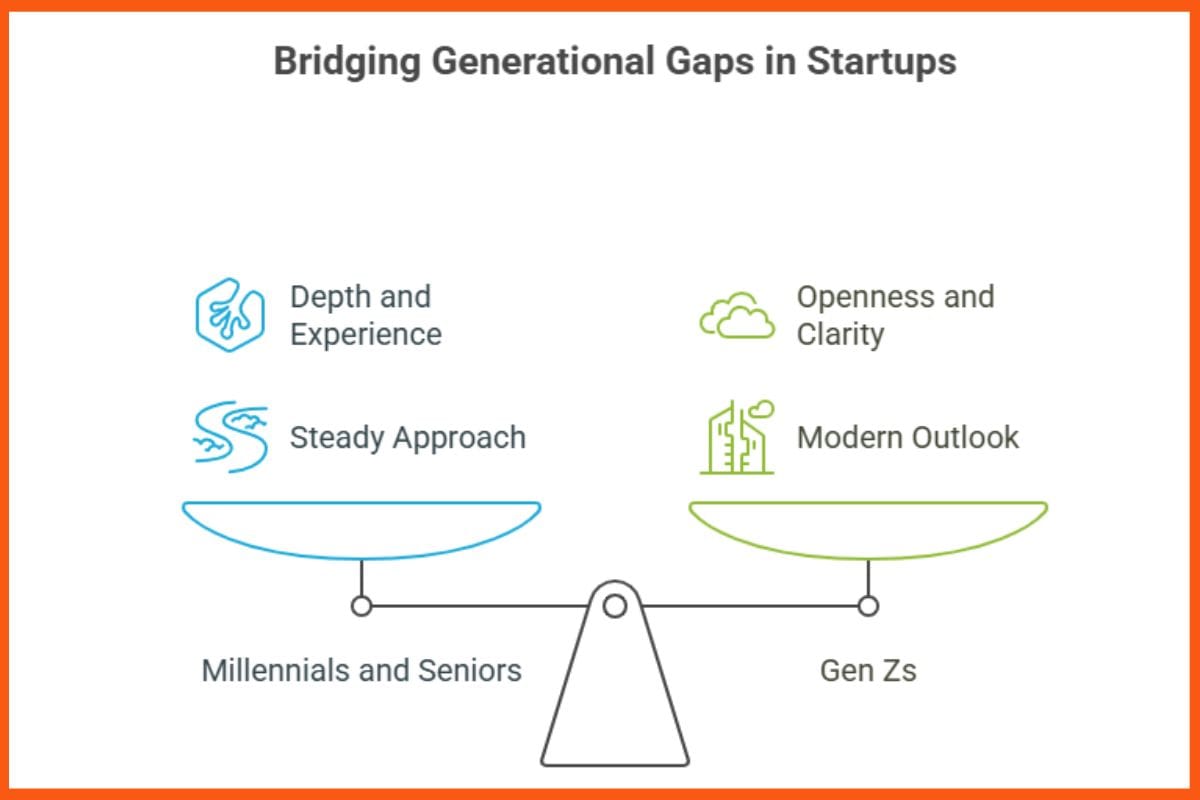
In startups, multiple generations work together toward their goals, and each group brings its own strengths. Millennials and senior professionals contribute depth, experience, and a steady approach, while Gen Zs bring openness, clarity, and a modern outlook to expressing stress. When both groups operate side by side, these differences can actually strengthen team culture. Recognizing how each group communicates allows leaders to design environments where everyone feels comfortable sharing in a way that suits them best. This creates more balanced teams, smoother collaboration, and a healthier workplace.
What Organizations Can Practically Do
Supporting men’s mental well-being in startups requires simple, consistent, and intentional steps. These steps should focus on behaviour, accessibility, and daily culture, not large one-time initiatives.
- Build meaningful well-being support: Organizations should offer accessible tools to their employees. This includes counselling, healthy habit building, guided self-care programs, and stress-management resources. The aim is to make these programs feel practical rather than symbolic.
- Strengthen circles of trust: Creating support systems such as employee assistance programs(EAPs), peer groups, and alumni networks helps create judgment-free spaces. These safe spaces are especially helpful for employees who find it difficult to speak up.
- Recognize effort consistently: In stressful environments, recognition restores confidence and keeps people moving forward. When effort is acknowledged consistently, employees feel valued and supported. Even a simple message of appreciation can shift someone’s emotional state.
- Design support that respects generational differences: Millennials & senior employees may feel more comfortable with structured conversations and leadership-led interventions, while Gen Zs respond better to open dialogue, transparency, and flexibility. Hence, supporting both groups creates a culture where everyone feels included.
- Train leaders to normalize conversations: Leaders who keep an open-door approach and make it easy for employees to talk about stress just as freely as they talk about work create a healthier environment. When managers treat these conversations as normal, people feel comfortable speaking up early instead of waiting until they are overwhelmed.
- Use technology to make support more accessible: AI-powered platforms now offer digital spaces for reflection, well-being check-ins, personalised nudges, and guided support. These tools help employees seek help confidentially and at their own pace.
A Positive Path to Stronger, Healthier Workplaces
When workplaces make space for open and healthy conversations about well-being, teams become more confident, more connected, and more effective. Encouraging men to share what helps them stay balanced supports stronger teamwork and smoother collaboration across generations. These conversations bring clarity, reduce misunderstandings, and help people support each other in simple but meaningful ways.
When leaders and teams treat well-being as a natural part of everyday work, it creates an environment where people feel motivated to bring their best ideas forward. By nurturing this mindset, startups build cultures that are not only healthier but also more innovative, more collaborative, and better equipped to grow sustainably.
 Varun Bhardwaj