

Nakul Kundra of Devnagri AI on Building India’s Multilingual AI Infrastructure and Driving Inclusive Digital Experiences
👨💻 StartupTalkers
StartupTalky presents Recap'25, a series of exclusive interviews where we connect with founders and industry leaders to reflect on their journey in 2025 and discuss their vision for the future.
In this edition of Recap’25, StartupTalky speaks with Nakul Kundra, Co-Founder of Devnagri AI, a multilingual AI infrastructure company that is enabling businesses to engage India’s diverse linguistic population at scale. Built to address the barriers of English-first digital platforms, Devnagri AI leverages real-time translation, text-to-speech, automatic speech recognition, and intelligent automation to deliver seamless, personalized experiences across 42 Indian and foreign languages.
Nakul shares how Devnagri AI is helping enterprises and MSMEs expand digital adoption through localized, language-first workflows, while strengthening compliance, automation, and operational efficiency. He also discusses the evolving multilingual AI landscape, the challenges of scaling language solutions across India’s complex linguistic terrain, and how Devnagri AI is redefining what it means to build truly inclusive digital experiences heading into 2026.
StartupTalky: What service does your company provide? What was the motivation/vision with which you started?
Nakul Kundra: Devnagri AI provides a multilingual intelligent infrastructure that enables businesses to communicate and scale across India’s diverse linguistic landscape. Devnagri’s real-time translation capabilities cover Text-to-Text, Text-to-Speech (TTS), and Automatic Speech Recognition (ASR) across 42 Indian and Foreign languages. The company provides intelligent multilingual workflows and automation solutions for a range of enterprise use cases. Using Devnagri’s multilingual workflows and automation solutions, enterprises can deliver personalized customer interactions and digital experiences in the languages their users naturally prefer.
Devnagri was founded on a clear insight: India’s digital growth cannot be inclusive if language remains a barrier. While over 800 million Indians are online, most prefer engaging in regional languages, with nearly all new internet users relying on Indic languages for daily digital use. English-first platforms exclude users not due to lack of access, but lack of understanding. Our vision has been to build language intelligence that adapts not just language but also voice, tone, and style, enabling brands, public services, and MSMEs to personalize and engage non-English-speaking audiences confidently across urban and rural India, and to make digital participation intuitive, accessible, and truly multilingual.
StartupTalky: What new features have been added in the past year? What is/are the USP/s of your SaaS?
Nakul Kundra: Over the past year, we have strengthened Devnagri’s core multilingual AI stack to meet the evolving needs of enterprises and MSMEs in India. We expanded our self-learning model (SLM) architecture to enable continuous, customer-specific fine-tuning while maintaining strict data privacy. This allows organizations to deploy private, domain-tuned language models within their own environments, a key requirement for regulated sectors such as BFSI and government sectors. We also enhanced real-time translation and transcription across text, voice, and document workflows, enabling businesses to manage high-volume multilingual interactions with improved accuracy and lower latency.
In parallel, we deepened our automation, quality monitoring, and MLOps capabilities to ensure consistency across Indian languages at scale. Our patented datasets, built over four to five years from millions of high-quality, annotated sentence pairs, now power faster, more context-aware language outputs. Our core strength lies in being built for India’s linguistic reality, combining AI efficiency, enterprise-grade compliance, and deployment flexibility to help organizations engage effectively with users who prefer local-language digital experiences.
StartupTalky: How has the industry you are in changed in recent years and how has your company adapted to these changes?
Nakul Kundra: The multilingual and language technology industry has undergone a fundamental shift in recent years, driven by the rapid growth of India’s non-English internet population and the mainstream adoption of AI across enterprises. Language is no longer treated as a support function but as core digital infrastructure, especially in sectors like BFSI, e-commerce, government services, and platforms targeting Tier 2, Tier 3, and rural markets. Enterprises now expect real-time, scalable, and secure multilingual capabilities across customer journeys, internal workflows, and compliance-heavy documentation, rather than static or manual translation services.
In response to these changes, we have evolved from being a language services provider into a multilingual intelligent infrastructure layer for enterprises. We invested heavily in building proprietary AI models fine-tuned for Indian languages, optimized for accuracy, low latency, and regulatory compliance. Our focus shifted toward automation at scale, enabling translation, transliteration, voice, OCR, and conversational AI workflows that integrate seamlessly into enterprise systems. We also strengthened our infrastructure to support on-premise and VPC deployments, addressing the growing demand for data security and localization.
StartupTalky: What were the most significant challenges your company faced in the past year and how did you overcome them?
Nakul Kundra: Over the past year, one of the most significant challenges we faced was scaling multilingual AI systems to meet rising enterprise demand while maintaining consistency across highly diverse Indian languages and dialects. As adoption accelerated across BFSI, government, and large consumer-facing platforms, the complexity of handling high volumes, strict latency requirements, and domain-specific language increased significantly. We addressed this by strengthening our core AI infrastructure, investing in domain-tuned language models, and optimising our deployment architecture for regulated and high-traffic environments.
Another key challenge was overcoming hesitation among enterprises that were transitioning from English-first systems to multilingual digital experiences. Many organizations were concerned about integration complexity, regulatory compliance, and measurable ROI. We tackled this by working closely with clients to embed multilingual AI directly into existing workflows, offering clear performance benchmarks, security-aligned deployments, and business impact metrics such as improved conversion, reduced drop-offs, and faster customer resolution.
Finally, as the multilingual AI space became more competitive, differentiation emerged as a challenge. We responded by doubling down on proprietary datasets, domain-specific fine-tuning, and enterprise-grade governance. By focusing on reliability, compliance, and real-world deployment outcomes rather than experimental AI capabilities, we were able to strengthen trust with large organizations and sustain long-term growth.
StartupTalky: Customer Success has become more important than ever. How do you keep your customers engaged to stop churn?
Nakul Kundra: We usually follow a simple path to onboard and scale enterprise adoption of multilingual workflows and automations. Depending on their openness, we either start with a simple, easy-to-implement use case or begin with the most complex use case to showcase our capabilities and build confidence right from the beginning of our engagement. Once a customer is comfortable and confident in our abilities, they usually sign multi-year contracts. Most of our customers have stayed with us for more than a year and extended their contracts to multi-year engagements.
Having said that, we have a dedicated customer success team that regularly connects with our customers, keeps them engaged and informed about the latest innovations and updates on our end, and resolves issues based on their priority. When our customers see the value in our solutions, they tend to stay with us without much effort. So, our CS team ensures our customers realize the value from their investments early in the engagement cycle.
StartupTalky: What are the different strategies you use for marketing? Tell us about any growth hack that you pulled off.
Nakul Kundra: We focus on a mix of enterprise-led marketing, ecosystem partnerships, and credibility-driven growth rather than volume-led tactics. Our primary strategy is thought leadership and problem-led storytelling around language inclusion, compliance-ready AI, and Bharat-focused digital growth, which helps us engage decision-makers in BFSI, government, and large enterprises.
One growth lever that worked particularly well for us was using pilot deployments as a wedge: we offered limited-scope, high-impact pilots in regional languages, measured tangible outcomes such as conversion uplift or turnaround time reductions, and then used those results to expand across departments and geographies. The other approach that worked well is ‘show-and-tell’. When prospects see everything we say come to life in demos, that’s when the magic happens.
StartupTalky: Content marketing and Community building is something everyone is talking about in SaaS, How do you plan to leverage that?
Nakul Kundra: We see content marketing and community building as a long-term trust strategy. Our plan is to focus on educational, insight-led content that helps enterprises and MSMEs understand how multilingual AI can directly improve adoption, conversion, and compliance in India. This includes publishing explainers, industry stories, data-backed reports, and real-world use cases on language inclusion across BFSI, government services, e-commerce, and MSMEs.
StartupTalky: What opportunities do you see for future growth in your industry in India and the world? What kind of difference in market behavior have you seen between India and the world?
Nakul Kundra: Globally, digital markets are designed on linguistic inclusion. In regions like Europe, Southeast Asia, and Latin America, users expect apps, platforms, and customer journeys to work seamlessly in their native languages, and businesses actively localize content to build trust and drive adoption. In India, however, there is a clear mismatch between user behavior and digital design. While only about 10–11% of the population is fluent in English, a majority of mobile apps, e-commerce platforms, and enterprise tools continue to be English-first. This creates friction across discovery, onboarding, and transactions, especially in Tier 2, Tier 3, and rural markets where regional languages dominate daily life.
As a result, India has massive untapped digital demand, but confidence and participation remain lower than potential. The opportunity ahead lies in correcting this imbalance. As Indian businesses begin to meet users in the languages they are most comfortable with, through multilingual interfaces, voice-led experiences, and AI-powered localization, the market can unlock deeper engagement, higher conversions, and a far broader base of digital users, bringing India closer to the language-inclusive models already normalized globally.
StartupTalky: One tip that you would like to share with another SaaS founder?
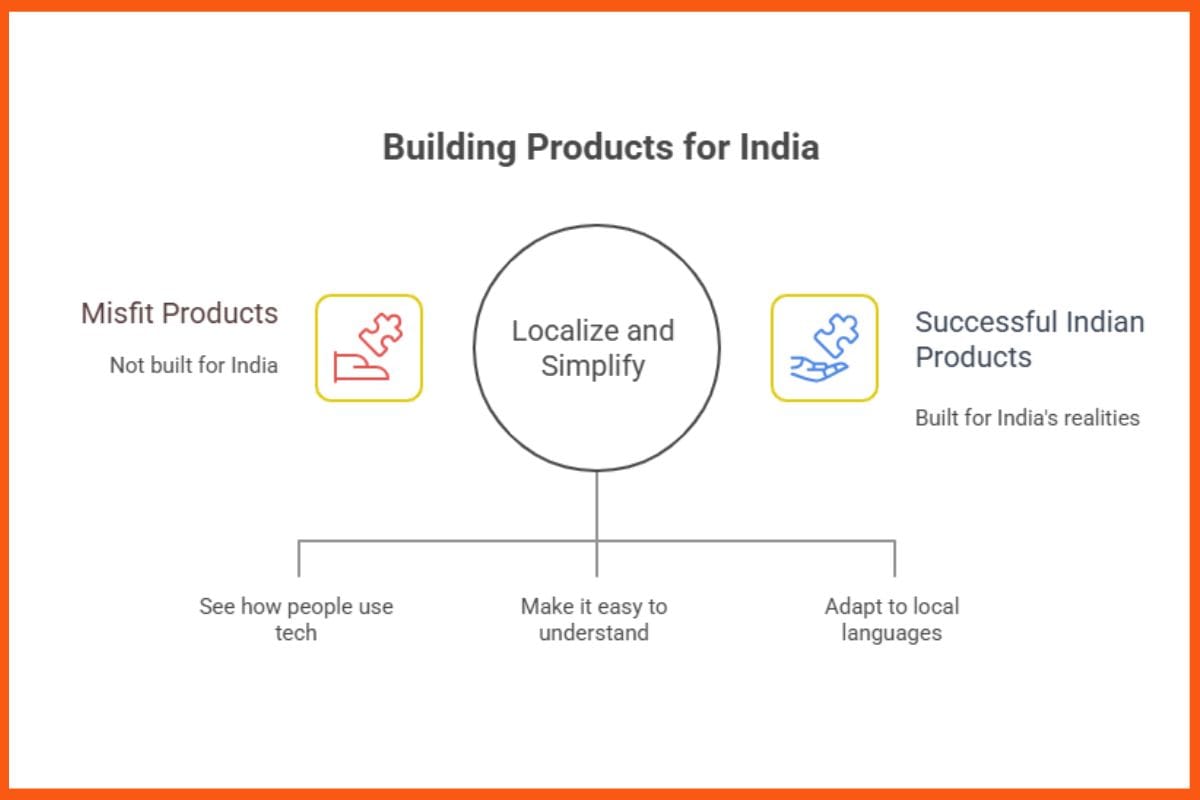
Nakul Kundra: One of the most valuable lessons from our journey is that products built for India must start with India’s realities. Users here operate across languages, bandwidth constraints, trust gaps, and very different digital comfort levels. Founders should spend time on the ground, observing how people actually use technology, where they hesitate, and what confuses them. Solutions that simplify, localise, and respect these nuances will always outperform feature-heavy products built for an “ideal” user who doesn’t really exist in the Indian context.
Explore more Recap'25 interviews here.