
Luma Fertility’s Neha Motwani on Human-Centered IVF Care, Patient Trust, and Scaling Fertility Services with Integrity
📝Interviews
StartupTalky presents Recap'25, a series of exclusive interviews where we connect with founders and industry leaders to reflect on their journey in 2025 and discuss their vision for the future.
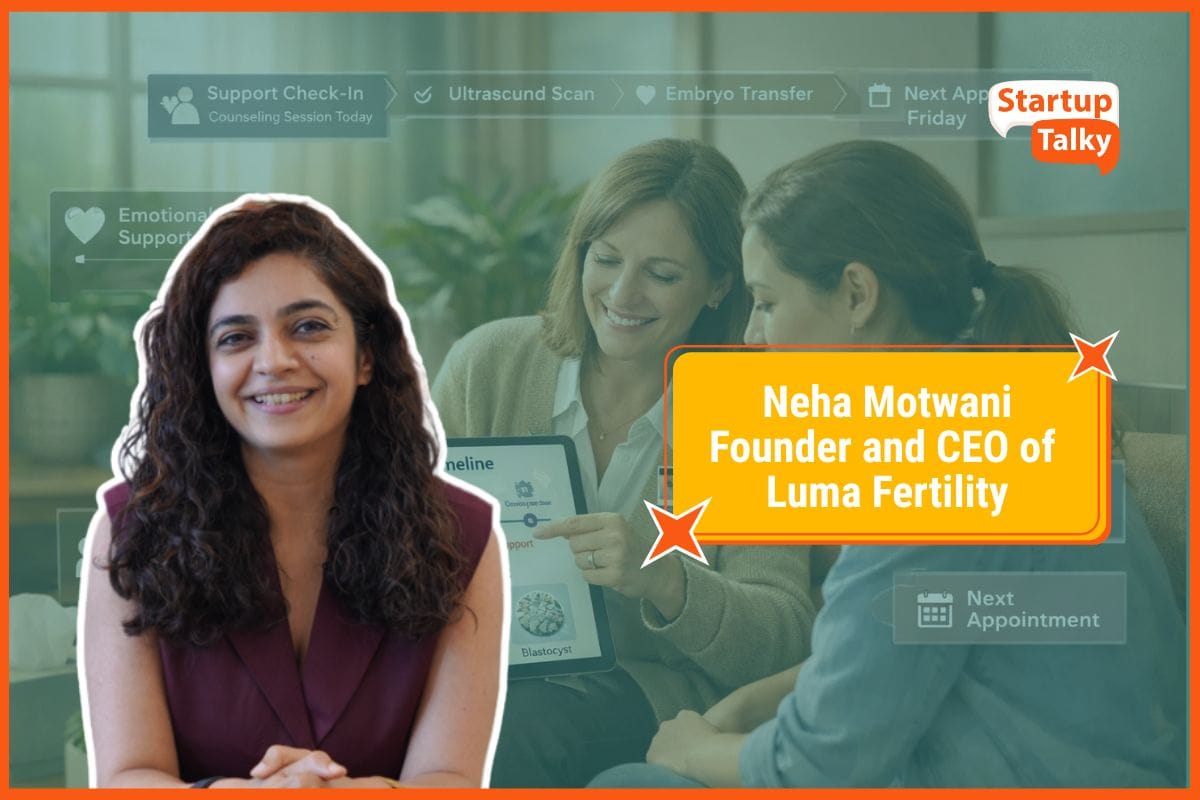
In this edition of Recap’25, StartupTalky speaks with Neha Motwani, Founder and CEO of Luma Fertility, about reimagining fertility care through a more human, emotionally intelligent, and transparent model. Drawing from her own personal experience navigating the fertility system, Motwani shares how Luma was built to move away from “assembly-line IVF” and toward a care-first architecture where dignity, clarity, and emotional support are as important as clinical outcomes.
She discusses how structured care navigation became a turning point for both patient confidence and treatment adherence, why metrics like dropout rates and counselling consistency matter as much as success rates, and how evolving patient behaviour in India is reshaping expectations around honesty, probability, and informed choice. Looking ahead, Motwani outlines how technology-assisted, protocol-driven fertility care can expand beyond metros without diluting clinical standards — and why, in fertility, trust will always scale slower than ambition.
StartupTalky: What problem in fertility care originally compelled you to start this clinic or network? Looking back, what assumptions about patients, outcomes, or scale turned out to be wrong as you grew?
Neha Motwani: Luma started from a deeply personal place. When I went through the fertility system myself, I realised that while science was advanced, the experience was broken. Patients were expected to be resilient, informed, and emotionally steady without the system doing much to support them. Fertility care was being delivered like an assembly line, when it is one of the most individual healthcare journeys a woman can go through.
One assumption I had early on was that patients primarily optimise for success rates. What I learned quickly is that clarity, dignity, and feeling in control matter just as much as outcomes. Many women would rather choose a clinic where they feel heard even if it means slower decisions, than one that overwhelms them with data but no context. That insight fundamentally shaped Luma’s care-first architecture.
StartupTalky: Success rates and patient trust define fertility brands. Which clinical or operational change in the past year had the most measurable impact on outcomes or patient confidence?
Neha Motwani: Introducing structured care navigation was the single biggest inflection point. Having one Care Navigator anchor the entire journey, appointments, injections, diagnostics, follow-ups dramatically reduced anxiety, dropouts, and confusion. From an outcomes perspective, fewer missed scans and better adherence to protocols directly improved cycle quality. From a trust perspective, patients finally felt like someone was accountable for their journey, end to end.
StartupTalky: What metrics matter most to you today beyond headline success rates? How do these metrics influence expansion or investment decisions?
Neha Motwani: The live birth rate will always be very important but it’s not sufficient. We closely track:
- Cycle conversion rates (how many women move confidently from consultation to treatment)
- Dropout rates
- Counselling adherence
- Time-to-decision clarity
- Patient-reported confidence scores
- Doctor and embryologist utilisation balance
These metrics tell us where friction still exists. Expansion decisions are not just about demand density they’re about whether we can replicate these metrics with integrity in a new geography.
StartupTalky: India’s fertility market is evolving rapidly—with increased awareness, price sensitivity, and competition. How has patient behaviour changed in the last 2–3 years, and what surprised you most as a provider?
Neha Motwani: Women are coming in earlier, better informed, and with sharper questions. The biggest shift is from reactive to preventive fertility thinking especially around egg freezing and AMH testing in the late 20s. What surprised me most was how openly women now discuss failure. Earlier, unsuccessful cycles were whispered about. Today, women want honest probabilities, not inflated hope. That maturity has raised the bar for clinics and rightly so.
StartupTalky: Trust is fragile in healthcare. How do you ensure transparency with patients around treatment outcomes, costs, and expectations—especially in a category where hope often outweighs data?
Neha Motwani: Transparency isn’t about being clinical, it's about being clear. We separate possibility from probability. We show data visually, explain ranges instead of absolutes, and revisit expectations at every milestone. Importantly, transparency doesn’t end at success rates—it includes cost structures, add-ons, and what might go wrong. Hope should never come from omission. It should come from informed choice.
StartupTalky: Regulation, technology, and standardisation are reshaping fertility care. What regulatory or technological shifts have most influenced your operating model, and how prepared is the industry for tighter scrutiny?
Neha Motwani: Tighter ART regulations and embryology standards have pushed clinics to professionalise rapidly, and that’s a good thing. From a technology standpoint, AI-assisted embryology and digital medical records have meaningfully reduced error rates and improved consistency. The industry, however, is unevenly prepared. Clinics that built scale before the process will struggle. Those who invested early in protocols, compliance, and data integrity will define the next decade.
StartupTalky: Looking ahead to 2026, where do you see sustainable growth coming from? Tier-2 cities, affordability models, technology-assisted care, or international patients—and what must go right clinically for that vision to work?
Neha Motwani: Growth will come from technology-assisted care beyond metros, not diluted clinical models. Tier-2 cities don’t need a reduced version of IVF, they need better orchestration. Remote monitoring, centralised embryology intelligence, digital counselling, and local clinical execution can coexist if outcomes remain non-negotiable. Clinically, what must go right is standardisation without dehumanisation.
StartupTalky: If you were advising a new fertility clinic founder today, what is one hard truth about this industry they must understand before scaling?
Neha Motwani: Fertility is not a volume business, it’s a trust business. You cannot scale faster than your weakest doctor, your most overworked embryologist, or your most confused patient. If you don’t design for emotional load, operational fatigue, and ethical clarity from day one, no amount of capital or branding will save you. Build slow. Build right. Outcomes will follow.
Explore more Recap'25 interviews here.
Must have tools for startups - Recommended by StartupTalky
- Convert Visitors into Leads- SeizeLead
- Website Builder SquareSpace
- Run your business Smoothly Systeme.io
- Stock Images Shutterstock