

China’s BYD Eyes Local Manufacturing in India Amid Rising Dealer Orders
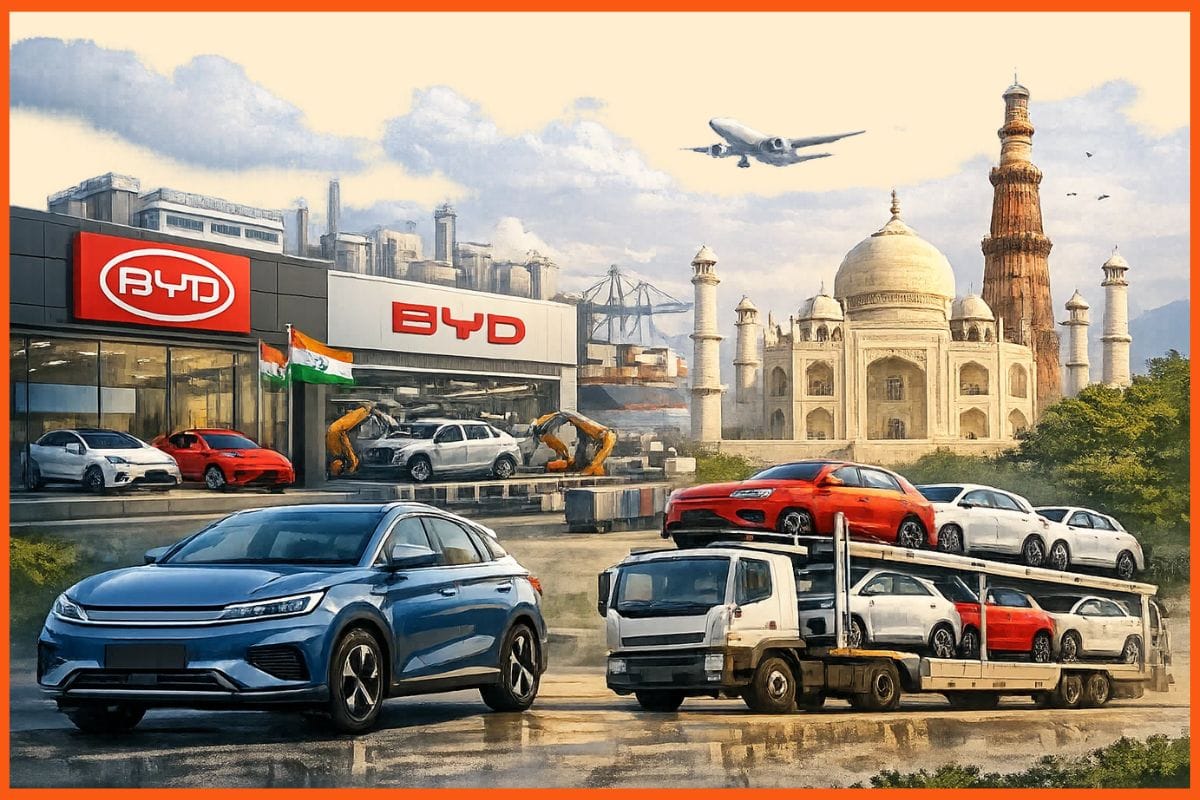
In order to meet the growing demand for the Chinese automaker's electric vehicles, BYD Co. is considering possibilities to expand in India, including local assembly. Due to import limits, the company is considering local assembly in India and is seeking to get local safety and regulatory approvals for more models. BYD's aspirations to establish a whole assembly factory in India were previously turned down.
The Chinese company is now thinking of assembling semi-assembled pieces, though, as this would be less expensive and simpler to acquire regulatory approval for. According to media sources, a visit by senior BYD officials would precede any manufacturing action.
Strong Demand Pushed BYD for Local Manufacturing
The automaker is reevaluating how to increase the number of cars in the nation due to strong demand. The dealers are running low on inventory and holding on to hundreds of bookings, according to media sources. In stark contrast, Tesla Inc. has been lowering the price of several of its models in an effort to increase sales in India.
The conversations shed light on BYD's potential as well as the regulatory challenges it faces in one of the fastest-growing vehicle markets in the world. Despite New Delhi's previous opposition to its investment plan during a time of increased scrutiny of Chinese companies, they also show a strategic pivot for the Chinese automaker, which is now doubling down in India.
Since the US imposed high tariffs on both countries last year, relations between China and India have somewhat improved. For BYD, expanding outside of China has grown more crucial as domestic growth slows due to dwindling EV subsidies and growing competition. This year, it wants to boost deliveries to markets outside of China by around 25%.
BYD’s Sale Figures in India
Last year, BYD's sales in India increased by almost 88% to about 5,500 automobiles. However, this hike makes it difficult for the company to comply with regulations that limit the number of fully manufactured models that may be imported to 2,500 units. Due to a price tag that is comparatively lower than Tesla's, that rise occurred even though import levies on fully constructed automobiles might reach 110%.
By using SKD assembly, tariffs would be reduced from 70% to 30%. In addition to the Sealion 7 and the Seal sedan, the business sells the Atto 3 compact e-SUV and the eMax7 multipurpose vehicle in India, both of which are authorised for imports beyond the 2,500-car quota. Even with a 70% import tax, the Atto 3 is priced at 2.5 million rupees ($27,255). Together with Mahindra & Mahindra Ltd and Tata Motors Passenger Vehicles Ltd, this places it at the premium end of India's mass-market EV industry while still undercutting Tesla.
|
Quick Shots |
|
•BYD exploring local assembly in India to meet rising EV demand
and bypass import limits. •Plan may shift to SKD (semi-knocked down) assembly for easier
approvals and lower costs. •Earlier full manufacturing proposal was rejected by Indian
authorities amid scrutiny of Chinese firms. •Dealers face inventory shortages with hundreds of pending
bookings, pushing expansion plans. |