

IMF Cautions World: AI Hype Could Put Global Economic Growth at Risk
- The global economy is overly reliant on AI, and if it fails, growth could drop by 0.4 percentage points this year. - The growth forecasts for the U.S., Canada, and China look promising for 2026 and 2027. - Reality check: Only 30% of the increased revenue was due to AI, says a PwC survey.
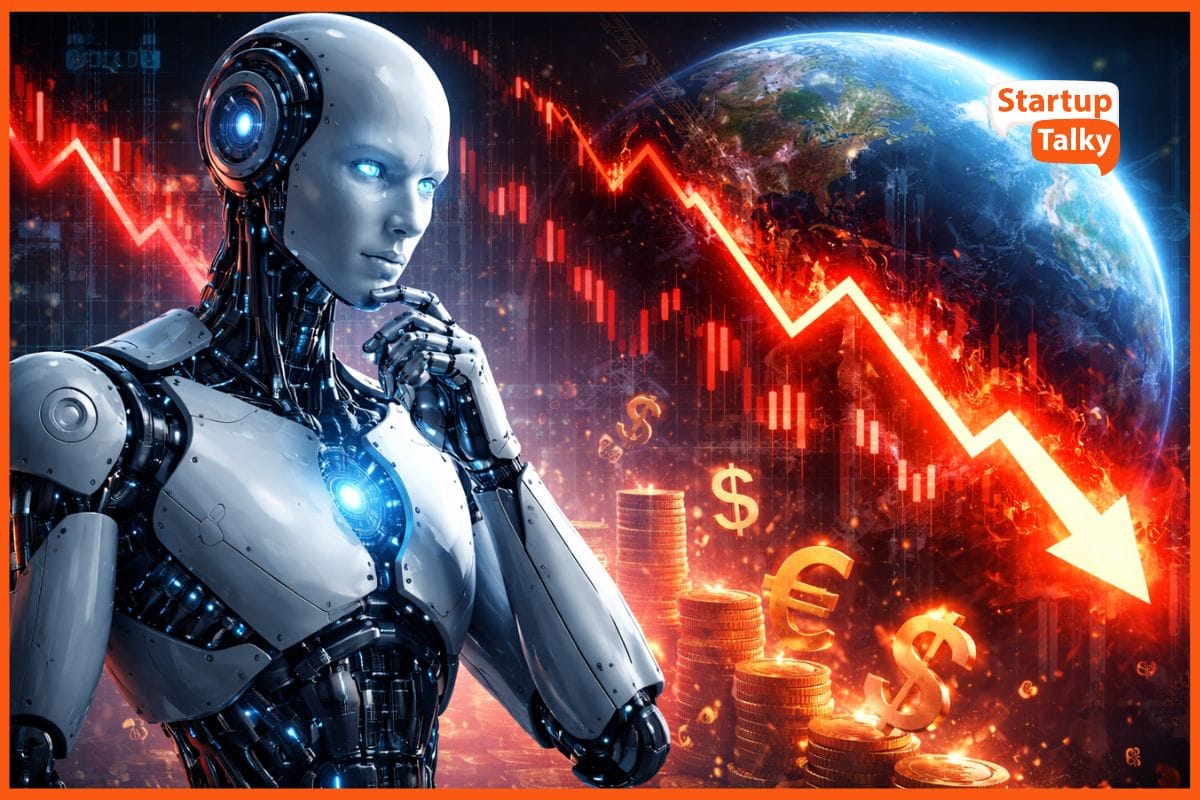
The IMF (International Monetary Fund) has come with a warning. It says that the global economy is currently looking solid. However, it's surrounded by the AI boom. This heavy dependency, especially in the U.S tech sector, may cause a big collapse. According to the IMF, investors’ excitement about AI is overhyped. If the future didn't deliver the expected profits, the downfall would be sharp.
The IMF clarified that it wouldn't be as suffocating as the dotcom bubble (of the late 1990s). It would still be bad enough. So, what are the exact risks? Will it impact the job market? How does the global growth outlook look for 2026 and 2027? For all that, learn more.
Why the IMF Is Worried About AI
The current growth is coming from narrow sources, such as U.S. tech companies that are heavily investing in AI. The stock prices of these companies have peaked as investors expect them to produce more products and achieve higher profits (of course, using AI). However, the world didn't yet witness the full potential of AI, in case the AI fails:
- Investors may panic
- Tech stocks could fall
- Investment in AI could suddenly slow down
- This could hurt economic growth worldwide
“There is a risk of a correction, a market correction, if expectations about AI gains in productivity and profitability are not realised. We’re not yet at the levels of market frothiness, if you want, that we saw in the dotcom period,” said Pierre-Olivier Gourinchas, IMF chief economist.
IMF's U.S. Economy Outlook
The U.S. economy forecasts look good despite the risks, and it is growing faster than other G7 countries, with 2.4% growth in 2026 and 2% growth in 2027. Reasons being: Tech investment in the U.S is at its highest share of the economy since 2001. Plus, AI is also driving the necessary growth.
IMF’s Global Growth Outlook
On January 17, 2026, Trump warned European countries that they would face 10% tariffs if they didn't support his effort to acquire Greenland. The IMF signals red that this could escalate trade conflicts (again), and this time, growth would suffer.
Recently, Trump has threatened European countries with 10% tariffs if they don't support his effort to acquire Greenland. The IMF warns that this could escalate trade conflicts (again), and this time, growth would suffer.
- Canada becomes the second-fastest-growing economy, with 1.6% growth in 2026 and 1.9% in 2027.
- The UK is expected to have a 1.3% growth in 2026 and 1.5%, a slightly higher growth in 2027.
- Germany forecasts 1.1% growth in 2026 and 1.5 in 2027.
- China's growth forecast is 4.5% in 2026 and 4% in 2027. This number is higher than earlier estimates, according to the IMF.
AI Boom: Risks vs Benefits (According to IMF & PWC)
Final Thoughts…
It’s good news that the AI bubble burst won’t be as bad as the dotcom bubble. However, in the current economy, losing some points in the stock market could wipe out millions and billions. If the downfall happens, jobs will have to leave the rooms and investors’ money will leave the buildings. We’ll have to wait and see the results. Keep in touch for more updates on the same.