

Livspace Lays Off 1,000 Employees as Co-founder Exits Amid Restructuring Drive
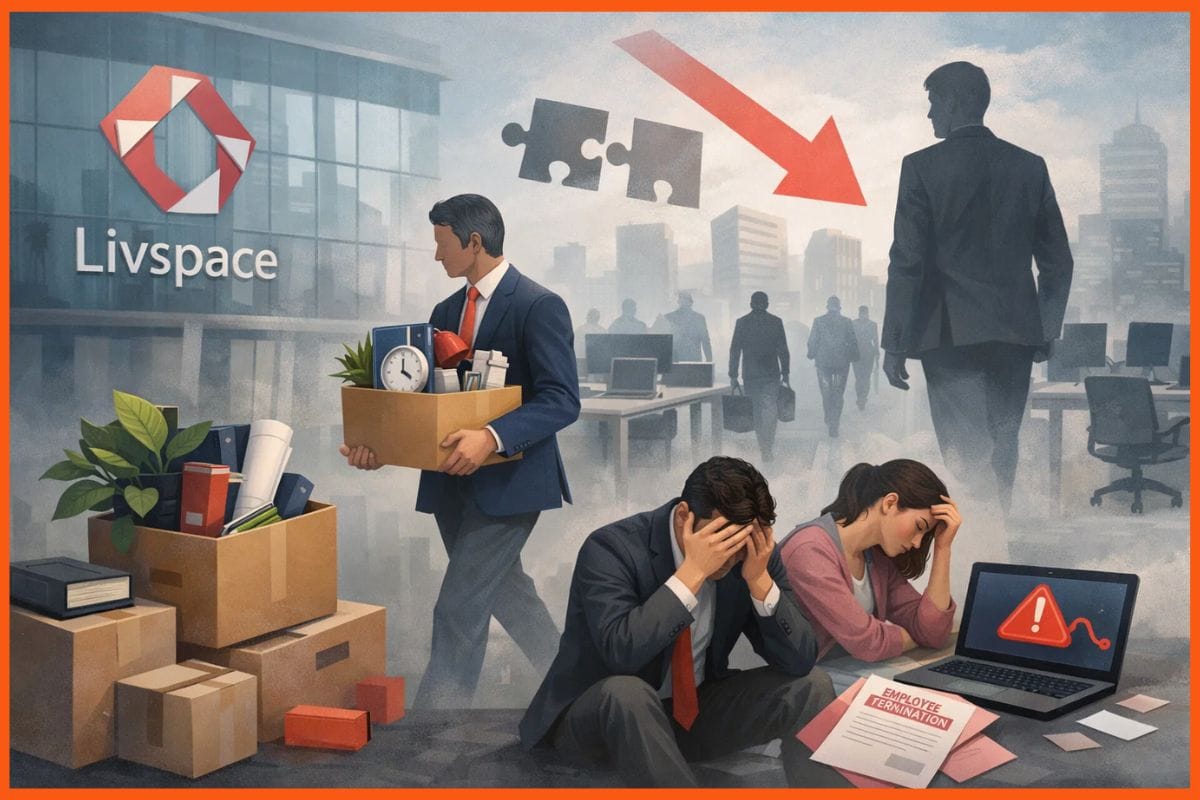
Amid the push for AI, home interior and innovation unicorn Livspace has let go of 1,000 workers, or 12% of its workforce. The startup's spokesman stated in a statement that the job layoffs were caused by automation and the integration of advanced AI agents throughout its main tasks, which include sales, operations, design, and marketing.
According to the corporation, the move was a long-term strategic reallocation of resources rather than a reactive cost-cutting effort. The representative went on to say that the company is making significant investments in AI and technology. This would enable it to provide more accurate and superior client outcomes. Instead of holding onto outdated operational patterns, the organisation is opting to embrace the future of work. According to a media report, roughly 25% of its employees were affected by the layoffs.
AI Shaking UP Livspace Business Operations
According to the spokesman, the layoffs occurred throughout the previous six months while the company evaluated and implemented AI agents in a variety of roles. The speed made it possible for Livspace to make sure that its automated systems could completely sustain its level of service while "manual roles" were phased out. Saurabh Jain, the startup's cofounder and CEO for India, also resigned during the layoffs to focus on "personal interests".
The startup claims that Jain contributed to the development of Livspace's AI avatar, which enabled it to eliminate several of these responsibilities. In a LinkedIn post, cofounder Jain stated that sometimes it's necessary to end a significant chapter—not because the story is over, but rather because a larger one is about to start. Livspace was established in 2014 and runs an omnichannel platform for home renovations and interior design that links homeowners with qualified contractors, interior designers, and design suppliers.
Up to this point, Livspace has raised more than $450 million from investors such as KKR, Ingka Group Investments (the parent company of IKEA), TPG Growth, Goldman Sachs, Bessemer Venture Partners, and Jungle Ventures.
AI Impacting Jobs in Tech Sector
It is important to note that corporations have been laying off employees as a result of the quick development and use of AI. Numerous businesses, ranging from big giants like Amazon, TCS, and Microsoft to startups like Cleartax, have reduced employment as a result of increased automation brought on by AI. Even while AI is predicted to boost production and efficiency, one of the main worries worldwide has been how it will affect jobs.
AI has the potential to significantly increase economic growth and productivity, according to the Economic Survey 2025–2026. It does, however, present a significant risk of workforce displacement, especially in India's service-orientated BPO and IT industries. Sam Altman, the founder of OpenAI, who is attending the "India AI Impact Summit 2026" in India, stated on Thursday that there is an increasing trend of attributing job losses to AI. He acknowledged that jobs are being replaced by AI but claimed that many businesses are using it as a cover for regular cost-cutting.
|
Quick Shots |
|
•Livspace lays off 1,000 employees, around 12% of
its workforce, amid AI-driven restructuring. •Layoffs attributed to automation and AI agents
across sales, design, operations, and marketing. •Company says move is a strategic realignment, not
short-term cost-cutting. •AI systems were tested and implemented over six
months before scaling down manual roles. |