

Maruti Suzuki to Gradually Localise EV Components as Electric Push Gathers Pace
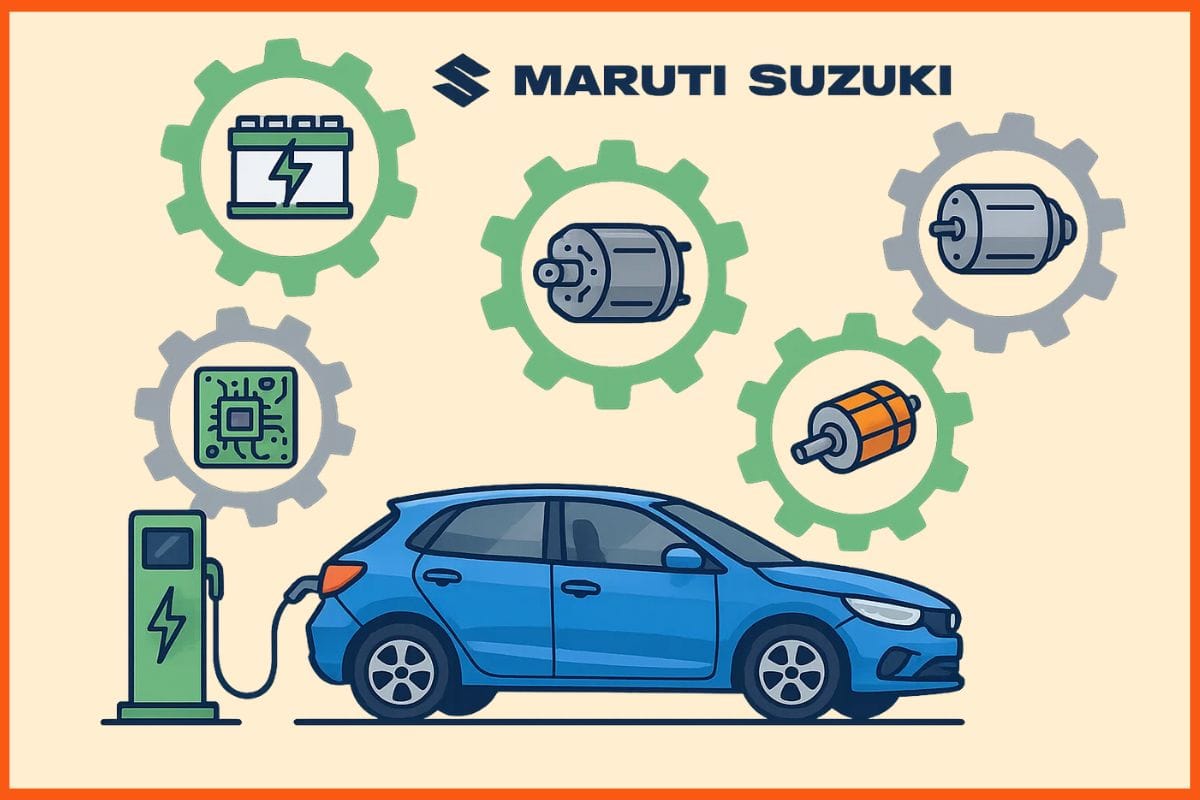
In order to improve the nation's whole EV ecosystem, Maruti Suzuki India intends to localise battery manufacture and other essential components over the coming years. In an effort to boost the EV ecosystem as a whole, the firm intends to inspire confidence in consumers by introducing its first electric car, the e VITARA, to the domestic market next year. Partho Banerjee, Senior Executive Officer (Marketing & Sales) of Maruti Suzuki India, told reporters that although the firm currently imports batteries, it does have plans to localise them. It is definitely planned to happen gradually over the coming years.
The Ongoing Performance of the India’s EV Sector
He pointed out that only when consumers are confident enough to purchase an electric vehicle as the main vehicle in the home will the market share of electric vehicles in India increase. He went on to explain that the company thinks the consumer lacks confidence (in EVs). People's perceptions of the driving range have been greatly damaged by the first items that were introduced and their experiences. "The majority of customers who purchase EV vehicles will use them as a secondary vehicle," he continued. It's not the main vehicle, according to Banerjee.
The buyer is reluctant to take a chance because there is no public infrastructure. Therefore, if he decides to purchase his first car, it will likely be an ICE or another type of vehicle rather than an EV. Maruti Suzuki intends to offer five EV cars in its whole product line by FY30. He went on to say that at that time, there will be about 5.5–6 million people in the business and 13–15% EV penetration. However, this was prior to GST 2.0.
Due to reports that EV penetration is declining after GST 2.0, the corporation must now reevaluate the market. Next fiscal year will be the best time to execute it. The largest obstacles to EV adoption in the nation, according to him, are driving range, inadequate public charging infrastructure, and issues with after-sales servicing and resale value.
EV Ecosystem Still a Major Challenge in India
He pointed out that the EV business is not expanding as quickly as automobiles with internal combustion engines, citing the absence of an EV ecosystem as a significant disadvantage. According to Banerjee, OEMs should prioritise producing high-quality goods, providing excellent after-sale support, and building a strong ecosystem.
"That gives the customer more confidence," he continued. Maruti has already begun exporting e-VITARA, shipping 10,000 units to 26 regions. In an effort to gain market leadership, the automaker plans to provide charging infrastructure nationwide and drive in a variety of electric vehicles with various body shapes. In collaboration with its dealer partners and charging point providers, the corporation intends to install around one lakh charging stations by 2030.
|
Quick Shots |
|
•Maruti Suzuki plans phased localisation of EV
components, including batteries, over the next few years. •Company currently imports EV batteries but aims to
manufacture them locally in stages. •Maruti Suzuki will launch its first electric SUV, e
VITARA, in India next year. •Consumer confidence remains a key hurdle for EV
adoption in India, says Maruti. |