

Microsoft CEO Satya Nadella Warns AI Could Disrupt and Kill Major Products, Businesses
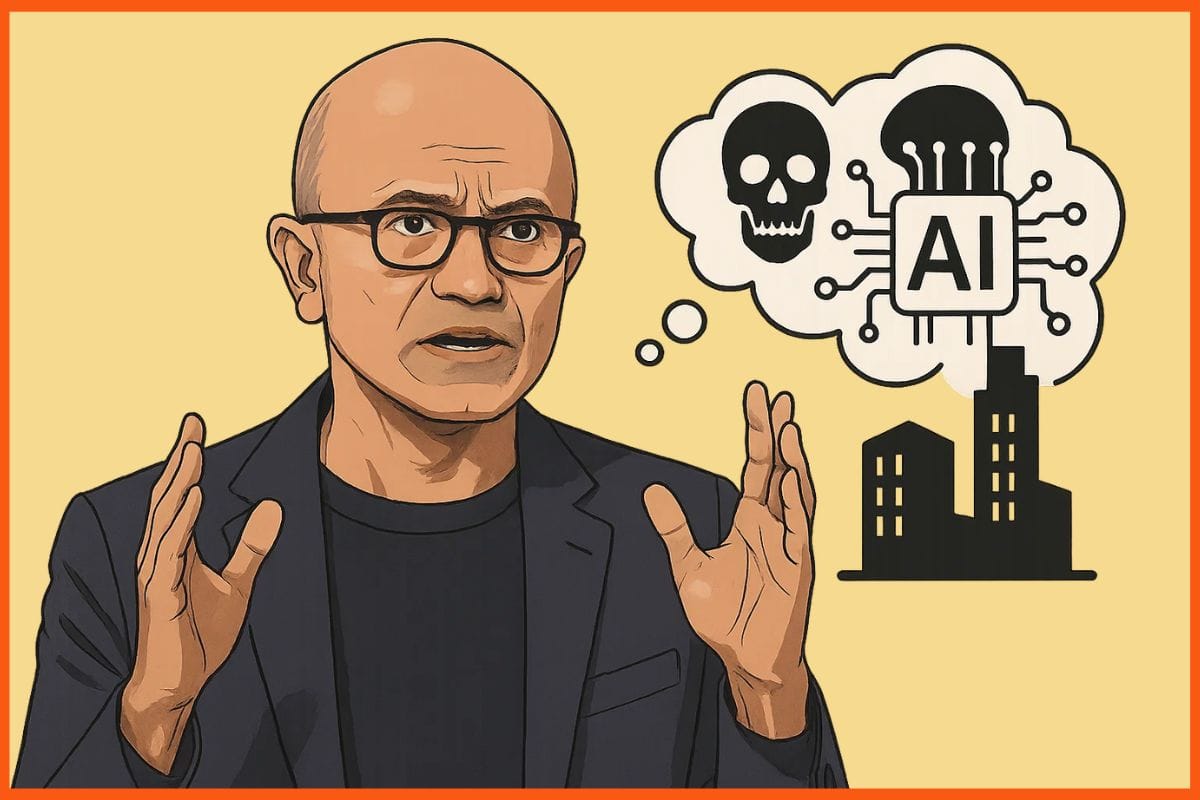
Satya Nadella, the CEO of Microsoft, has acknowledged that he has a disturbing notion that keeps him up at night: what if the computer giant fails to survive the AI revolution? An innocent query about workplace culture ultimately led to a rare moment of weakness from the guy in charge, which prompted his open revelation during an employee-only town hall.
Nadella, who has led Microsoft into its current AI-driven renaissance, acknowledged that the company's largest and most lucrative endeavours might not be as significant in the future. According to him, some of the company's largest ventures may not be as significant in the future.
Nadella Narrates the Ordeal of DEC
The CEO cited Digital Equipment Corporation (DEC), a well-known cautionary tale from Silicon Valley's history. Early in the 1970s, DEC was a major force in computing, but it lost its appeal when it couldn't keep up with new developments, especially the Reduced Instruction Set Computing (RISC) architecture. Nadella acknowledged that the IT sector is replete with examples of once-great businesses that have simply vanished.
He went on to say that DEC is the specific one that haunts him. He disclosed that his first computer was a DEC VAX, and he had previously fantasised of working there; thus, the reference also had a personal sting. He pointed out that Microsoft ended up reaping unanticipated benefits from DEC's downfall. He recalled that several of the developers of Windows NT were from a DEC lab that had been laid off, highlighting the fact that industry disruptions frequently cause talent to go from one company to another.
When a UK-based employee noted that Microsoft felt noticeably different, colder, more rigid, and lacking in the empathy Microsoft had come to respect, then the topic of corporate mortality came up. The criticism was courageous, and Nadella did not brush it off. Rather, he acknowledged that the emotion was accurate and pledged to consider how leadership could improve.
Survival in a Fast-Evolving Industry is the Need of the Hour: Nadella
In addition to addressing the market's AI-driven uncertainties, Nadella recognised that the corporation had to foster an atmosphere where workers feel encouraged, appreciated, and heard. After all, surviving in a rapidly changing sector depends as much on retaining your workforce as it does on winning technology fights. The openness of the CEO acted as a rallying cry as much as a warning.
His message is that unless a corporation continuously adjusts, irrelevance will always lurk, regardless of how tall it may appear. Microsoft also needs to be on guard in this new AI-powered environment, or DEC could disappear despite its early supremacy.
However, Nadella's remarks also highlighted the emotional strain of running a business with such a past. He seems eager to find a balance between leading Microsoft into the future and re-establishing trust with its employees, despite being haunted by the demise of previous titans and confronted by internal worries.
|
Quick
Shots |
|
•At an internal town hall, Nadella
shared his personal fears about Microsoft’s survival in the AI era. •Nadella cited Digital Equipment
Corporation (DEC) as a reminder of once-dominant tech giants that collapsed. •Nadella revealed his first computer
was a DEC VAX, making the story emotionally significant. •Nadella stressed the need for
constant adaptation, empathy, and cultural resilience. |