

OpenAI’s Sam Altman Calls on U.S. to Expand Chips Act Tax Credits to Boost AI Innovation
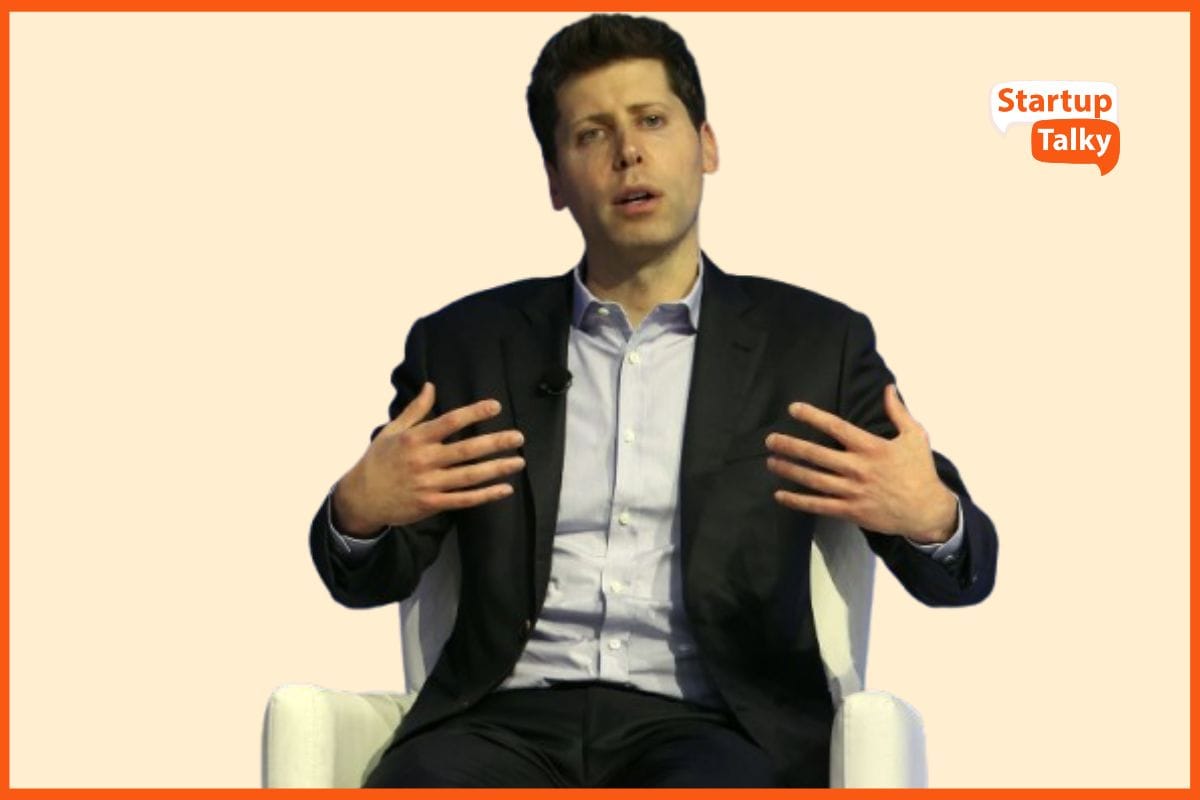
As the nation steps up attempts to establish itself as a global leader in artificial intelligence, OpenAI CEO Sam Altman reiterated the company's request on 7 November for the United States to increase eligibility for a Chips Act tax credit. Altman's statement comes after Chris Lehane, the chief global affairs officer for OpenAI, wrote to Michael Kratsios, the director of policy for the White House Office of Science and Technology, on October 27 to request an extension of the Advanced Manufacturing Investment Credit's (AMIC) eligibility to include AI server production, AI data centres, and grid components. The AMIC is a federal tax incentive in the United States that aims to increase domestic semiconductor production.
Why Altman Feels this is the Right Step?
OpenAI believes that U.S. re-industrialisation throughout the full stack — fabs, turbines, transformers, steel, and much more — would benefit everyone in this business and other industries, Altman said in a post on X. However, Altman stated that the tax credit is "very different from loan guarantees to OpenAI." Altman had earlier this week stated that the business had discussed with the U.S. government the prospect of federal loan guarantees to encourage the construction of chip manufacturers in the U.S., but not data centres.
According to him, OpenAI has pledged to invest $1.4 trillion in developing computational resources over the ensuing eight years. Leading tech companies have revealed ambitious plans to build new data centres and develop sophisticated CPUs in response to the surge in demand for AI models and solutions, such as OpenAI's popular ChatGPT. However, White House AI and crypto czar David Sacks had stated that the federal government would not provide a bailout for AI.
OpenAI on a Radar of Many Publishers
The growing controversy around OpenAI's usage of copyrighted content is exacerbated by CODA's lawsuit. In order to train its AI on copyrighted content first and address concerns subsequently, the corporation has frequently adopted the "ask forgiveness, not permission" strategy. Due to similar concerns, OpenAI has previously been sued by a number of significant media outlets.
According to the Associated Press, OpenAI was sued in November 2024 by organisations such as CBC/Radio-Canada, Globe & Mail, Postmedia, Torstar, and The Canadian Press. Millions of OpenAI articles were allegedly utilised to train ChatGPT without permission, according to the report. Later, a US federal judge permitted The New York Times and others to continue their legal action against Microsoft and OpenAI.
A lawsuit was also brought by eight US newspapers, including the New York Daily News, Chicago Tribune, Orlando Sentinel, Denver Post, and others, alleging that their copyrighted material was used without permission to train Microsoft's Copilot and ChatGPT.
According to the report, there is currently no clear legal guidance regarding whether training AI on copyrighted material constitutes infringement, and US copyright law has not been revised since 1976. Anthropic, an AI business, was punished for unlawfully stealing books for training, but a US judge recently decided that the company did not violate copyright laws by using the books to train its model.
|
Quick
Shots |
|
•Altman
emphasized that tax credits differ from loan guarantees, clarifying that
OpenAI is not seeking direct financial aid. •OpenAI
plans to invest $1.4 trillion over the next eight years to expand its
computational infrastructure. •The
proposal aligns with U.S. efforts to boost domestic semiconductor and AI
production amid growing global competition. •The
White House’s AI policy team, led by David Sacks, has stated that there will
be no federal bailouts for AI firms. |