

Reliance Industries Puts Cell Manufacturing Plans on Hold After Failed Bid for Chinese Battery Technology
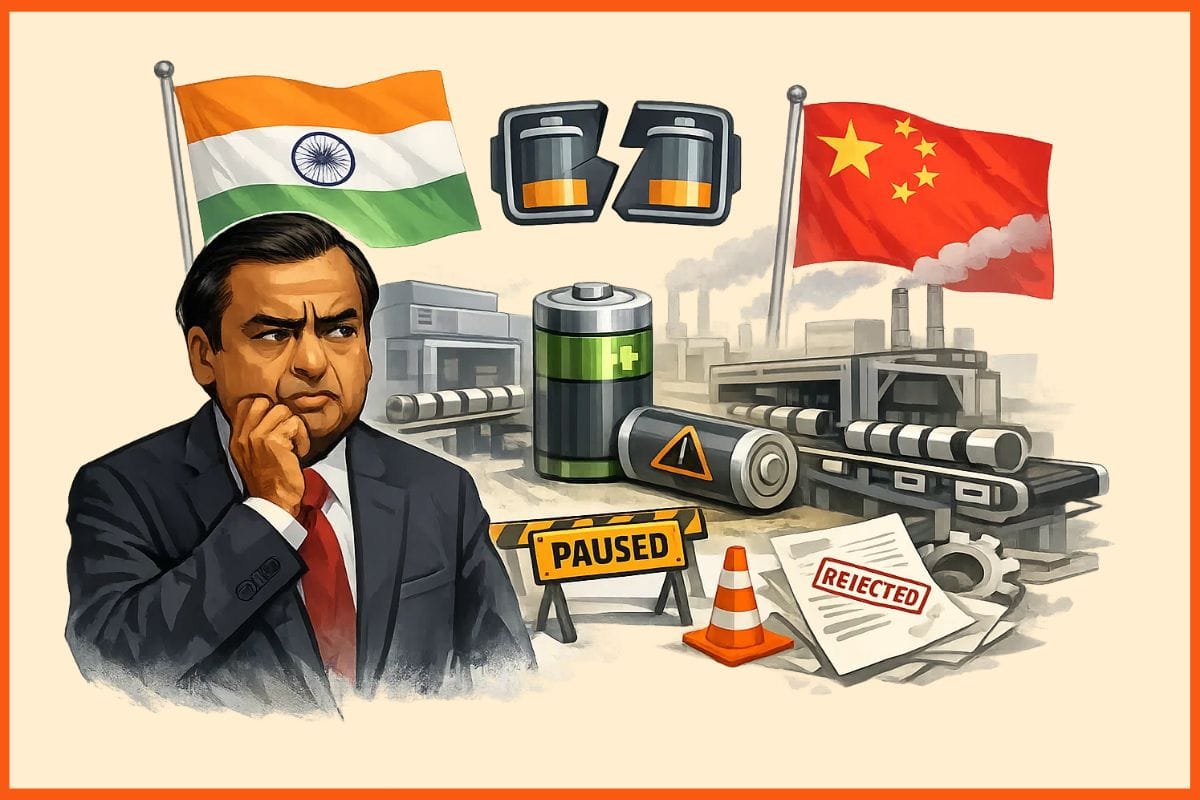
Even the most powerful companies in the nation are finding it difficult to establish an autonomous clean-energy supply chain, as evidenced by Reliance Industries Ltd.'s decision to halt plans to produce lithium-ion battery cells in India after failing to acquire Chinese technology, according to people familiar with the situation. According to various media reports that cited internal sources, the Mukesh Ambani-led oil-to-telecoms conglomerate, which had planned to start cell manufacturing this year, had been in talks to license cell technology with Xiamen Hithium Energy Storage Technology Co., a Chinese supplier of lithium iron phosphate.
A Big Setback to RIL
According to media sources, a Chinese company pulled out of the proposed alliance due to Beijing's restrictions on foreign technology transfers in critical industries, meaning the recent negotiations with RIL did not reach their conclusion. Reliance stated that as a result of the setback, it is now concentrating on building battery energy storage systems, or BESS—containers for its own renewable power projects.
A representative for Reliance disputed that the company's plans for renewable energy, which include a battery gigafactory it had previously stated would begin operations in 2026, had changed in any way. In an email, the spokesman stated that RIL's energy storage plans have always included BESS, battery pack, and cell production, and that their implementation is going well. Reliance's difficulties demonstrate how businesses that are supposed to support Prime Minister Narendra Modi's objective of making India carbon-zero by 2070 are unable to make significant progress in the absence of improved diplomatic relations with Beijing.
In an effort to preserve its strategic advantages in certain industries, China has increased its examination of renewable energy technology agreements, making it more difficult for international businesses to localise their products. Reliance makes the majority of its money from oil refining and consumer companies, so the halt to the cell-making portion of its broader plans doesn't immediately hurt the company's finances, but it highlights the difficulties facing the tycoon's ambitious green energy goals. In 2021, the wealthiest individual in Asia revealed plans to build four gigafactories as part of a $10 billion investment drive to shift the empire away from its fossil fuel roots.
RIL Now Looking for Alternative Partners
Media reports further claimed that the other technologies from South Korea, Japan, and Europe were evaluated but found to be significantly more costly and less suitable for widespread use in India. Conglomerates in India Inc. are racing to get battery capacity to serve quickly growing renewable power industries, but they are still hindered by technological constraints.
Despite the recent diplomatic reconciliation between China and India, obstacles to technology transfers persist as both countries cope with President Donald Trump's erratic foreign policy. According to those involved with the talks, Reliance's internal teams have determined that moving forward without access to tested Chinese cell technology would greatly increase costs and execution risks, especially given that global markets are already struggling with excess battery capacity.
|
Quick Shots |
|
•Reliance
Industries has paused lithium-ion cell manufacturing plans in India after
failing to secure Chinese battery technology. •Talks
with China’s Xiamen Hithium Energy Storage Technology for LFP cell technology
licensing did not materialise. •The
proposed alliance reportedly collapsed due to Beijing’s restrictions on
foreign technology transfers in strategic sectors. •Reliance had planned to begin cell
manufacturing in 2025, making the halt a significant setback to its
clean-energy roadmap. |