Venezuela Crisis Puts Pressure on Indian Rupee: Impacts Gold, Oil & Stocks
- The Indian rupee opened the week at 90.24 (weakened) against the U.S. dollar. - Investors are withdrawing funds from the Indian market out of panic. - All eyes are on the RBI’s $10 billion dollar-rupee swap on January 13.
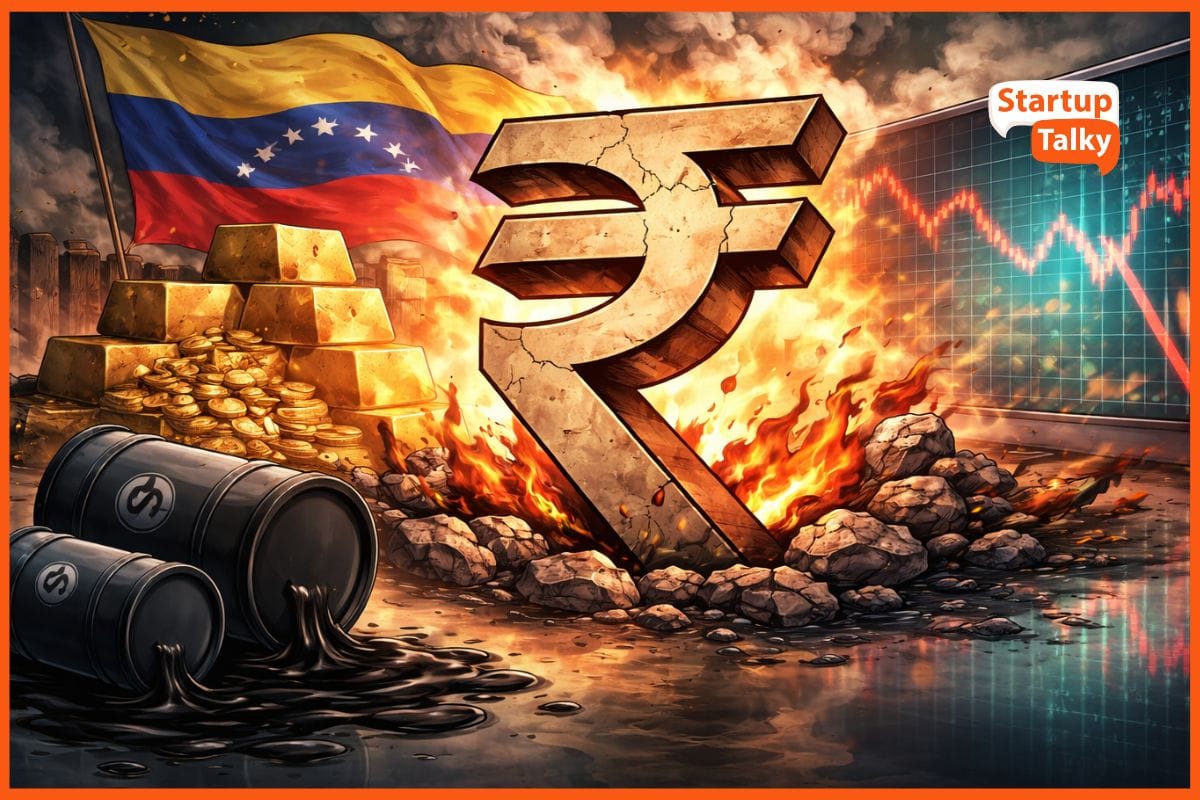
Venezuela is under pressure, and so is the Indian rupee. The new Global geopolitical tension (the Venezuela crisis, precisely) has weakened the rupee, slipping four paise to 90.24 against the U.S. dollar (opening the week). Notably, over the past year, the Indian rupee has fallen by 5%, hitting a record low of INR 91.14 per U.S. dollar. Bankers and experts say the rupee will likely head into a rough week. So, how large can the impact be? Will it affect the gold, petrol, imports and stocks (as it matters a lot to the general public)? Is RBI planning to take any major steps to ease the pressure? Learn more.
Why Is the Indian Rupee Falling (Over the Last Two Weeks)?
Fall has been slow yet consistent over the last 2 weeks. For the record, it also crossed an important mental level: INR 90 per dollar. Now, 90 is crucial as many traders panic after this point. Apparently, there are three major reasons why this is happening:
- Global problems (especially a crisis involving Venezuela and the U.S). Plus, Trump’s higher tariffs.
- India’s domestic economic issues (exporting less and importing more is widening the trade deficit). Plus, investors are moving away from the Indian markets.
- A strong U.S. dollar (and high demand for dollars at the year's end).
Why Is Venezuela Suddenly Affecting the Indian Rupee?
The U.S., under Donald Trump's administration, led an operation in Venezuela to capture its President Nicolás Maduro. According to Trump, Maduro was captured for a trial in court for drug trafficking charges. Trump mentioned that the U.S. is now in charge of Venezuela, after which the global tension rose, and investors got scared. Investors naturally move into a 'risk-off' environment and shift money into safe currencies, especially the U.S. dollar. Money has also been moved from emerging markets such as India. Therefore, the Indian rupee got hit.
Falling Indian Rupee Impact on Gold, Oil, Imports, and Stocks in India
What Are Bankers & Experts Saying About the Falling Indian Rupee?
“The currency is likely to be the most sensitive to global volatility, and markets are already positioned for a weaker rupee. However, it is difficult to predict the extent of the move or the levels at which the Reserve Bank of India will step in,” said Anshul Chandak, Head of Treasury at RBL Bank.
“The last two to three sessions have seen persistent pressure. While the RBI has announced supportive measures, the next major intervention is scheduled only for January 13. Until then, the rupee could weaken to the 90.50–91 range against the dollar,” said Alok Singh, Head of Treasury at CSB Bank.
What’s Happening With the U.S. Dollar Right Now?
The U.S. dollar has getting stronger as it hit:
- A 3½-week high vs the euro.
- 2-week highs vs yen, Swiss franc, and Canadian dollar.
What is RBI doing on January 13 ($10 Billion Swap)?
Major reports suggest that the Reserve Bank of India (RBI) is planning a big operation:
A $10 billion dollar-rupee swap
In simple terms, banks will give dollars to the RBI for rupees in exchange. After a 3-year tenure, RBI will return those dollars, so banks will have to pay a higher price (including interest/forward premium). The real question is: why does the RBI want to do this?
- It seeks to boost the dollar supply to control volatility and ease pressure on the rupee. Hence, the RBI's move on January 13 is paramount.
 StartupTalky News