

Diamonds Just Got Clearer Under New BIS Rules: What’s a Real Diamond?
- India tightens diamonds labelling rules to protect buyers; lab-grown diamonds can't be called 'diamonds' alone. - BIS has introduced a new official standard called IS 19469:2025 for diamonds. - Jewellery industry leaders strongly support the new BIS rules and say they build trust.
Everything that shines bright isn't a diamond, and everything that says diamond isn't a diamond, either. The story of lab-grown diamonds has confused many. Well, not anymore. India has made new official rules about what can and cannot be called a “diamond.”
The news rules defined by the Bureau of Indian Standards (BIS) have set new quality and labelling standards in India. The agenda is simple: protect the buyers, especially online (where most of the confusion lies). So, what are these new rules? Read more to learn.
Why Were These BIS Rules Around Diamonds Needed?
For several years, the diamond industry used different and confusing words for diamond-like products, such as:
- Natural diamonds
- Lab-grown diamonds
- Man-made or alternative stones
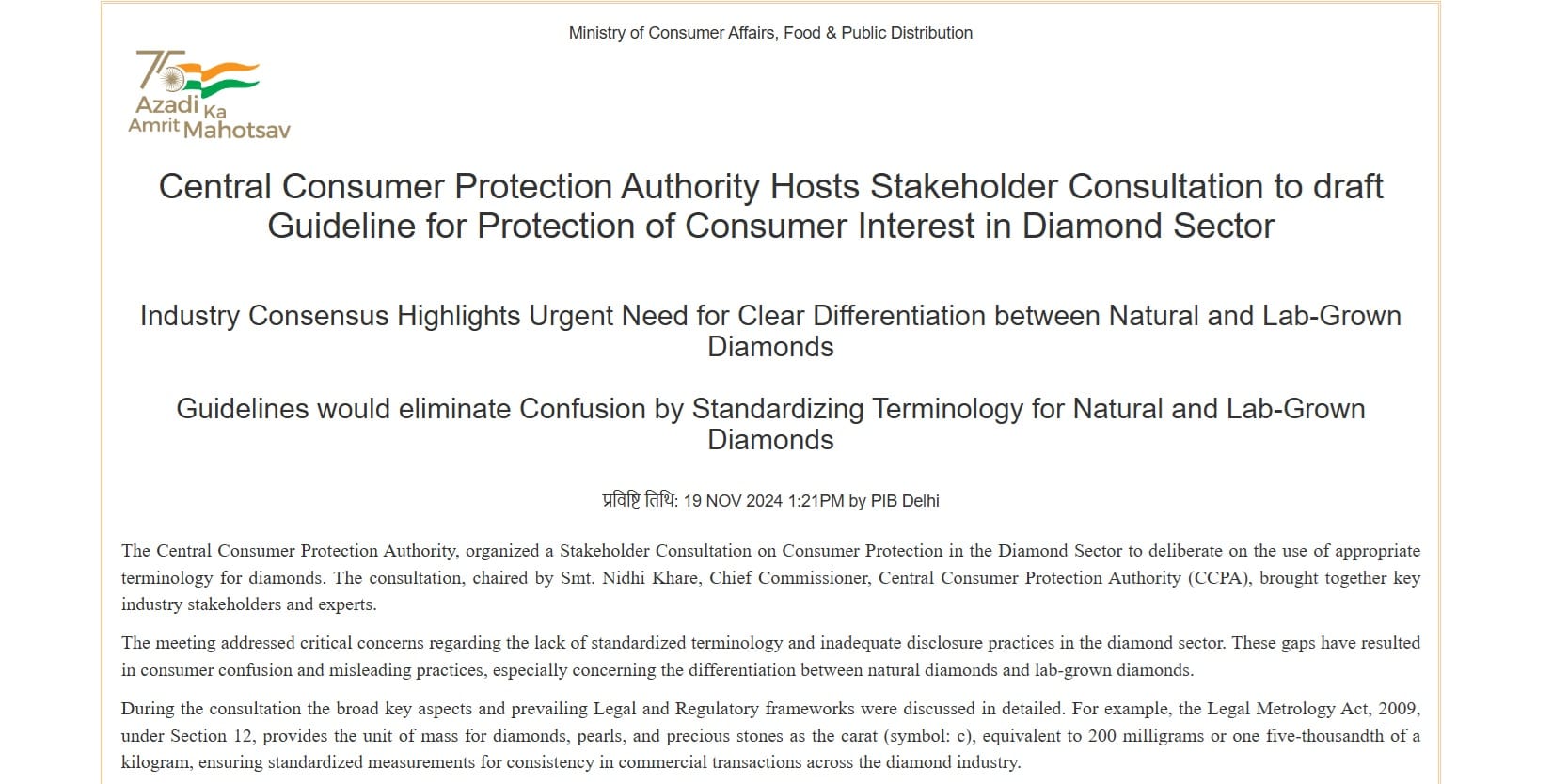
Especially on e-commerce websites, the use of words like pure, nature's, even when the diamonds are manmade, has misled several. To protect buyers in every marketplace, the government has put in place these rules.
- BIS has introduced a new official standard called IS 19469:2025.
- This is India’s new version of an international standard (ISO 18323:2015).
- This separates natural diamonds from laboratory-grown diamonds entirely.
These are not just mere suggestions. They are clear and must follow the rules for Jewellery sellers in the country. Therefore, consumers can make better-informed decisions when buying diamond jewellery. And by default, protected from the guilt.
BIS Rules: What Can Be Called a Diamond
What Industry Leaders Are Saying About the New BIS Rules for Diamonds?
Big Jewellers across India, including leaders from Navrattan Jewellers, Aisshpra Jewellery, Anand Jewels, and Gehna Jewellers, agree with the new rules. Plus, the Natural Diamond Council (NDC) strongly supports the move. They say these provide transparency, build trust, and hold brands accountable for misleading people.
“This standard brings long-awaited clarity for consumers. When someone buys a diamond, they deserve to know exactly what it is—clearly, honestly and without confusion. Defining what can be called a diamond strengthens trust and protects the value of a truly natural diamond,” said Richa Singh, managing director, Natural Diamond Council.
Final Thoughts...
These much-needed rules have finally come into effect. The above-mentioned rules will help you determine the real diamonds so you won't lose your money. If you ever find someone misleading the lab-grown diamonds as the real ones, report it to the National Consumer Helpline (NCH).