

How Pranav Dangi Built The Hosteller into a Community-Driven Travel Brand for Young India
startuptalkers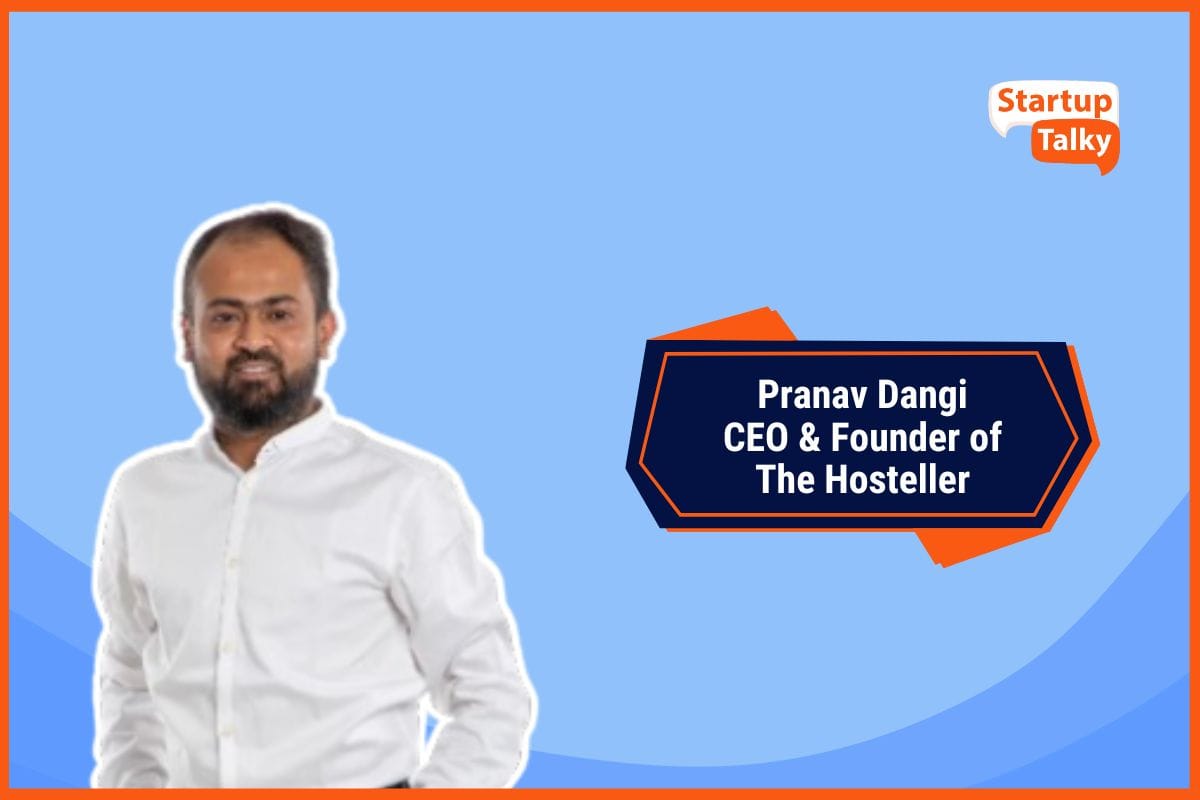
In this exclusive interaction with StartupTalky, marking National Tourism Day, Mr. Pranav Dangi, CEO & Founder of The Hosteller, shares how the brand has grown into one of India’s largest self-operated backpacker hostel networks while redefining youth travel experiences. With 70+ properties across mountains, beaches, cities, and heritage destinations, The Hosteller combines standardised operations with community-led programming, curated local experiences, and tech-enabled convenience. He discusses how the company has scaled rapidly through an asset-light, tech-driven model, expanded into emerging destinations to promote sustainable tourism, and built a strong repeat-traveller community through memberships, workation-friendly spaces, and experiential offerings designed for how young India travels today.
StartupTalky: How does The Hosteller operate today, and what are the key services and experiences that differentiate your brand in India’s youth and domestic travel market?
Pranav Dangi: Today, The Hosteller operates as a pan-India, self-operated backpacker hostel network with 70+ properties and over 5,100 beds. Every hostel runs on a central operating system—standardised processes, common design language, shared tech and community-led programming—so guests know exactly what to expect, no matter where they are in the country.
What truly differentiates us is that we’re not just selling beds. We offer a full-stack travel experience—stay, food, local experiences, transport support, and community—all under one brand. From social common areas and curated activities to a strong focus on safety, solo travel (especially for women), and meaningful local experiences, The Hosteller is built for how young India actually travels today.
StartupTalky: The Hosteller has grown to operate in 60+ locations across India and plans to expand to over 150 hostels by 2026 after securing Series A funding. What specific operational and market factors have enabled this rapid scaling while maintaining guest experience?
Pranav Dangi: We been operating in a seasonal category, but we have successfully managed to de-seasonalise the business. Our network spans mountains, beaches, cities, and heritage destinations—each peaking at different times of the year. This allows demand to balance out at a system level even when individual markets fluctuate.
The Series A funding has helped us accelerate expansion, but the real driver has been operational control and consistency. We follow an asset-light, self-operated model, centralised revenue management, uniform SOPs, and tech-driven operations. Over 55% of our bookings are direct, we have a fast-growing membership base, and we invest deeply in training community managers who deliver a consistent experience across locations.
StartupTalky: On National Tourism Day, how does The Hosteller support the growth of offbeat and emerging destinations, and how does this align with your strategy to promote sustainable domestic tourism?
Pranav Dangi: At The Hosteller, growth has never been about chasing the obvious destinations. Some of our strongest markets today—Bir, Chakrata, Jibhi, Wayanad or Kodaikanal—were relatively under the radar when we first entered them.
By building hostels in these regions early, we help create consistent, year-round travel demand instead of short seasonal spikes. This brings steady employment, encourages local entrepreneurship, and allows us to collaborate closely with local guides, artists, adventure operators and small businesses who shape the guest experience.
For us, sustainable tourism means distributing travel more evenly across India, easing pressure on overcrowded hotspots while helping emerging destinations grow responsibly. It’s not a one-day initiative—it’s embedded in where we choose to grow and how we build each hostel.
StartupTalky: Community building is central to your brand. What measurable engagement metrics (e.g., repeat stays, membership activations, local partnerships) do you track to evaluate the success of experiential activities and social spaces at your properties?
Pranav Dangi: Community for us is something we measure very clearly through guest behaviour and data. Across the network, repeat guests now account for 38.3% of total stays, up from 16.4% the previous year, which is one of our strongest indicators of a thriving community. We also track membership adoption and usage, with 2,500+ active members who consistently book, stay longer, and use multiple Hosteller services across trips.
At a property level, we monitor average length of stay, participation in hostel-led activities, and usage of common and social spaces, as these reflect how connected guests feel to the hostel and to each other. Direct bookings, which contribute over 55% of our total bookings, and referrals further signal trust and long-term engagement with the brand.
Beyond guest metrics, we evaluate the quality and continuity of local partnerships—with guides, artists, adventure operators, and small businesses—because authentic, community-led experiences are central to our model. When guests return, stay longer, book directly, and actively participate in on-ground experiences, we know our community-building efforts are working at scale.
StartupTalky: The Hosteller has integrated tech solutions such as the Glu concierge app and partnerships with platforms like redBus. How have these integrations impacted customer acquisition, retention, or operational efficiencies?
Pranav Dangi: Technology has helped us simplify travel for guests while improving efficiency at scale. Our concierge and web-app experience allows guests to manage bookings, access services, and discover experiences easily, which directly improves retention.
The redBus partnership helps travellers seamlessly plan intercity movement—especially important for backpackers exploring multiple destinations. On the backend, tools like dynamic pricing systems have strengthened revenue management, while automated KYC and self-serve F&B have reduced check-in times and operational load.
StartupTalky: With increasing competition from other hostel and experiential stay brands, what unique revenue streams or value-added services (e.g., workations, memberships, curated experiences) are you prioritising to differentiate The Hosteller’s offerings?
Pranav Dangi: We are focused on driving sustainable and diverse revenue streams rather than being linearly focused on nights stays. Workation, long-stay rates, and membership concepts are core to this priority, as they generate higher lifetime values with greater repeat behavior. We are also beginning to expand upon experiences based on destinations, which add to staying values while serving local ecologies. These enable us to compete based upon experiences in communities rather than necessarily being primarily price-competitive in a market.
Our goal is to be the brand travellers rely on every time they travel; not just where they sleep, but how they experience a place.
StartupTalky: As remote work trends continue, how are you planning to evolve your work-friendly spaces and hospitality services to capture demand from digital nomads and extended-stay travellers?
Pranav Dangi: We have seen a strong demand from guests staying longer, working remotely while travelling. In response, we are evolving our hostels with better work-friendly common areas, reliable connectivity, quieter zones, and flexible stay options.
At the same time, we ensure that work doesn’t dilute the social energy of our hostels. The balance between productivity and community is what makes The Hosteller attractive to digital nomads.
How we service this market has thus been adjusted based on their needs for extended stays or work-friendly spaces.
StartupTalky: Looking ahead to 2027 and beyond, what are the most significant strategic priorities for The Hosteller in terms of geographic expansion (including potential international markets), customer segments, and ecosystem partnerships?
Pranav Dangi: India will remain our core focus, with plans to add 40–50 hostels every year, targeting travel-heavy states and emerging destinations. Internationally, we plan to enter select backpacking hubs across Asia and the Middle East from 2027 onward, however this will be slow, strategic, and asset-light.
Our key priorities are focused on strengthening our membership-led ecosystem, deepening partnerships across transport, experiences, and fintech and serving core segments like solo travellers, Gen Z, digital nomads, and community-led group travel.
Our long-term vision is to build Asia’s most connected backpacker network, rooted in India but global in spirit.
 Ashwini