
Women, Craft, and Change: How Priyal Bhardwaj is Building Impact Across Fashion, Social Work, and Public Leadership
📝InterviewsIn this interview, Priyal Bhardwaj talks about blending fashion, social work, and leadership to create impact. From supporting artisan communities with Label PB to empowering women through Sangini Saheli, she highlights the power of women-led development and sustainable ecosystems.
India’s fashion, social impact, and women empowerment ecosystem is undergoing a significant transformation. The Indian fashion industry is expected to reach over USD 115 billion by 2026, while the handicrafts sector contributes $4B+ in exports and employs millions, many of them women artisans. At the same time, women-led development initiatives and self-help groups (SHGs) are playing a crucial role in driving financial inclusion and grassroots entrepreneurship.
As part of StartupTalky’s International Women’s Day 2026 series, we spoke with Priyal Bhardwaj, whose journey uniquely blends fashion, social impact, and political leadership. Through Label PB and Sangini Saheli, she is building sustainable ecosystems that empower women, preserve heritage, and create long-term community impact.
From Fashion to Social Impact: Defining Early Career Decisions
StartupTalky: Your journey spans fashion, social work, and politics. What were the key defining decisions early in your career that shaped such a diverse and impact-oriented path?
Priyal Bhardwaj: Early in my career, when I found Label PB, it was not only about fashion as design, but fashion as a platform to celebrate India’s textile heritage and the communities that sustain it. Working closely with artisans from regions such as Kashmir, Murshidabad, and Banaras over the years exposed me to the deeper realities of livelihoods, craft ecosystems, and the role of women within them.
That experience shaped my understanding that enterprise and social responsibility are not separate domains. Over time, it became clear that meaningful change requires engagement beyond one sector. This led to the formation of Sangini Saheli, where the focus shifted to grassroots empowerment through self-help groups, health awareness, and skill-building initiatives.
The transition into public life and organisational leadership came naturally from this journey. It was driven by the belief that when entrepreneurship, community engagement, and policy awareness intersect, they can create a far more sustainable and scalable impact.
Driving Women-Led Development Through Political Leadership
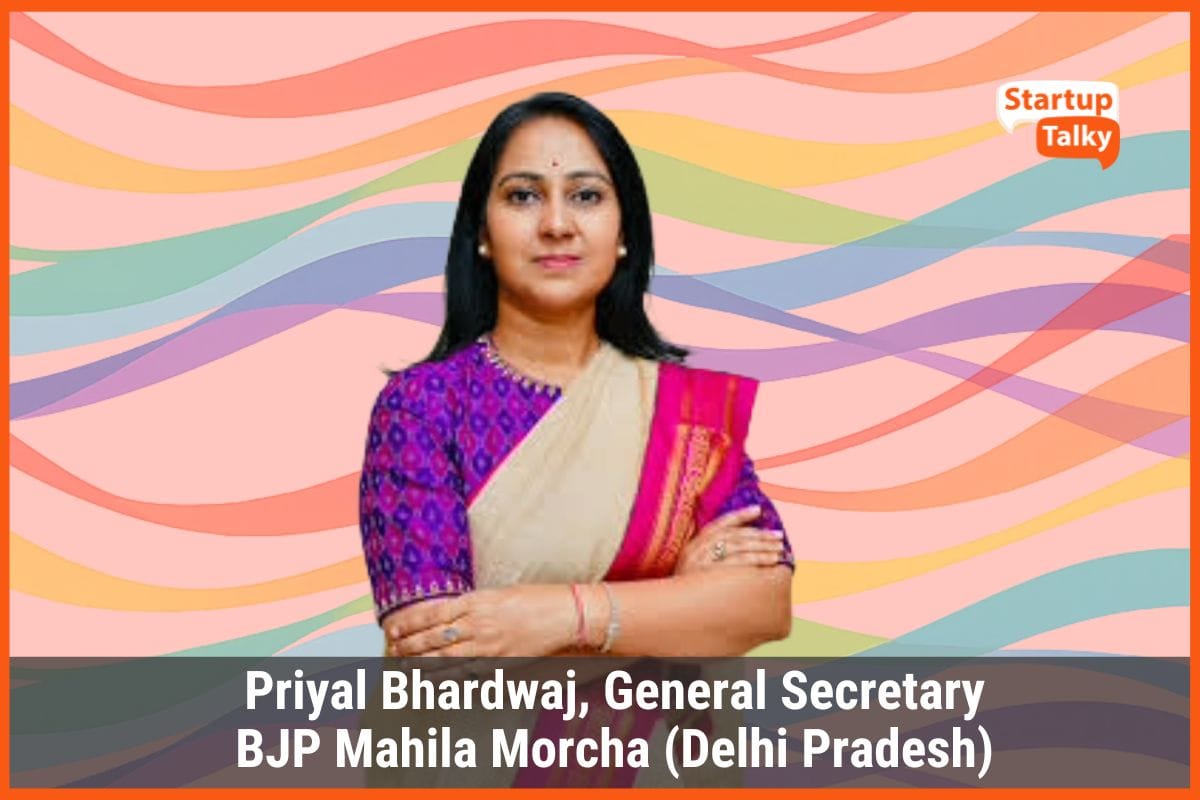
StartupTalky: How do you see your role as General Secretary of the BJP Mahila Morcha (Delhi) amplifying your work in women empowerment and community development?
Priyal Bhardwaj: My role as General Secretary of BJP Mahila Morcha, Delhi, provides an important platform to bridge real time gaps. Over the years, working directly with aspirational leaders in BJP and women led communities through has given me valuable insight into the aspirations and challenges women face in everyday life.
Within the organisation, the focus is on strengthening women’s participation not only as beneficiaries of schemes but as active contributors to governance and community leadership. Under the guidance of our Honourable Prime Minister Narendra Modi, there has been a visible shift towards women-led development through initiatives that promote financial inclusion, entrepreneurship, and education.
In my role, I see the opportunity to amplify awareness of these initiatives, encourage greater grassroots engagement, and ensure that women are supported in accessing opportunities that allow them to participate more confidently in economic and civic life.
Understanding the Real Barriers to Women’s Independence
StartupTalky: Based on the work and insights from your teams on the ground, what are the most pressing barriers women face today in achieving independence?
Priyal Bhardwaj: From our work across communities, it is clear that the barriers women face are often interconnected. Access to education, financial literacy, healthcare, and safe mobility all influence a woman’s ability to achieve economic and social independence even today.
One of the most significant challenges continues to be access to information and structured opportunities. Many women possess the capability and motivation to build livelihoods, but they lack exposure to networks, training, or financial systems that allow them to scale their efforts.
Through Sangini Saheli, we have focused on areas such as menstrual hygiene awareness, educational support for girls, and the formation of self-help groups. These initiatives collectively create a foundation where women can move from dependency to participation and eventually to leadership within their communities.
Building Sustainable and Inclusive Fashion with Label PB
StartupTalky: How does your fashion brand Label PB align with sustainable fashion and inclusive supply chains?
Priyal Bhardwaj: At Label PB, sustainability has always been closely tied to heritage and craftsmanship. Long before sustainable fashion became a global industry conversation, Indian textiles inherently reflected many of those principles through slow production cycles, handcrafted processes, and intergenerational knowledge.
Our work with artisans across regions such as Kashmir, Murshidabad, and Banaras focuses on preserving these traditions while adapting them for contemporary audiences. This approach allows craft communities to remain economically relevant while maintaining their cultural identity.
Inclusive supply chains in fashion are not just about sourcing responsibly; they are about recognising the people behind the craft and ensuring that their skills are valued and sustained. For me, fashion becomes meaningful when it connects design with dignity of labour and cultural continuity.
Balancing Multiple Roles While Driving Real Impact
StartupTalky: How do you manage different stakeholders while ensuring real impact?
Priyal Bhardwaj: Managing diverse responsibilities across fashion, social initiatives, and organisational leadership requires clarity of purpose. Each platform I work through serves a different audience, but they are connected by a common objective: creating value that extends beyond individual success.
A key aspect of this process is building strong teams and ensuring that initiatives are structured with clear goals and accountability.
At Sangini Saheli, for example, programmes are designed with measurable outcomes so that we can understand where impact is being created and where improvements are needed.
Equally important is listening to communities directly. Ground-level engagement ensures that initiatives remain relevant and responsive rather than purely conceptual.
Designing Community-Centric Programs with Cultural Sensitivity
StartupTalky: How have research insights about cultural context shaped Sangini Saheli’s programmes?
Priyal Bhardwaj: Over time, our teams have learned that sustainable change rarely comes from imposing solutions, it emerges when communities feel ownership of the process.
For example, while working with self-help groups, we place strong emphasis on peer networks where women support and mentor each other. This creates a sense of collective responsibility and trust that strengthens participation.
Similarly, initiatives around health and education are designed with cultural sensitivity so that conversations around subjects such as menstrual hygiene or financial independence can take place with openness and dignity. When programmes align with local contexts, they become far more sustainable.
Vision for the Future: Building Scalable Women-Led Ecosystems
StartupTalky: What is your long-term vision for the ecosystems you are building?
Priyal Bhardwaj: Looking ahead, my vision is to build interconnected ecosystems where entrepreneurship, community development, and leadership opportunities for women grow together.
Through Label PB, the aim is to continue supporting artisan communities and strengthening the presence of Indian craftsmanship in contemporary design spaces. Through Sangini Saheli, the focus will remain on expanding networks of self-help groups, health awareness programmes, and livelihood opportunities for women.
At a broader level, I believe the future lies in women not only participating in development but actively shaping it. When women gain access to education, financial independence, and leadership platforms, the benefits extend far beyond individuals to families, communities, and ultimately the nation.
My goal is to continue contributing to that ecosystem in ways that are both meaningful and sustainable over the long term.
 Apoorva Bajj