
The Role of Travel Insurance in Visa Approvals: New Embassy Requirements for 2026
📰 News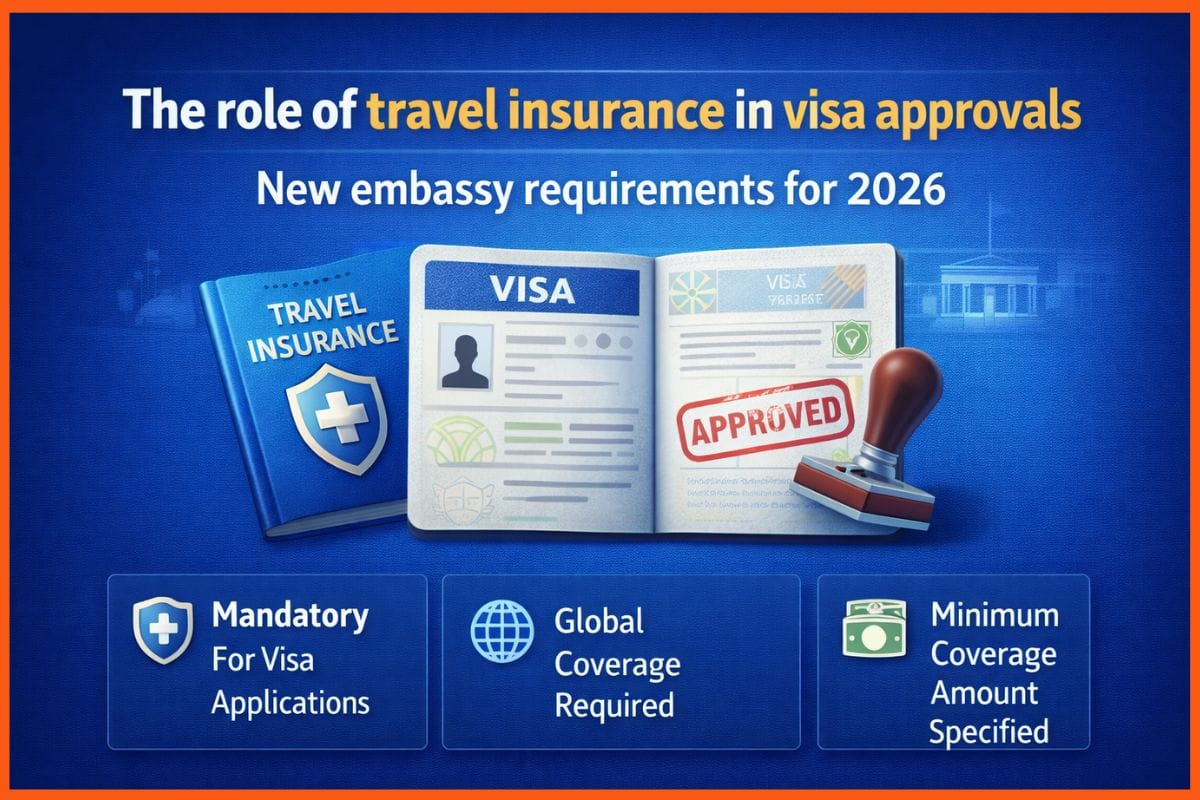
The process of visa applications involves a detailed evaluation of a traveller's preparedness, self-reliance, and responsibility. With several countries becoming stricter with entry norms and the rise in healthcare costs, embassies are now redefining what an “ideal” visa application is. Travel insurance policy is now one of the major checkpoints in the application process. What once served as a supportive tool for safe travel is now a decisive factor in visa qualification. In 2026, travel insurance plans are poised to play a key role in approvals, influencing the outcome, processing speed, and scrutiny levels. This article discusses how travel insurance helps determine visa approval.
Why is travel insurance becoming an important tool in visa applications?
Uninsured and underinsured travellers who need emergency evacuation, medical care, or extended stay due to unexpected circumstances have become a critical area of consideration for embassies. When a traveller lacks proper coverage, the financial and management responsibilities often shift to the host country.
In such scenarios, a valid travel insurance policy acts as proof of assurance. It provides embassies with the relief that the applicant will be able to handle emergencies (if any) independently rather than relying on the host country’s healthcare systems, diplomatic intervention, or state-funded repatriation. This one document eliminates multiple concerns at once for visa officers.
How are embassy requirements changing in 2026?
Generic insurance proof is not enough. Visa authorities now evaluate insurance documents with far greater precision. Most requirements focus on:
- Emergency treatment and hospitalisation
- Minimum medical coverage
- Medical evacuation and repatriation
- Coverage validity matches the entire visa duration
- Destination and territory inclusion in the policy
Ambiguous, loosely stated, or short-term insurance document terms are increasingly leading to outright rejection or delays.
Medical coverage: The core of visa approval
Medical costs abroad are usually high, especially in countries with private healthcare systems. This factor determines the type of coverage you must choose when travelling.
Embassies now check that travel insurance policies include coverage for:
- Emergency medical treatment
- Hospitalisation and surgeries
- Prescribed medication
- Follow-up care related to emergencies
In addition, these inclusions, embassies require coverage amounts to be clearly stated and easily verifiable. Policies with vague clauses or heavy exclusions often fail to qualify for approval.
Importance of emergency evacuation and repatriation
Evacuation and repatriation have become real concerns due to natural disasters, global travel disruptions, and sudden health crises. They are no longer an exception, but a necessity that even determines visa application success.
Many countries are taking evacuation and repatriation coverage seriously, especially for long-stay visas. This ensures travellers can be safely transported back home if/when required, without involving government resources.
Impact on students and long-term travellers
Due to longer stays, students, exchange visitors, interns, and digital nomads are subject to stricter travel insurance requirements. Basic or short-term plans are no longer sufficient.
Instead, these types of travellers are expected to have insurance with:
- Continuous medical coverage for the entire visa duration
- Adequate medical limits are suitable for extended stays
- Clearly defined policy renewal or extension options
Mismatched dates or any gaps in policy terms can result in delayed processing or requests for resubmission.
Common errors in travel insurance policy that lead to rejection
Travellers must stop underestimating or neglecting the role of travel insurance. Here are the mistakes that are becoming a surefire reason for visa rejections and delays:
- Submitting domestic health insurance instead of international coverage
- Buying the cheapest policy just for the sake of formalities
- Not matching embassy requirements and coverage
- Mismatched travel dates and insurance validity
- Choosing a plan with low medical limits or unclear exclusions
How to choose the right travel insurance policy?
Here’s the ground rule for finding a visa-perfect insurance policy: Pay attention to detail. You are not only securing your peace and money against emergencies, but also planning ahead of entry-related barriers. These tips below are all you need to keep in mind when choosing the perfect insurance:
- Review embassy guidelines before purchasing a travel insurance plan. This will filter out a lot of options already.
- Check coverage thoroughly. Understand the limits and see if they meet stated requirements.
- Match policy validity exactly with travel dates.
- Choose travel insurance providers who provide well-defined, verifiable documentation.
A well-structured travel insurance policy makes your application look more reliable and reduces the risk of complications.
Wrapping up!
In 2026, travel insurance will pose an important factor in the visa approval framework worldwide. This shift in visa applications also brings clarity for travellers, ultimately inspiring them to plan and start their trip more responsibly. After all, choosing the right travel insurance plan is not only about protecting finances and peace of mind during emergencies but also removing one of the most critical barriers before the journey even begins.
Disclaimer: Plan features, benefits, coverage, and claims underwriting are subject to policy terms and conditions. Kindly refer to the brochure, sales prospectus, and policy documents carefully.