

Sandeep Singh on Rubystone Hospitality’s Asset-Light Strategy and Tech-Driven Growth Plans
👨💻 StartupTalkers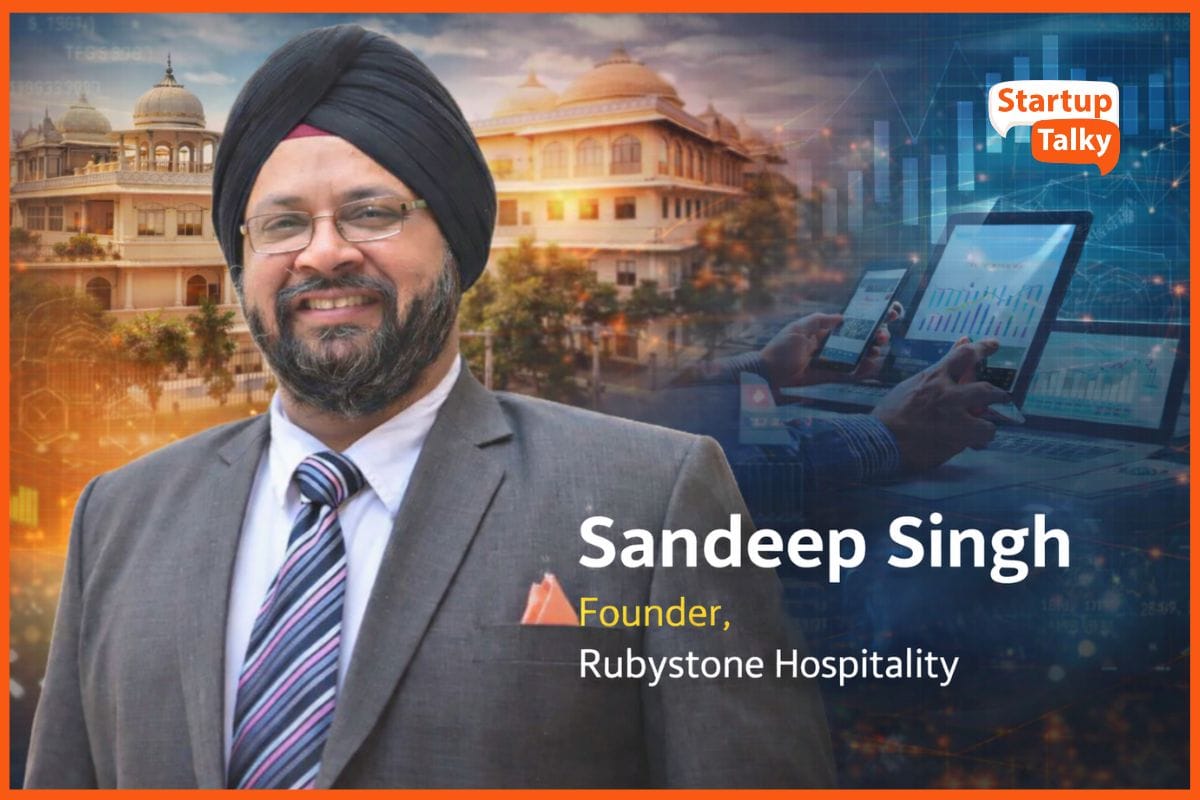
In this insightful conversation, Sandeep Singh, Founder of Rubystone Hospitality, outlines how the company is building an experience-led and asset-light hotel management model in India. He explains how Rubystone focuses on end-to-end operations, asset optimisation and strong brand positioning across destinations such as Udaipur, Rishikesh, Lansdowne and Vrindavan. Singh also discusses site selection strategy, the role of technology in improving revenue and guest satisfaction, and the launch of specialised concepts like destination weddings and boutique retreats. He further shares the company’s plans to expand across leisure, spiritual and secondary city markets over the next three to five years.
StartupTalky: How does Rubystone Hospitality define its core business today, and what key services distinguish your hotel management and hospitality offerings from other players in India’s travel ecosystem?
Mr. Singh: Rubystone Hospitality's core business model is to create and operate experience-based hotels based on established operational standards and strong brand identification. Today, the company has expanded its business model to focus on an end-to-end hotel management model, asset optimisation, and brand development of both leisure and business destinations within India. Rubystone's approach to operations and the way that it relies on data for revenue management and its extensive local market knowledge are all distinguishing factors from its competitors.
Through its commitment to working with hotel developers and owners, Rubystone strives to create a successful experience for both parties by increasing the profitability of the owners' hotels while increasing guest satisfaction and preserving the long-term value of the hotel asset. This commitment has allowed Rubystone to establish an excellent reputation as a provider of luxury, customised, upscale accommodation options that are continuing to evolve with the needs of our guests because they are a direct extension of their commitment to service excellence.
StartupTalky: Rubystone operates properties in destinations like Udaipur, Rishikesh, and Lansdowne, and recently launched a premium hotel in Vrindavan. How do you prioritise locations and balance leisure, cultural, spiritual, and business traveller segments?
Mr. Singh: The site selection process for Rubystone Hospitality's hotel properties will take into account the sites' potential for long-term growth in the tourism industry, the sites' cultural value, and their contribution toward sustainable tourism development through community and environmental cooperation. It seeks out these types of locations where the type of traveller falls into one of three areas: leisure traveller, pilgrimage traveller, or business traveller.
An example of a destination that Rubystone has identified would be Udaipur, Rishikesh, Lansdowne, or Vrindavan. Rubystone has identified the best ways to create a hospitality offering that would normally fit into one of the three types of traveller segments.
Rubystone conducts extensive assessments of the local tourism market, the time of year, and local demand patterns when determining site selection. Rubystone's establishment of Fitplaces allows the company to create and maintain multiple streams of revenue at all locations through relevant product offerings for all guests who visit there. Also, it is a means for Rubystone to ensure that all properties will have sustainable occupancy levels because they offer products relevant to the area.
StartupTalky: Technology plays a key role in modern guest experiences. How has your investment in digital tools (e.g., online booking, operational platforms, guest engagement tech) improved customer satisfaction or operational efficiency across properties?
Mr. Singh: The goal of Rubystone Hospitality is to enhance the guest experience and enhance its operational efficiency by using technology to provide integrated online booking and dynamic pricing systems, offering increased speed and visibility to help drive ultimate revenue optimisation. The property management systems developed by Rubystone Hospitality provide a means of real-time inventory, housekeeping, and maintenance tracking across the entire Rubystone Hospitality portfolio. All Rubystone Hospitality services are consistent and align with Rubystone Hospitality service standards.
Guest engagement tools allow guests to engage with the property before their arrival and provide feedback during their stay to help develop personalised services and resolve any issues. By providing these technologies to guests, Rubystone Hospitality has reduced the manual process and is able to provide each guest with a similar and improved experience, and increase guest satisfaction and operational control of the Rubystone Hospitality portfolio.
StartupTalky: Rubystone now also offers specialised concepts like Regal Wedding Experiences in Udaipur and boutique retreats. How do such diversified offerings contribute to your revenue mix and brand positioning?
Mr. Singh: Rubystone Hospitality's strategy for increasing revenue and improving its brand position is through the production of Regallina's Wedding Experience in Udaipur and various curated boutique retreats. These unique and niche concepts provide Rubystone with a way to reach customers who are seeking a higher level of quality in a personal experience that tends to be more sophisticated than conventional hotel stays.
Moreover, the generation of ancillary and off-peak revenues provides a strong source of ancillary income through catering, banquet, and event services. The offerings present Rubystones as an innovative experiential service organisation that provides hospitality through personalised services that enhance specific destination experiences through cultural, elegant, and excellently operated engagements within all areas of the hospitality business.
StartupTalky: Looking ahead to the next 3-5 years, what are your top strategic priorities for expanding Rubystone’s presence and strengthening its role in India’s hospitality and tourism landscape?
Mr. Singh: The Strategic Plan for Rubystone Hospitality is intended to provide a roadmap to growth through the established strategic initiatives and the establishment of long-term value for the next 3-5 years. Rubystone Hospitality will add to its portfolio through the growth of hotels within the leisure market, the spiritual market, and the secondary cities market, and continue enhancing its asset-light hotel management model.
Rubystone will increase its brand visibility, increase investment in technology-oriented operations, enhance owner partnerships, etc. Also, Rubystone will further develop its experience-focused hotel formats, e.g., destination weddings, wellness retreats, etc. In support of continued expansion, the company will continue to focus on operational excellence, sustainability, and providing consistent guest experiences to solidify its competitive position within the constantly changing hospitality and tourism industry in India.
 Sanvi Barjatya