

Sriram Kakarala of Scalefusion on AI-Driven Unified Endpoint Management, Zero-Trust Security, and Simplifying Global Enterprise IT
News 📰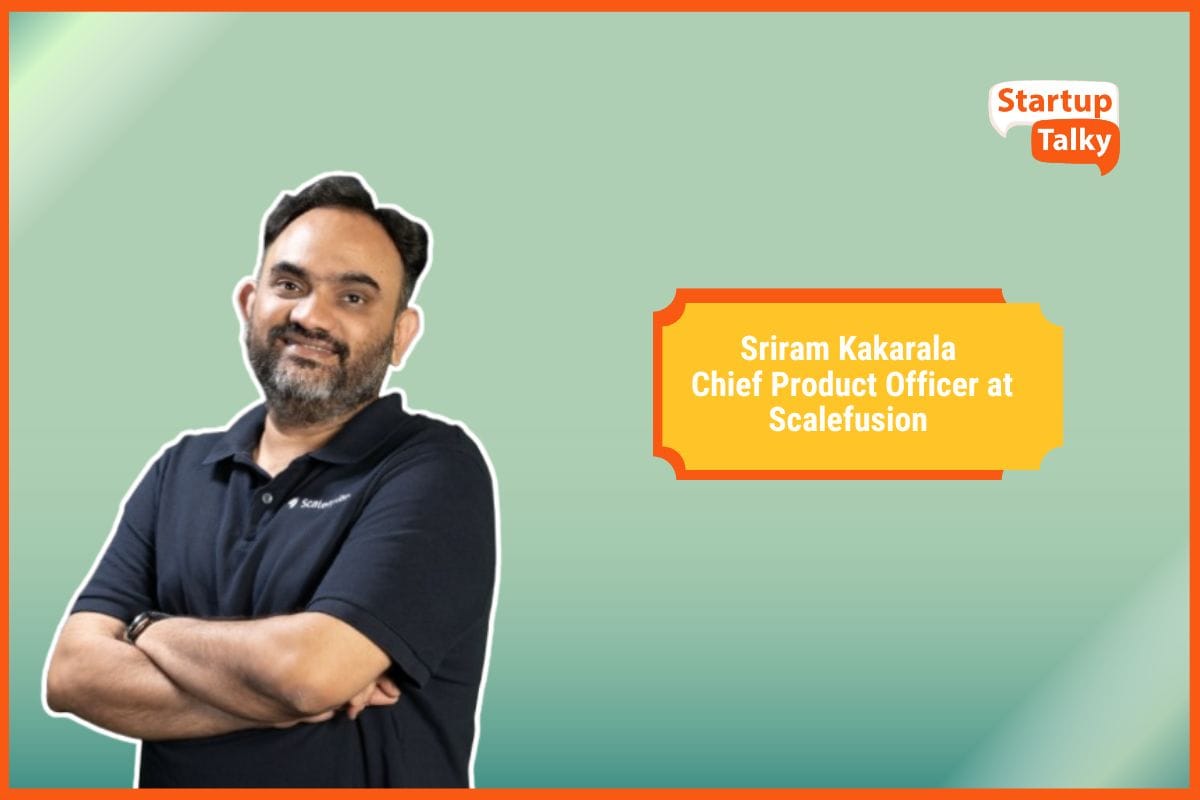
StartupTalky presents Recap'25, a series of exclusive interviews where we connect with founders and industry leaders to reflect on their journey in 2025 and discuss their vision for the future.
In this edition of Recap’25, StartupTalky speaks with Sriram Kakarala, Chief Product Officer at Scalefusion, who reflects on a year where enterprise IT decisively moved toward consolidation, automation, and AI-led operations. Kakarala shares how Scalefusion’s unified approach to endpoint management, security, identity, and IT operations helped global enterprises reduce tool fatigue, simplify compliance, and manage hybrid, multi-OS environments at scale. He discusses how AI shifted from experimentation to real operational impact, the growing importance of zero-trust access, and the challenges of scaling securely across diverse regulatory landscapes. Looking ahead, he outlines the technologies and product directions shaping the future of Unified Endpoint Management (UEM), where predictive security, customizable platforms, and user-centric management redefine enterprise IT.
StartupTalky: Scalefusion has grown globally with a presence in over 124 countries. Reflecting on 2025, what were the key milestones or product innovations that had the most impact on your clients?
Sriram Kakarala: In 2025, AI shifted from content creation to streamlining IT operations, a game-changer for enterprise teams. Our key innovation converged IT operations, security, identity, and endpoint management into one platform. This unified approach eliminated silos, boosted productivity, and let IT manage compliance and endpoints seamlessly without tool-switching. Clients saw real efficiency gains as workflows simplified across hybrid setups.
StartupTalky: How did enterprise IT and security needs evolve this year, particularly in managing multi-OS environments and hybrid work setups?
Sriram Kakarala: Hybrid work continued to surge, driving demand for single-platform management across multi-OS environments. Cost pressures pushed organizations toward consolidated tools that cut deployment, training, and support costs during tighter budgets. IT teams moved to more strategic work, scaling easily for remote staff while keeping administration simple.
StartupTalky: Technology, AI, and automation are central to your platform. Which tools or innovations had the biggest impact on endpoint management, compliance, and security in 2025?
Sriram Kakarala: Bringing IT, security, and endpoint management together on one platform improved visibility and made things easier for enterprise teams. AI automated routine IT tasks, enabled proactive threat detection, and sped up compliance work like audits. Predictive analytics moved security from reactive fixes to anticipating attacks before they hit. That convergence turned endpoint management into a strategic asset.
StartupTalky: The UEM and endpoint security space continues to face regulatory, cyber, and operational challenges. Which trends or obstacles shaped your strategy this year?
Sriram Kakarala: Tool fatigue is still a major problem in UEM and endpoint security. Most time IT teams waste time trying to juggle multiple disconnected platforms instead of doing their core job. To alleviate this issue, we created a unified and consolidated console that reduces complexity and streamlines operations. As part of this platform, zero trust access is key for allowing appropriate individuals to have access at appropriate times.
StartupTalky: In 2025, what operational or strategic hurdles did you face in serving global enterprises, and how did you overcome them?
Sriram Kakarala: Expanding globally required a deep understanding of local markets and region-specific compliance frameworks such as GDPR in Europe and HIPAA in the US. To navigate this complexity, we built strategic local partnerships that strengthened service delivery and helped us bridge linguistic and cultural gaps. These collaborations enabled us to stay compliant while scaling, ensuring that our global growth was always aligned with local expectations and regulations.
StartupTalky: Looking ahead to 2026, which technologies, products, or enterprise segments do you see as having the fastest growth potential in UEM and endpoint security?
Sriram Kakarala: In 2026, customizable UEM solutions will be on the rise and will allow organizations to select only what they need and not pay for features they will not use, which is valuable in times of financial constraints. In addition, industry-specific modules will provide tailored security and operational functions for various industries, such as healthcare and finance, among others. The capability of multi-OS support will allow for global teams to utilize the platform flexibly and easily adapt to user-centric management and move from managing devices to creating secure user experiences.
StartupTalky: From your perspective, how is the future of unified endpoint management and enterprise security evolving, especially regarding AI-driven automation, zero-trust access, and simplifying IT complexity?
Sriram Kakarala: The convergence between IT Operations, Endpoints, and User Access will continue to shape the future of Unified Endpoint Management (UEM) and all Enterprise Security. As a result of this Unified Ecosystem, Artificial Intelligence (AI) will be central to EDR/XDR, Predictive Threat Detection. Defense against AI-based attacks will also be on the checklist for security leaders. Consequently, Security will be proactively addressed (rather than reactively) through the use of Zero Trust principles to determine user behavior in order to keep IT complexity at an acceptable level for the rest of the user's journey through IT.
Explore more Recap'25 interviews here.