

Surabhi Trivedi of Media Maniacs Group on Intent -Driven Marketing, AI-Led Storytelling, and Building Trust-First Brands
News 📰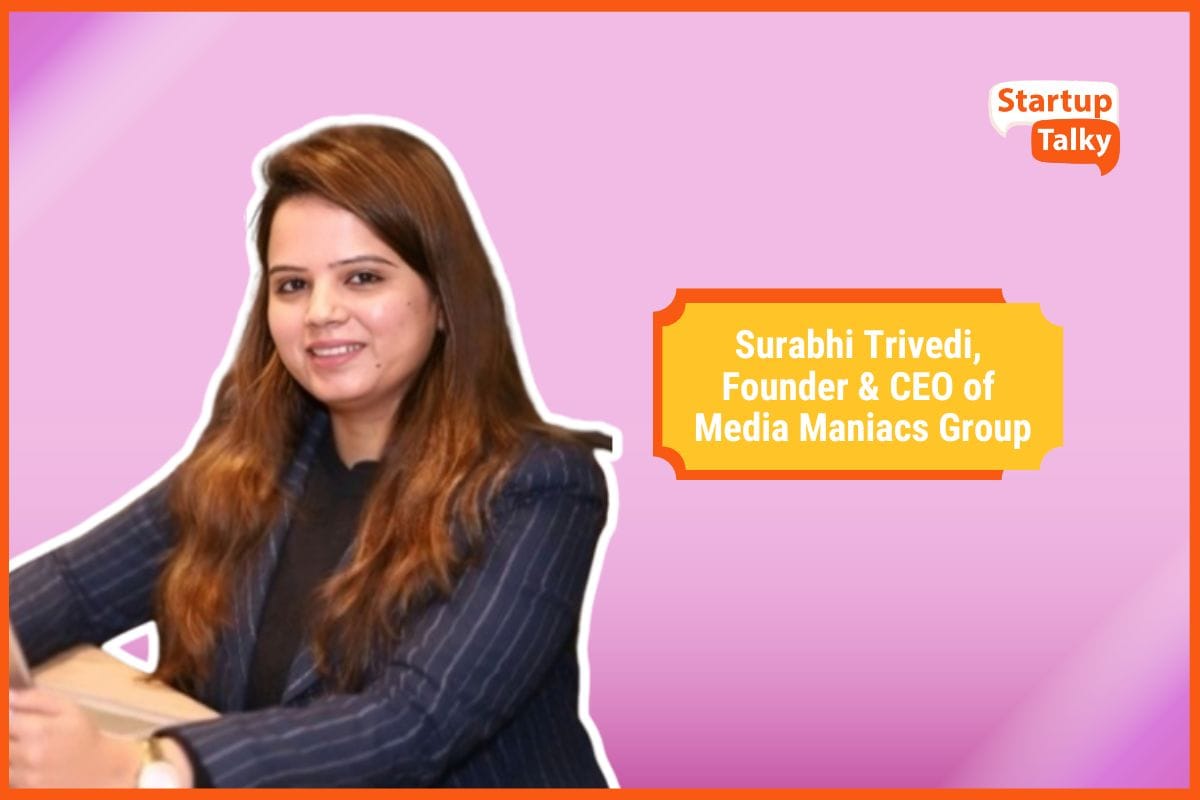
StartupTalky presents Recap'25, a series of exclusive interviews where we connect with founders and industry leaders to reflect on their journey in 2025 and discuss their vision for the future.
In this edition of Recap’25, StartupTalky speaks with Surabhi Trivedi, Founder & CEO of Media Maniacs Group, who reflects on a transformative year marked by intent-driven content consumption, rising expectations around brand trust, and the deep integration of AI across digital marketing. Trivedi shares how shifting consumer behaviour reshaped campaign strategies, why reputation-led storytelling outperformed performance-only approaches, and how AI amplified creativity, media planning, and crisis readiness. She also discusses the sectors that gained momentum in 2025, the metrics that now define meaningful brand success, and her outlook on content, paid media, and predictive reputation management in 2026 offering clear guidance for brands navigating a trust-first, technology-led future.
StartupTalky: How would you describe the biggest shifts in digital marketing in 2025? What stood out most in consumer behaviour, content formats, or brand expectations?
Surabhi Trivedi: In 2025, the most profound shift has been the move toward intent-driven, AI-filtered content consumption. Consumers are engaging less with generic content and gravitating toward hyper-personalized, emotionally intelligent narratives. Short-form video remains dominant, but long-form trust-building formats, podcasts, expert Q&As, and community-driven content have resurged.
On the brand side, expectations have heightened: brands now demand measurable reputation impact, not just visibility. Authenticity, transparency, and value-based storytelling became non-negotiable as audiences grew more discerning about who they trust. Overall, the year marked a shift from performance-only thinking to a more holistic approach blending reputation, influence, and conversion.
StartupTalky: Which campaigns or strategies delivered the strongest results for your clients this year? Any learning that changed your approach going forward?
Surabhi Trivedi: Our most effective campaigns in 2025 were those that blended earned storytelling with data-led targeting. Integrated reputation programs, combining digital PR, influencer authority, and thought leadership, drove the highest client impact. A key learning was the need to front-load campaigns with deeper audience intelligence: sentiment mapping, contextual trend analysis, and competitor positioning. This changed our approach significantly; we now design narratives based on emotional motivations rather than product attributes alone. Campaigns that used real-time content optimization and creator co-creation outperformed traditional content calendars. Ultimately, building credibility at scale proved more valuable than chasing virality.
StartupTalky: AI adoption grew across the industry in 2025. How has AI changed the way Media Maniacs Group works—across creative, media planning, performance, or client servicing?
Surabhi Trivedi: AI fundamentally reshaped our agency workflow in 2025. Creative teams now use AI copilots for ideation, rapid concept testing, and tailoring messaging for micro-audiences. In media planning, AI tools help us predict channel performance, optimize budgets in real time, and adjust PR angles based on emerging sentiment. Performance teams rely on predictive analytics to foresee crisis triggers and reputation risks. Even client servicing evolved, AI assistants streamline reporting, benchmark insights, and meeting preparation. Rather than replacing talent, AI amplified our strategic capacity, allowing teams to spend more time on nuance, relationship-building, and high-value thinking.
StartupTalky: As a full-service digital agency, what were the toughest challenges you faced this year, and how did you tackle them?
Surabhi Trivedi: The biggest challenge this year was the speed at which platforms and consumer expectations evolved. Attention spans shortened while trust gaps widened, forcing us to rethink traditional publicity and digital playbooks. Additionally, the influx of AI-generated content created noise, making authenticity harder to stand out. We tackled these challenges by investing heavily in training, equipping teams with narrative intelligence, crisis prediction tools, and platform-specific storytelling skills. We also restructured our internal workflows, building integrated pods for PR, digital, and creative to collaborate from day one. This allowed us to deliver faster, more cohesive brand experiences without compromising quality.
StartupTalky: What metrics matter most to you today when evaluating the success of a campaign or a long-term brand engagement?
Surabhi Trivedi: Today, we prioritize a balanced scorecard combining brand trust indicators, content resonance, and commercial impact. Reputation metrics, such as sentiment shifts, expert validation, and share of positive voice are foundational. Engagement quality matters more than volume; we evaluate dwell time, saves, shares, and contextual responses. For long-term clients, we track narrative consistency, leadership credibility, and organic brand advocacy over time. On the business side, we closely monitor attributed revenue, funnel influence, uplift in search demand, and customer lifetime value. Ultimately, the metric that matters most is whether the brand is earning sustained preference, not just momentary attention.
StartupTalky: Which sectors or client categories showed maximum growth momentum this year? Any category that behaved differently from expectations?
Surabhi Trivedi: In 2025, the strongest momentum came from fintech, healthtech, and sustainability-driven brands. These categories benefited from shifting consumer priorities toward financial empowerment, wellness, and ethical consumption. Interestingly, traditional retail and automotive, once conservative sectors showed surprising digital agility, embracing influencer-led storytelling and community-based PR at scale. On the other hand, luxury brands behaved differently than expected; instead of chasing mass reach, they focused on exclusivity and private digital ecosystems. Overall, the categories that grew fastest were those willing to innovate their narratives and connect transparently with their audiences.
StartupTalky: What tools have become essential for your team in 2025? Are there any AI tools or platforms that now play a major role in your workflow?
Surabhi Trivedi: Our essential toolkit this year included AI-powered listening platforms for real-time sentiment analysis, predictive PR monitors, and automated content versioning tools. Creative teams rely on multimodal AI assistants for scripting, storyboarding, and campaign simulation. For operations, workflow automation tools have drastically improved efficiency in approvals, reporting, and asset management. We also adopted advanced influencer verification systems to avoid fraud and ensure brand-safe collaborations. While technology evolved rapidly, we were careful to blend AI with human judgment, using tools to accelerate execution, not to dilute narrative craftsmanship or strategic thinking.
StartupTalky: Looking ahead to 2026, what trends in content, paid media, or tech-led marketing do you think will shape brand strategy?
Surabhi Trivedi: Looking at 2026, we expect three dominant trends. First is the rise of “content with context”, brands will invest in expert-backed storytelling, moving away from entertainment-only formats. Second, paid media will shift heavily toward AI-optimized micro-targeting and immersive ad formats, especially in AR-enabled experiences. Third, tech-led marketing will lean into predictive reputation management, where brands act before sentiment turns. We also see community-centric influence expanding, with niche creators and owned communities surpassing broad influencer marketing. In essence, 2026 will reward brands that prioritize trust, personalization, and experiential depth.
StartupTalky: What is your long-term vision for your agency, and what strategic moves are planned for the next phase of growth?
Surabhi Trivedi: Our long-term vision is to become the most trusted reputation and growth partner for future-focused brands. We aim to expand regionally, strengthen our research and insights division, and build specialized hubs for AI-driven creative and crisis intelligence. Strategic acquisitions in content production and influencer management are also part of our roadmap. We are moving toward a model where PR, digital, and experiential work as a single integrated narrative engine. Ultimately, we want to redefine PR as a proactive, data-informed, always-on discipline that drives tangible business impact, not just communication outcomes.
StartupTalky: What key advice would you give to brands planning their 2026 marketing strategies? (Especially in terms of budgets, content, channels, or consumer trust)
Surabhi Trivedi: For 2026, my biggest advice to brands is to budget for consistency, not sporadic campaigns. Invest in content ecosystems that reinforce your core narrative across formats, short-form, long-form, expert-led, and community-driven. Prioritize channels where trust is still high and attention is meaningful, even if reach is smaller. Build crisis readiness into every plan, especially with the pace of misinformation. Most importantly, balance performance spending with brand-building efforts; conversion without credibility is not sustainable. And above all, treat consumers as informed partners, be transparent, add value, and show your purpose through action, not just messaging.
Explore more Recap'25 interviews here.