

Suresh Bansal of DCGpac on Building Intelligent Packaging Solutions, Driving Sustainability at Scale, and Reimagining Packaging as a Strategic Supply Chain Enabler
📰 News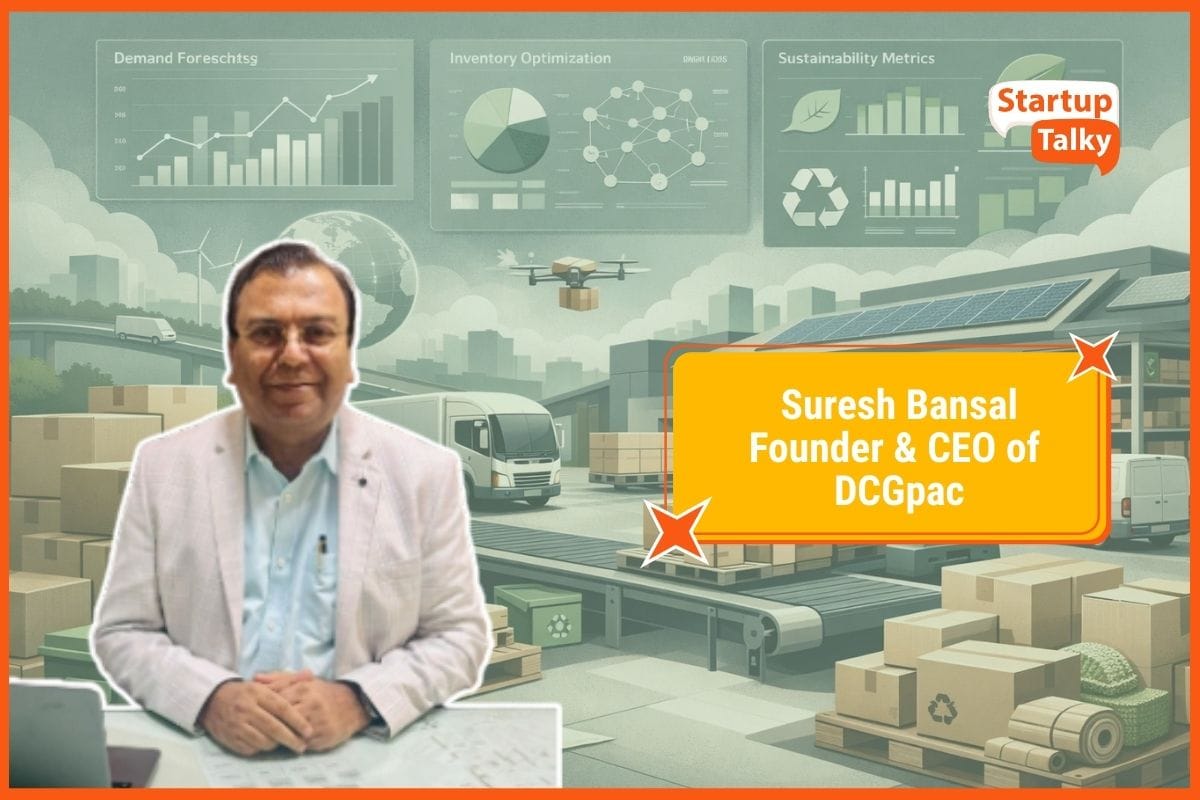
StartupTalky presents Recap'25, a series of exclusive interviews where we connect with founders and industry leaders to reflect on their journey in 2025 and discuss their vision for the future.
In this edition of Recap’25, StartupTalky speaks with Suresh Bansal, Founder & CEO of DCGpac, who reflects on building an integrated packaging solutions company in a time when packaging is no longer a backend necessity but a strategic lever for efficiency, sustainability, and supply-chain resilience. Drawing from his experience in logistics and supply chains, Bansal shares how DCGpac was created to bring structure, transparency, and accountability to a fragmented packaging ecosystem.
He goes on to discuss how DCGpac has evolved with the rapid growth of e-commerce, shifting regulatory landscapes, and rising sustainability expectations by adopting data-led planning, AI-enabled forecasting, and platform-driven procurement. The conversation also explores DCGpac’s approach to treating packaging as a strategic enabler rather than a cost centre, its focus on recyclable and eco-conscious solutions, and the company’s roadmap for building a smarter, more responsible, and scalable packaging ecosystem for modern businesses.
StartupTalky: What service does DCGpac provide? What was the motivation/vision with which you started?
Suresh Bansal: DCGpac provides integrated packaging solutions that support businesses across manufacturing, logistics, and e-commerce with reliable, scalable, and increasingly sustainable packaging. When I started the company, the motivation was rooted in a simple observation from my years in supply chain and logistics packaging was treated as an afterthought, even though it directly impacted cost, efficiency, and environmental outcomes.
My vision was to bring structure, transparency, and accountability to a fragmented ecosystem. I wanted to build a platform where businesses could access the right packaging at the right time, without excess inventory or waste. Over time, this vision expanded to include sustainability and technology, because packaging decisions today have long-term implications for supply chains and the environment. At its core, DCGpac was created to make packaging smarter, more responsible, and aligned with how modern businesses operate.
StartupTalky: What new services have been added in the past year? What is/are the USP/s of your service?
Suresh Bansal: Over the past year, we have expanded DCGpac’s offerings to move beyond conventional packaging supply into a more integrated, intelligence-led ecosystem. We introduced data-backed packaging planning, smarter demand forecasting, and platform-led procurement tools that help businesses optimise inventory, reduce waste, and improve turnaround times. Sustainability has also been deepened through a wider portfolio of recyclable and eco-conscious packaging solutions aligned with evolving compliance and consumer expectations.
Our key USP lies in combining scale with intelligence. DCGpac bridges manufacturers, suppliers, and end users through a single platform that brings transparency, predictability, and operational efficiency to packaging decisions. By blending technology, supply-chain understanding, and sustainability-first thinking, we help businesses treat packaging not as a cost centre, but as a strategic enabler of efficiency and growth.
StartupTalky: How has the industry you are in changed in recent years and how has DCGpac adapted to these changes?
Suresh Bansal: Over the past few years, the packaging industry has undergone a fundamental shift. What was once seen as a back-end cost function has evolved into a strategic lever for efficiency, sustainability, and brand value. Rapid growth in e-commerce, tighter sustainability regulations, and rising customer expectations have pushed the industry to rethink materials, sourcing, speed, and transparency. At the same time, digital adoption and data-driven decision-making have become unavoidable.
At DCGpac, we adapted early by recognising that scale alone would not be enough. We focused on building a more intelligent and responsible packaging ecosystem one that reduces waste, improves predictability, and supports businesses across sizes. The transition towards recyclable materials, smarter demand planning, and tech-enabled procurement has helped us stay relevant in a rapidly changing environment. Personally, I see this phase as a necessary evolution where businesses that align efficiency with sustainability will define the future of packaging, logistics, and manufacturing in India.
StartupTalky: What key metrics do you track to check the DCGpac's growth and performance?
Suresh Bansal: As a founder, I focus on a balanced set of metrics that reflect both growth and sustainability. On the business side, we closely track revenue growth, repeat customer rates, order fulfilment timelines, and unit economics to ensure scale is profitable, not just fast. Operationally, inventory efficiency, demand predictability, and supply-chain turnaround times are key indicators. Equally important are sustainability-linked metrics material efficiency, recyclability adoption, and waste reduction across the value chain. Finally, customer satisfaction and team productivity serve as long-term health indicators, because enduring growth comes from trust, consistency, and people not numbers alone.
StartupTalky: What were the most significant challenges DCGpac faced in the past year and how did you overcome them?
Suresh Bansal: Over the past year, one of our biggest challenges was navigating volatility across supply chains rising input costs, inconsistent availability of sustainable raw materials, and heightened customer expectations around speed and reliability. At the same time, the regulatory and ESG landscape evolved rapidly, requiring faster adaptation. We addressed this by strengthening supplier partnerships, improving demand forecasting through data-led planning, and investing in process automation to reduce inefficiencies. Internally, we focused on building resilience empowering teams to take quicker decisions and stay agile. These measures helped us maintain service continuity, control costs, and stay aligned with our long-term sustainability goals despite a complex operating environment.
StartupTalky: What are the different strategies you use for marketing? Tell us about any growth hack that you pulled off.
Suresh Bansal: Over the years, I’ve learned that marketing works best when it solves a real problem rather than just amplifying a message. Our core strategy has been to stay close to customers and let insights drive communication. We focus heavily on content-led engagement, data-backed outreach, and relationship-driven growth rather than high-decibel advertising.
One effective growth lever has been simplifying discovery and access making it easier for businesses to find the right packaging quickly and reliably. We also leveraged partnerships, word-of-mouth within seller communities, and rapid fulfilment as organic growth drivers. In a crowded market, consistency, credibility, and customer experience have been our most reliable growth catalysts.
StartupTalky: What are the important tools and software you use to run your business smoothly?
Suresh Bansal: Running a scalable operation requires strong digital foundations. We rely on integrated ERP systems for inventory, procurement, and finance, ensuring real-time visibility across operations. Data analytics tools help us track demand patterns, optimize stock levels, and improve forecasting accuracy. CRM platforms enable better customer engagement and service responsiveness. Internally, collaboration and workflow tools support coordination across teams and locations. For me, technology is not about complexity it’s about clarity. The right tools help reduce manual dependency, improve accountability, and allow leadership to focus on strategic decisions rather than operational firefighting
StartupTalky: What opportunities do you see for future growth in your industry in India and the world? What kind of difference in market behavior have you seen between India and the world?
Suresh Bansal: The future growth opportunity in the packaging industry lies at the intersection of sustainability, technology, and scale. In India, rapid growth of e-commerce, MSMEs, and quick commerce is driving strong demand for reliable, affordable, and environmentally responsible packaging solutions. Globally, the focus is more mature on circular economy models, strict compliance, and data-driven efficiency.
The key difference I see is pace versus process: India prioritises speed and cost, while global markets emphasise lifecycle impact and traceability. Over time, these markets will converge, creating opportunities for Indian companies to lead with scalable, sustainable solutions that meet global standards.
StartupTalky: How are you using AI, whether in service delivery, internal processes, or customer experience, and what impact has it created?
Suresh Bansal: AI today plays a quiet but powerful role across our operations and customer experience. We use AI-led analytics to forecast demand patterns, optimize inventory planning, and reduce overproduction and waste. Internally, automation supports faster order processing, smarter SKU management, and more accurate procurement decisions. On the customer side, AI enables quicker responses, personalized recommendations, and improved service predictability. The impact has been measurable shorter fulfilment cycles, better cost control, and improved customer satisfaction. For me, AI is not about replacing people; it is about enabling teams to make better decisions, faster, while building a more efficient and sustainable business ecosystem.
StartupTalky: How do you plan to expand the Customers, service offering, and team base in the future?
Suresh Bansal: Over the next phase of growth, our focus is on expanding all three pillars’ customers, capabilities, and people in a balanced manner. On the customer front, we aim to deepen our presence among MSMEs while strengthening relationships with large enterprises across e-commerce, retail, and manufacturing. Our service offerings will evolve through smarter, more sustainable packaging solutions supported by data and AI-led insights. Equally important is our team expansion building cross-functional talent in technology, operations, and sustainability. We believe long-term growth comes from investing in people, processes, and purpose together.
StartupTalky: One tip that you would like to share with another Service company founder?
Suresh Bansal: If I had to share one lesson from my journey, it would be this: build your service business around trust before scale. In services, growth doesn’t come from aggressive expansion alone it comes from consistently solving real problems for customers, even when it’s inconvenient or unglamorous.
Early on, many founders focus heavily on pricing, features, or speed. While these matter, what truly differentiates a service company is reliability, transparency, and the ability to evolve with the customer’s needs. Listen deeply to feedback, invest in systems and people early, and don’t compromise on ethics for short-term wins.
Equally important is patience. Service businesses compound over time through relationships, not virality. If you stay disciplined, customer-first, and resilient through cycles, scale will follow naturally and sustainably.
Explore more Recap'25 interviews here.