

Unpacking Petpooja revenue: A deep dive into the SaaS firm's unconventional growth

If you've ever grabbed a bite from a local cafe, a cloud kitchen, or a bustling family-run restaurant in India, there's a decent chance Petpooja was running the show behind the counter. In a startup world that is often focused on scaling at all costs and chasing global trends, Petpooja carved its own path by building for the small, independent restaurant owner. This approach proved successful.
This case study offers insights into building a sustainable, high-growth business by listening to an underserved market. We're going to pull back the curtain on the Petpooja revenue figures, break down the business model that powers it, and explore the journey from a simple idea to a major player in India's restaurant tech space. For any aspiring entrepreneur, this deep dive provides lessons on identifying opportunities in overlooked markets.
What is Petpooja?
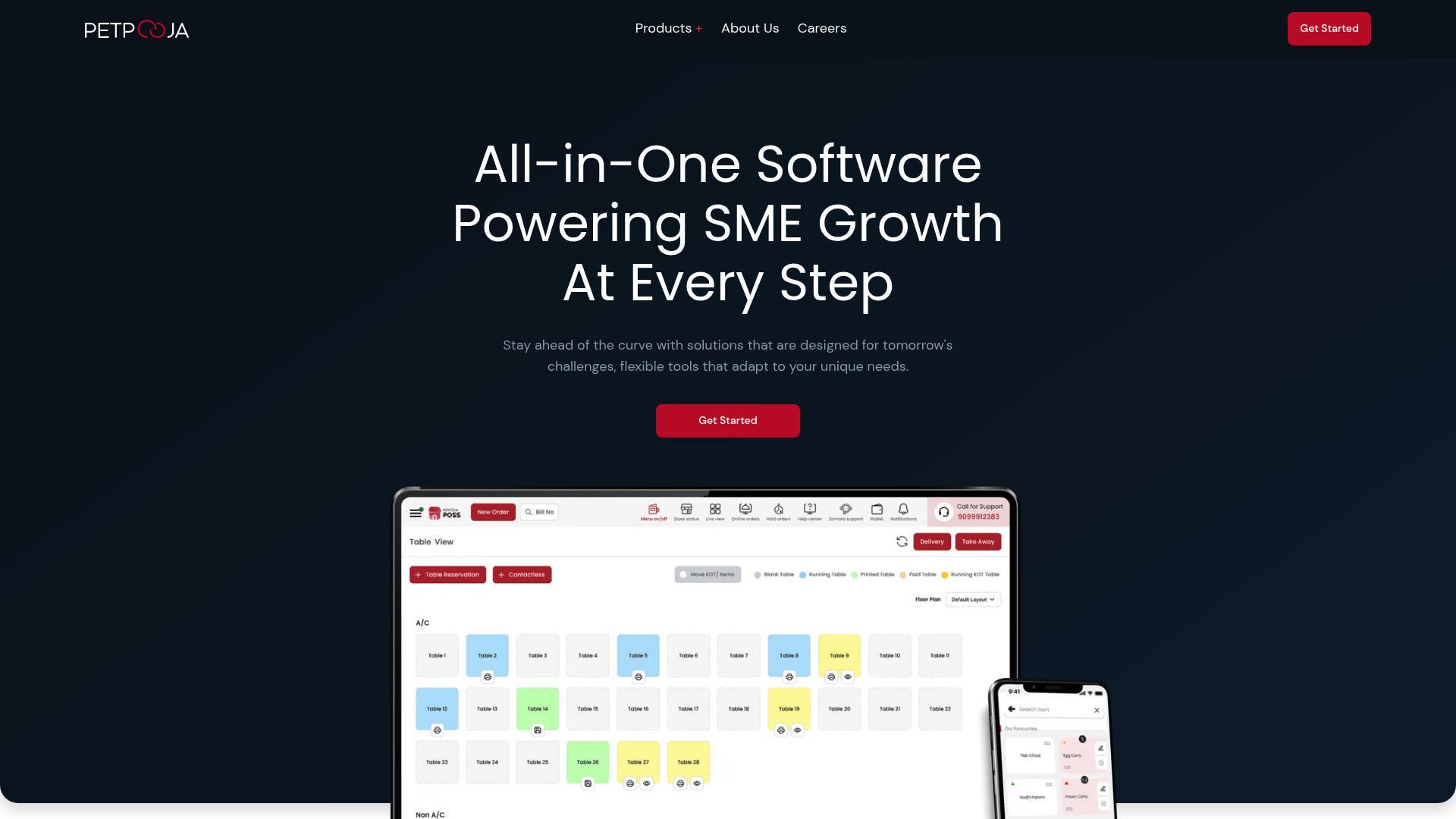
Let's hop back to 2011. The Indian startup scene was active, but most of the action was in consumer-facing apps. Petpooja started its life as a B2B food delivery platform, but the founders, Apaar and Parthiv, quickly spotted a much bigger problem. The small and medium-sized restaurants they were working with were dealing with operational chaos. They were managing orders on paper, tracking inventory in their heads, and struggling with the basics of billing and payroll. The tech that existed was either too expensive, too complicated, or just not built for them.
This observation led to a pivot. Instead of just delivering food, they decided to build the digital infrastructure these restaurants needed. Petpooja was reborn with a clear mission: to organize the incredibly fragmented food sector with technology that was simple, affordable, and built for the realities of the Indian market.
At its core, Petpooja is an all-in-one restaurant management platform. Think of it as the central nervous system for a restaurant. It offers a suite of tools that cover everything from the front-of-house to the back office:
- Point of Sale (POS): An intuitive system for taking orders and processing payments.
- Inventory Management: Helps track stock, reduce waste, and manage suppliers.
- GST Billing: Simplifies tax compliance, a common challenge for small business owners.
- Payroll & Staff Management: Automates salary calculations and helps manage employee records.
Reporting & Analytics: Gives owners a clear view of their sales, profits, and customer trends.
What started as a solution for a handful of local eateries has grown into a significant platform nationwide. Today, Petpooja serves over 100,000 businesses across India and has even expanded into markets like the UAE and South Africa. This massive scale is the foundation of its business, and it’s the key to understanding how they built a strong revenue model.
The business model driving Petpooja's revenue growth
Petpooja's financial foundation was built on several strategic choices tailored to small, price-sensitive businesses. Petpooja's success was based on a deep understanding of its customers and a relentless focus on delivering value.
The engine of the whole operation is a classic SaaS model. Restaurants pay a subscription fee, which gives Petpooja a steady, predictable stream of recurring revenue. This is a more stable approach than one-time hardware sales, allowing them to reinvest continuously in their product and support. The key was adapting this model for a market that others were ignoring. They developed a unique strategy for the local market.
Their go-to-market strategy was to aim squarely at the heart of the Indian food scene: the small, independent restaurants, the family-run joints, and the quick-service outlets that make up the vast majority of the industry. While some competitors were chasing fine-dining chains with deep pockets, Petpooja went after smaller businesses. They embraced an "industry-low, transparent pricing" philosophy, making their software accessible to businesses that never thought they could afford it. This lowered the barrier to entry and created a growth loop driven by word-of-mouth.
Stories of startups with these kinds of unconventional strategies can be found on platforms that cover the startup ecosystem.
Here’s a closer look at how Petpooja implemented its strategy.
Focusing on an underserved market
Targeting small restaurants can present challenges. These businesses operate on thin margins, often have limited tech literacy, and can be difficult to reach. But Petpooja identified an opportunity in this segment. They understood that these owners valued reliability and tools that would save them time and money.
Online forums are filled with restaurant owners looking for "accessible POS systems for my small restaurant bar in India." This is the pain point Petpooja addressed. Their simple, easy-to-use interface was a good fit for owners who didn't have time for a steep learning curve. More importantly, they solved hyper-local problems that global platforms couldn't always address. For example, integrating GST billing directly into the POS was a significant advantage. It automated a complex, mandatory process that was a major source of stress for small business owners. This deep understanding of local needs created a product that was well-suited for its target audience.
A product-led growth engine
Petpooja didn't rely on a massive sales team to fuel its growth. Instead, they focused on product-led growth. They worked on creating an all-in-one platform that was intuitive and effective. By bundling everything a restaurant needs into one subscription, they eliminated the friction of having to use multiple, incompatible tools.
This focus on a seamless user experience was backed by two other critical pillars:
- Continuous Innovation: They built a tight feedback loop with their customers, constantly rolling out updates and new features based on real-world needs. This showed users that Petpooja was a partner invested in their success, not just a vendor.
- Robust 24/7 Support: When you're running a busy restaurant, you can't afford for your system to go down during the dinner rush. Petpooja invested in a responsive, round-the-clock customer support team, building a high level of trust.
This combination of an accessible product, local relevance, and relentless customer focus is what turned their users into their biggest advocates, driving the organic growth that continues to power the company today.
Petpooja's revenue and funding
A great story is one thing, but financials can validate a business model. Petpooja's financials indicate a company that has demonstrated not just impressive growth, but sustainable growth, which is a key indicator of a healthy, well-run business.
For the fiscal year 2023-24, Petpooja clocked an annual revenue of ₹77.2 crore. What makes this number even more remarkable is the 43% year-over-year growth it represents. In a competitive market, that kind of expansion signals strong product-market fit and a rapidly growing customer base.
This growth has not gone unnoticed by investors. To date, Petpooja has raised over $26.5 million in funding across eight rounds. The most recent was a $15.5 million Series C round in September 2025, led by Dharana Capital. This injection of capital is being strategically deployed to further enhance the product, particularly by integrating AI-driven features to offer even smarter insights and automation for restaurant owners.
Here’s a quick summary of their key financial metrics:
| Metric | Figure | As Of | Source/Note |
|---|---|---|---|
| Annual Revenue | ₹77.2 Cr | FY 2023-24 | 43% increase YoY |
| Total Funding Raised | $26.5 M | Sep 2025 | Across 8 rounds |
| Latest Funding Round | $15.5 M (Series C) | Sep 2025 | Led by Dharana Capital |
| Post-Money Valuation | ~₹910 Cr ($103 M) | Sep 2025 | Post-Series C round |
| Client Base | 100,000+ | 2026 | Across India, UAE, South Africa |
These figures indicate a company with a strong business model: a massive, loyal customer base that fuels strong, recurring revenue, which in turn attracts the capital needed to innovate and scale even further.
The competitive landscape
Petpooja doesn't operate in a vacuum. The restaurant tech market is a crowded space, with global giants like Toast, SpotOn, and Square for Restaurants all vying for a piece of the pie. These are formidable competitors with massive resources. This raises the question of how a startup from Ahmedabad has competed effectively, especially in its home market.
The answer lies in its strategic advantages, which are deeply rooted in its understanding of the Indian market. Its key differentiators aren't just features on a checklist; they're fundamental aspects of its business model that global players may find hard to replicate. These include its deep market penetration in the SMB segment, a reputation for simplicity and reliability, and a strong on-ground support network that provides personalized support.
Gaining visibility and building credibility in a crowded market is one of the biggest hurdles for any growing startup. Ecosystem platforms play a vital role here.
While global competitors are powerful, their standardized models may not always address the specific needs of the Indian market.
Petpooja's local approach versus global POS systems
This is where Petpooja's localized approach provides an advantage. Many international POS systems come with a critical limitation: they often lock users into their own proprietary payment processors. This is not practical in markets like India or the Bahamas, where those processors aren't even available. Users can be left with a system that can't actually process payments, making it less functional. Petpooja, on the other hand, is processor-agnostic, integrating seamlessly with the payment gateways that Indian businesses already use.
The issues with global platforms can go beyond just technical compatibility. Based on verified user feedback, the customer experience can be a significant issue.
This stands in stark contrast to Petpooja's model. Its transparent, affordable pricing and focus on solving core operational problems without aggressive upselling have built a high level of trust with its customers. It's an example of a local company competing effectively against global players by being closer to the ground and more attuned to the needs of its community.
For restaurant owners, understanding how to leverage their management platform is key to boosting the bottom line. Beyond just processing orders, modern systems offer powerful tools for loyalty programs and customer data analysis that can directly impact profitability. To see how these features work in practice, check out this video from Petpooja on building customer loyalty to increase revenue.
Embedded iFrameThis video from Petpooja explains how restaurant owners can use the platform's loyalty and customer data features to increase revenue.
Key takeaways from Petpooja's success story
Petpooja's story highlights that business opportunities can be found by addressing the everyday problems of underserved markets. Their journey shows that you don't need to reinvent the wheel to build a successful company. Sometimes, you just need to build a better, more accessible wheel for a group of people that others have overlooked.
The key takeaways for entrepreneurs are clear. Success doesn't always come from chasing the latest trend or mimicking what's popular in other markets. It comes from developing a deep empathy for a specific customer, solving their most pressing problems with an elegant solution, and building a sustainable business model around it. Petpooja found its niche, dominated it, and built a foundation of trust and customer loyalty.
Their success is a testament to the potential that still exists within India's vast SMB ecosystem. There are millions of small businesses out there waiting for the right tools to help them grow, and future startups may find success by serving these businesses.