

Varun Sheth of Ketto on Scaling Digital Philanthropy, AI-Driven Fundraising, and Building Trust-First Giving in India
👨💻 StartupTalkers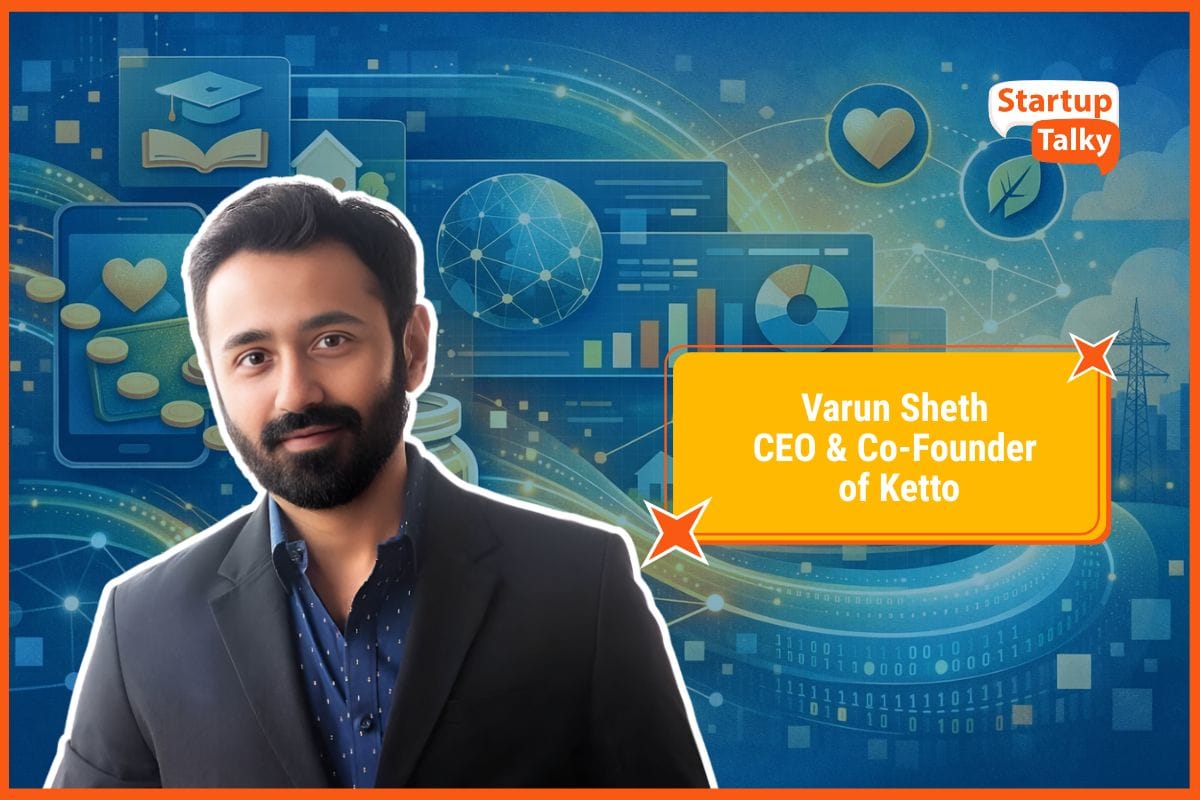
StartupTalky presents Recap'25, a series of exclusive interviews where we connect with founders and industry leaders to reflect on their journey in 2025 and discuss their vision for the future.
In this edition of Recap’25, StartupTalky speaks with Varun Sheth , CEO & Co-Founder of Ketto, who reflects on transforming India’s crowdfunding ecosystem through technology, transparency, and trust. Launched to simplify fundraising for urgent medical and social needs, Ketto has evolved into a large-scale digital giving platform connecting millions of donors with fundraisers for causes spanning disaster relief, education, healthcare, and community development.
Sheth discusses how Ketto has scaled its impact in 2025 by leveraging AI, automation, and data-driven workflows to improve fundraiser success rates, prevent fraud, and streamline operations. The conversation also explores donor behaviour trends, ecosystem partnerships with hospitals and NGOs, and Ketto’s vision for the coming year: fostering a culture of consistent, technology-enabled generosity that makes digital giving seamless, trustworthy, and accessible across India.
StartupTalky: What does Ketto do today, and what problem in India’s social and fundraising ecosystem were you originally trying to solve when you started the platform?
Varun Sheth: Today, Ketto, India’s crowdfunding platform is allowing people and organizations to raise money for disaster relief, education, medical emergencies, and social causes. It has developed into a sizable, technologically advanced giving ecosystem that prioritizes openness, trust, and usability while connecting millions of donors with those in need of prompt financial assistance.
India was still in the early phases of creating easily available, technologically advanced ways for people to raise money in emergency situations, especially for medical needs, when Ketto was established. The majority of fundraising relied on unofficial networks and conventional techniques, which restricted the scope and speed of support. Ketto was developed to provide a more streamlined and transparent alternative; a platform that made it simpler for people to communicate their needs, establish connections with a larger community, and obtain financial aid in a more systematic and effective way.
StartupTalky: How has Ketto’s role evolved in 2025 in terms of causes supported, partnerships with hospitals/NGOs, and overall platform impact?
Varun Sheth: Ketto is no longer just a crowdfunding platform with a medical focus. With more than 7.2 million donors, more than 300,000 fundraisers, and more than 10 million donated for a variety of causes. The platform now promotes education, community development, creative projects, and large-scale disaster relief, representing a wider and more inclusive social footprint, even though medical emergencies continue to be a core category.
Moreover, faster patient onboarding, more seamless verification procedures, and more transparent fund flows are all made possible by its more organized and impact-driven partnerships with hospitals and non-governmental organizations. The platform's annual Ketto Kindness Report displays concrete outcomes of these relationships, demonstrating how cooperation with hospitals and non-governmental organizations have made it possible for grassroots organizations to reach a larger network of donors, raise money more effectively, and provide assistance to communities in need. All things considered, Ketto's development in 2025 shows a change from being a tool for fundraising to becoming a national catalyst for charity, community mobilization, and digital-first philanthropy.
StartupTalky: What key technology or product improvements have you introduced this year to improve transparency, trust, and ease of fundraising for users?
Varun Sheth: This year, we've focused on making fundraising more predictable, transparent, and easy to use, particularly for donors and first-time fundraisers.
Regarding the product, we've improved real-time visibility throughout the fundraising process, made it easier to track funds, provided quicker progress updates, and facilitated more organized communication between donors and fundraisers. We have strengthened the delivery of updates, documents, and milestones to give donors clearer visibility into how funds are utilized and how beneficiaries’ circumstances evolve.
To lower friction, we made significant technological investments in automation and data infrastructure. This includes more dependable data for internal teams, quicker onboarding for fundraisers, and more intelligent workflows for approvals and verification. The goal is straightforward: at every stage of the process, customers should experience less ambiguity and more clarity, speed, and trust.
StartupTalky: How has donor behaviour changed over the past year, and what trends are you seeing in causes, ticket sizes, or repeat contributions?
Varun Sheth: Following Mumbai, the cities of Bengaluru, Hyderabad, New Delhi, and Pune also exceeded donor expectations. Donors from places like Singapore and Dubai also provided support, extending beyond India's boundaries. The top metro areas were closely followed by Chennai and Kolkata, indicating widespread involvement.
Around important international holidays, donation activity increased. The largest increase was seen on World Social Justice Day, which was followed by World Happiness Day, World Environment Day, World Cancer Day, World Alzheimer's Day, and even Holi. With 9,21,073 donations, medical fundraisers received the most donation, followed by efforts devoted to education, memorials, and children.
StartupTalky: What were some of the biggest operational or ecosystem challenges faced in scaling social impact through technology in 2025, and how did you address them?
Varun Sheth: One of the key challenges in 2025 was scaling rapidly while maintaining operational discipline, ensuring compliance, and preserving trust. Verification, communication, customer support, and partner coordination all become more complex as the ecosystem expands. Managing disjointed systems and data silos across many channels, including advertisements, organic traffic, WhatsApp, telecalling, and partner ecosystems, was another significant difficulty. If left unchecked, this division could hinder decision-making and negatively impact user experience.
In order to address this, we strengthened internal platforms, standardized data flows, and introduced automation. In order to give teams a clear understanding of responsibility, deadlines, and service standards, we also concentrated on developing technologies that are process-aware. This enabled us to increase impact without sacrificing accountability or quality.
StartupTalky: How is technology, especially data, automation, or AI, helping Ketto improve fundraiser success rates, fraud prevention, and overall platform efficiency?
Varun Sheth: In order to increase results throughout the platform, technology is essential. Data enables us to comprehend the true factors that contribute to fundraiser success, including timing, channels, contributor behavior, campaign structure, and storytelling. With the use of these information, we can better direct fundraisers and give priority to initiatives that actually enhance results. By lowering manual interventions in areas like verification, communication, follow-ups, and reporting, automation has greatly increased operational efficiency. This guarantees quicker response times and a more reliable user experience.
Instead of taking the place of human judgment, AI is increasingly being deployed as a decision-support layer. Teams can prioritize high-impact actions, find patterns, report abnormalities, and uncover insights that might otherwise take a lot longer. We can scale trust, lower risk, and ultimately assist more fundraisers in succeeding on the platform thanks to this combination of data, automation, and artificial intelligence.
StartupTalky: Looking ahead to the coming year, what is your vision for Ketto’s role in shaping the future of crowdfunding and social impact in India?
Varun Sheth: Ketto’s objective for the coming year is to enhance its role as a catalyst for accessible, technology‑driven giving in India. By increasing fundraisers for medical, educational, and community-based causes and creating more seamless, integrated connections with hospitals, NGOs, and grassroots organizations, the platform hopes to fortify its ecosystem. The goal is to increase the speed, transparency, and inclusivity of fundraising for individuals from all regions and socioeconomic backgrounds.
More broadly, Ketto wants to influence crowdfunding by promoting a culture of regular generosity, where digital giving becomes commonplace, trustworthy, and natural. The platform aims to enable individuals and communities to mobilize support at scale by investing in improved verification processes, donor engagement tools, and impact-tracking methods. This will ultimately contribute to a more resilient and participatory social-impact environment in India.
Explore more Recap'25 interviews here.