

What Entrepreneurs Learn About Themselves When Scaling from 0 to 1, 1 to 10, and 10 to 100
✍️ Opinions
This article has been contributed by Rakesh Wadhwa, Managing Director – Event Dynamics India Pvt. Ltd.
Every entrepreneur remembers the moment their idea first felt real. It may have been a late-night conversation, a hastily scribbled note, or a “what if” that refused to go away. But what most founders do not realize is that building a company is also a journey of discovering who they are at different stages of growth. Scaling changes the business, but it also changes the founder.
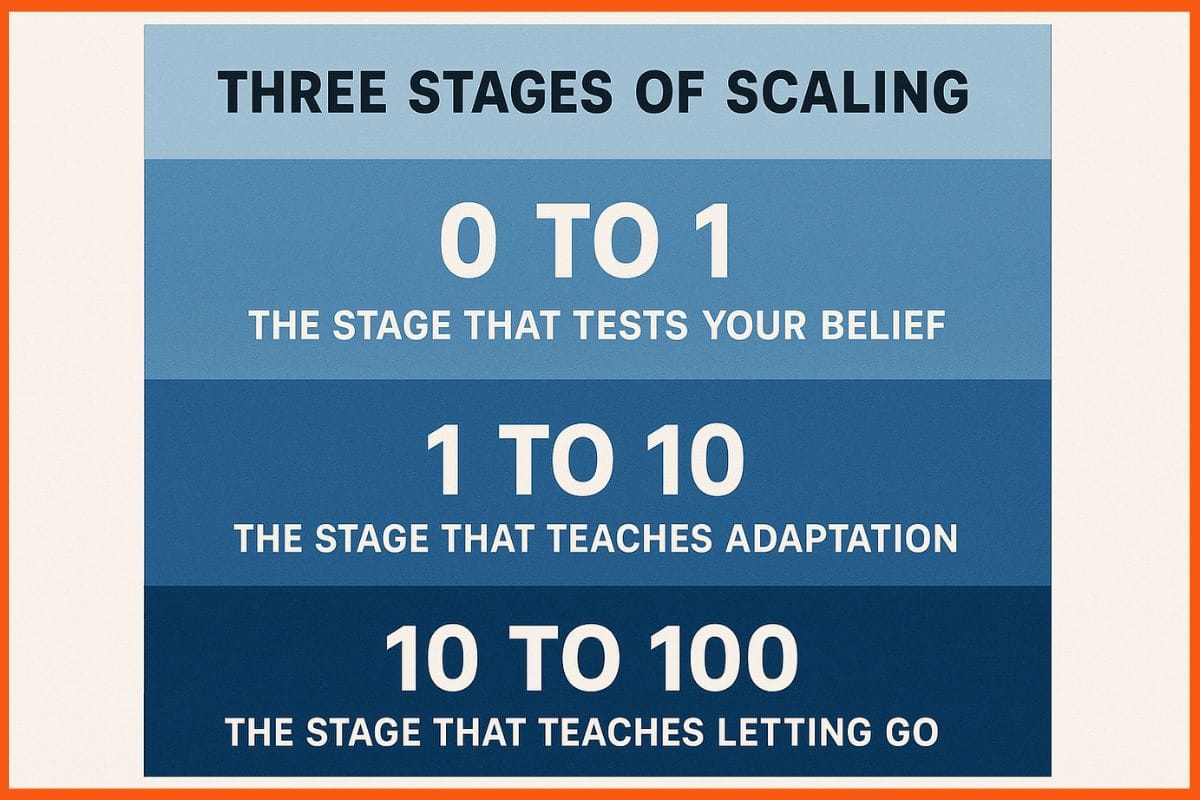
0 to 1 - The Stage that Tests your Belief
The 0 to 1 phase is the most fragile and the most defining. It is the stage where you learn how deeply you believe in your own story. Think of Brian Chesky and Joe Gebbia of Airbnb, selling cereal boxes to keep their dream alive, or Sara Blakely packing orders from her living room before Spanx became a global brand.
In the events industry, this stage often looks like convincing the first client to trust you with their stage, their audience, and their reputation. It is setting up sound consoles at 2 am because there is no one else to do it. It is learning to negotiate, pitch, and sometimes even lift equipment yourself.
At 0 to 1, you learn resilience. You discover your hunger. You realize that passion is important, but patience is essential.
1 to 10 - The Stage that Teaches Adaptation
Once the foundation is in place, the next phase demands adaptability. The business starts growing, people join the team, customers expect more, and decisions feel weightier.
Netflix found itself here when it moved from DVD rentals to streaming. Starbucks went through this shift when it expanded rapidly and realized culture was harder to scale than coffee. Growth exposes the cracks, and leaders must evolve with speed and honesty.
In the events world, this is when a company moves from doing a few shows a year to managing multiple productions across cities. You start building teams. You learn to trust people with things you once insisted on doing yourself. You realize that processes are your friends.
Most importantly, you understand that the skills that helped you build the business may not be enough to grow the business. And that is where humility enters the founder’s life.
10 to 100 - The Stage That Teaches Letting Go
Scaling from 10 to 100 is not about working harder. It is about redefining yourself. Jeff Bezos often spoke about shifting from being a builder to being a systems thinker. Reed Hastings learned to step back so Netflix could become bigger than him.
At this stage, founders must let go of old habits. You delegate vision, not just tasks. You build leaders, not followers. You spend more time thinking than doing.
In the events industry, this is where the company moves from executing events to shaping experiences. You step away from the console and into strategy. You guide the brand, nurture partnerships, and open doors for the next generation of creators who will take the craft forward.
The Quiet Truth About Scaling
Across industries and across continents, entrepreneurs discover one simple truth: each stage requires a different version of them. The courage that powers 0 to 1 must be replaced with adaptability at 1 to 10, and that must eventually give way to trust and detachment at 10 to 100.
Scaling is not just the evolution of business. It is the evolution of the entrepreneur.
“As the saying goes, “You do not grow a company. You grow yourself, and the company grows with you.”
 Muskaan Kapoor