

AI Agents Are the Next Big Shift in BFSI: How They Will Redefine Sales, Onboarding, and Customer Success
✍️ Opinions
This article has been contributed by Ashutosh Prakash Singh, co-founder and CEO at RevRag.AI
Banks and financial institutions process millions of transactions daily, yet something fundamental breaks down in most customer interactions. Applications get abandoned halfway. Questions get answered three times across different channels. Customers give up because explaining their situation in English feels impossible. These are not minor inconveniences, but revenue leaks and trust gaps that add up fast.
AI agents are filling this lag. They hold real conversations, remember what customers said yesterday, complete actual transactions, and do it all in whatever language the customer speaks. According to McKinsey, banks worldwide could unlock $1 trillion in annual value through smart AI use. For India's diverse market, that potential multiplies.
Sales Without Friction
Traditional digital sales in BFSI feels transactional because customers click through forms, hit error messages, backtrack to correct fields, and often abandon the process entirely. AI agents flip this script.
For instance, a customer in Nashik looks at personal loans for the first time. Instead of navigating dropdown menus and terms like "debt-to-income ratio," they talk to an agent in Marathi. The agent asks about their income, explains what they're eligible for, walks them through EMI options, and completes the application, all in one conversation that actually makes sense.
Sales conversions drop by up to 40% when sessions are English-only. Nearly 67% of customers abandon applications when their language is not supported. Early pilots show that language-first agents cut abandonment rates by 40–55%. That is fixing a broken funnel.
What makes these agents different is how they sell. A traditional system pushes products based on algorithms. An AI agent listens, comprehends the customer’s needs, and then accordingly recommends the right products. For example, if someone wants to save for their child’s education, it suggests options that fit their timeline and risk level, not just a list of mutual funds.
This changes the economics of digital sales. The cost of acquiring a customer drops because fewer drop off. The quality of leads improves because people who complete applications understand what they are signing up for. Revenue per interaction increases because relevant cross-sell happens naturally, as advice rather than hard selling.
Onboarding Made Simple
Opening a bank account digitally should be simple. In practice, it is often confusing. Customers struggle with document uploads, get stuck on verification screens, and cannot figure out why their PAN is not validating. The system notices these problems only after the customer has already left.
As per Stanford's 2024 AI Index, transformer-based models now recognize regional accents and grasp context instantly. This means the technology can tell when someone's struggling and intervene before they quit.
A new digital banking user tries to open an account on their phone. They upload their Aadhaar card, but the app keeps rejecting it. Just as they are about to give, a prompt appears indicating the image is blur and to steady the phone so all four corners show. They follow the tip, take another photo, and the upload goes through. They move on without any back-and-forth.
That small intervention matters enormously. Multiply it by millions of onboarding sessions and the impact is faster completions, fewer support tickets, better first impressions.
Memory links it together. Someone starts opening an account on their laptop at work, then picks it up on their phone during lunch. The agent remembers their language preference, their documents, their progress. No starting over. No repeating information. The experience flows.
Banks using these systems see onboarding times drop significantly. More importantly, they see completion rates rise. People finish what they start because the process actually helps them finish.
 Subham Kumar
Customer Success Becomes Proactive
Customer service in banking has operated the same way for decades, that is, wait for problems, then solve them. AI agents make it proactive.
Bank of America's Erica handles millions of interactions daily, tracking spending, paying bills, answering questions. HSBC uses AI to detect fraud and deliver personalized guidance. Revolut and Monzo built their entire customer experience around AI features like instant card controls and intelligent budgeting. Clearly, this is how modern banking works.
The shift happens when service becomes continuous. A customer calls about an unexpected charge. The traditional path will verify identity, pull up the account, explain the charge, close the ticket. The AI agent path will recognize the customer instantly, see their transaction history, explain the charge in their language, notice they are close to their credit limit, and if relevant mention their pre-approved limit increase. The conversation solves the immediate problem and opens a growth opportunity, naturally.
Context awareness separates useful AI from impressive demos. When agents identify patterns, like customers repeatedly asking the same question, they are flagging unclear processes. When the same issue appears across channels, they are identifying communication gaps. Banks can fix these problems before they generate thousands of complaints.
During 2023-24, 95 commercial banks received over 10 million complaints, as revealed during the annual conference of the RBI Ombudsmen. Most of them stem from confusion that could have been averted. AI agents catch confusion early, for instance someone hesitating over a transaction gets help before it becomes a dispute. Someone struggling with a form gets guidance before they abandon it.
Compliance Made Simple
In financial services every interaction carries regulatory weight. Every decision needs documentation. Every recommendation must be defensible.
AI agents solve this naturally because they document everything automatically. Conversations get transcribed. Decisions get logged. Recommendations link to specific data points. When the RBI asks why a loan was rejected, the answer is not buried in emails, it is in a structured record showing exactly what criteria were not met.
Sixty-eight percent of India's BFSI sector now uses AI. Over 60% of transactions occur digitally. As per a report AI in Finance Market by Product by MarketsandMarkets, the AI in Finance market is anticipated to hit USD 190.33 billion by 2030 from USD 38.36 billion in 2024, at a CAGR of 30.6% during 2024–2030. These figures reflect current adoption patterns. Compliance requirements are growing alongside adoption. AI agents meet both demands; they handle volume while creating audit trails that satisfy regulators.
Fraud checks now happen at the time of the conversation itself. If a customer tries to send a large amount to a new account, the system takes a quick pause, verifies the details, and looks for anything out of place. If something doesn’t add up, it flags the issue before the transfer goes through.
Language Opens Markets
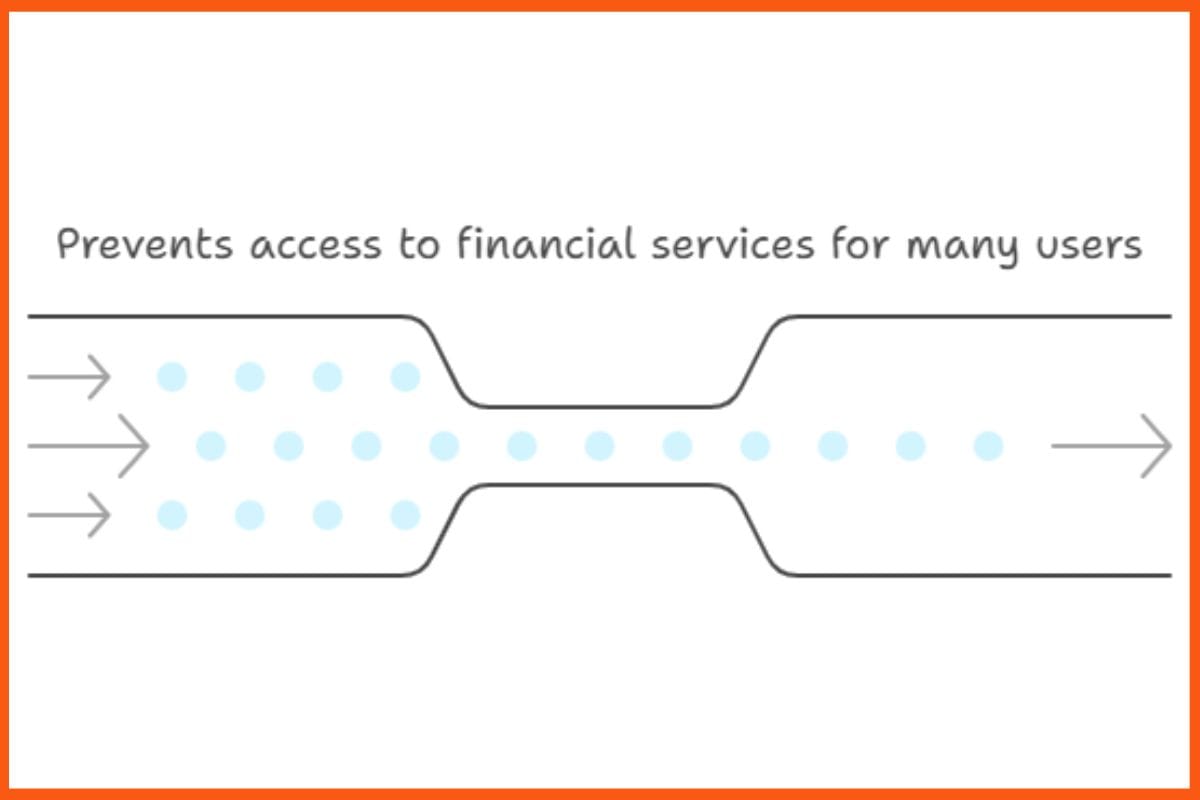
Over 90% of Indians prefer to interact in their native language. Most digital banking apps are still in English, and many people drop off owing to this. The next 500 potential million users will be from Tier 2 and Tier 3 towns, where regional languages matter. They have smartphones, internet access, and growing incomes. What they often lack is comfort navigating English-language financial products. AI agents close this gap by speaking Hindi, Tamil, Kannada, Bengali, Marathi, and other languages that people actually use.
Financial inclusion is not just good ethics, it is enormous business. When institutions remove language barriers, they access underbanked populations who need savings accounts, insurance products, and credit facilities. These aren't marginal customers. They're the growth market.
The technology works because several pieces fit together. Language models handle natural responses, while speech systems manage different languages and dialects reliably. Integration layers connect the system with payment gateways, loan modules, and core banking platforms, facilitating everything work together securely. All of this allows the system to speak regional languages and complete real transactions during a conversation.
Rolling out AI agents requires rethinking customer interactions. It works best with real conversation data, compliance checks, seamless system integration, and constant refinement. Banks that use language and context to build trust get the most impact. When a system speaks the customer’s language, remembers past interactions, explains choices clearly, and completes transactions seamlessly, it builds loyalty that goes beyond products or rates.