

Why All-in-One, AI-Driven CRMs Are Becoming Essential for Business Growth in 2026
🔍Insights
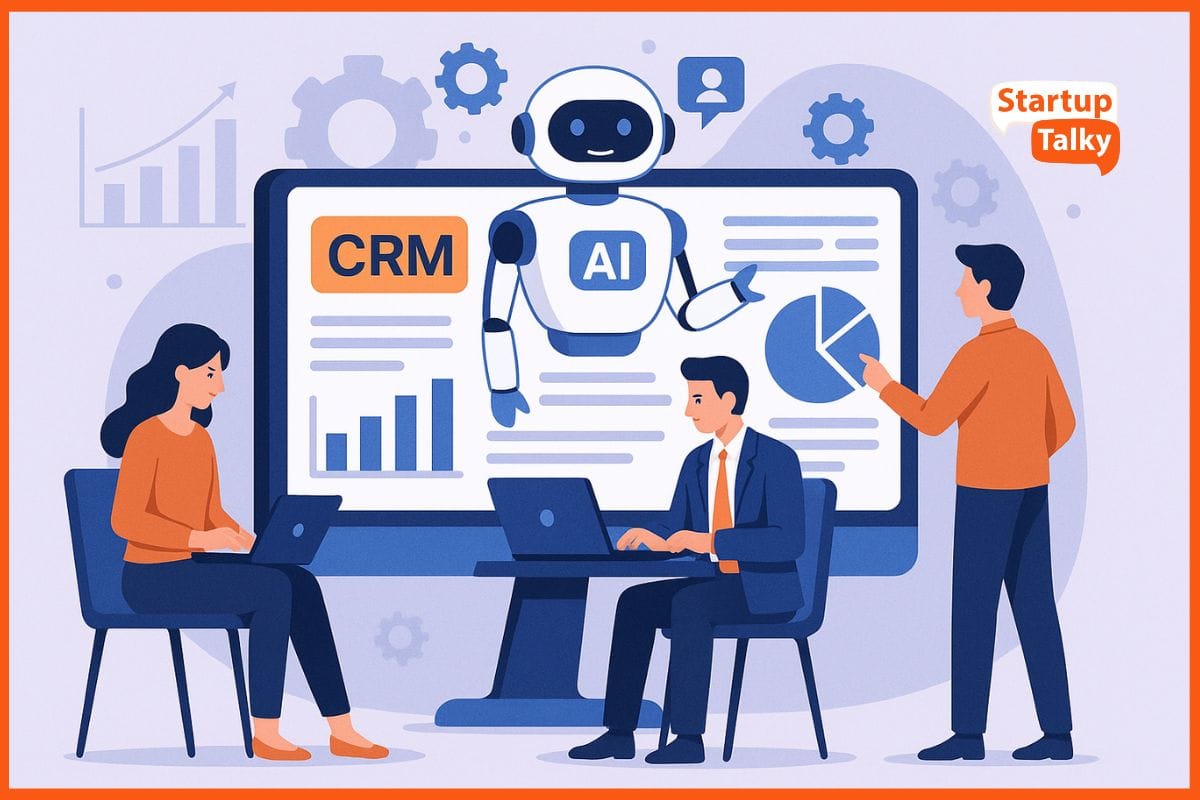
Imagine juggling dozens of apps just to track one customer. Right now, most businesses do exactly that. In fact, only 24% of companies have fully integrated customer data across their tools.
The result is chaos: teams waste hours on duplicate data entry and manual work, and customers get inconsistent service. Sales reps may enter the same lead in multiple systems, support agents lack context, and marketing misses the full picture.
These scattered tools create silos and waste money; one report found companies spend nearly $9,600 per employee on apps, half of which sit idle. The gap is clear: fragmented systems slow teams and frustrate customers.
The Shift to Unified CRMs
Problems with Fragmented Systems
AI as the Core Differentiator
Business Impact of AI-Driven Centralization
Future Outlook
The Shift to Unified CRMs
Businesses are responding by moving toward all-in-one CRM platforms. These unified systems combine sales, marketing, and support in a single workspace. Instead of toggling between siloed tools, everyone shares the same updated customer profile. This “single source of truth” approach unlocks full visibility and efficiency.
As one industry expert notes, “unified platforms centralize marketing, sales, and support operations, unlocking full customer visibility”. Sales teams can see marketing history and support tickets; marketing can view sales pipelines and service issues. This alignment means campaigns and follow-ups stay coordinated.
Problems with Fragmented Systems
By contrast, fragmented systems create real headaches. When data “lives in silos”, sales in one tool, marketing in another, support in yet another, every interaction becomes a gamble. For example, a customer complaining to a telecom company might get bounced between departments, forced to repeat their story over and over. Teams lose context.
One industry veteran warns this disconnect is a “customer experience crisis” that costs loyalty and revenue. Inevitably, handoffs break down, and customers feel “unknown, unsupported, and frustrated”. Internally, reps manually reconcile records, reconcile duplicates, and fill gaps. This reactive mode leads to missed upsell and retention opportunities: research shows companies with siloed data often leave money on the table.
These problems add up. Customers hate repeating themselves, and high expectations mean any delay can drive them to competitors. Sales cycles stall while reps chase missing info. Meanwhile, marketing campaigns can’t be personalized without full data.
The inefficiency is eye-opening; for many firms, roughly half their purchased software licenses go unused. This waste is essentially paying for tools that just add complexity. As one analyst quipped, businesses end up “managing their tools instead of growing their company.”
AI as the Core Differentiator
All-in-one CRMs now leverage AI to turn data chaos into clarity. With unified data as fuel, AI-powered features give teams superhuman insights. Predictive analytics can spot patterns in the customer journey, forecast sales trends, and flag churn risks.
For instance, platforms like Bitrix24 use AI lead scoring and forecasting to highlight the hottest leads in real time. An AI-powered dashboard then visualizes these insights and even sends alerts when key metrics change.
Automated workflows are another game-changer. AI chatbots and “copilots” handle routine tasks, freeing reps for strategy. In service, AI can analyze each incoming ticket’s content and urgency, then instantly route it to the right agent.
This intelligent routing ensures high-priority issues never slip through, no more agents cherry-picking easy tasks while urgent cases wait. Across sales, support, and marketing, AI bots can greet customers, verify info, and even draft email replies, all with the full context of past interactions in the CRM.
The upshot is that CRM tools become active assistants, not passive databases. As one report notes, when all data flows through a single CRM, “AI can deliver actionable insights and automate workflows impossible in fragmented stacks”.
AI also drives personalization. It can analyze buying signals and customer behavior to suggest the next best action, whether that’s a special offer or a prioritized outreach. Over time, these systems learn and improve, adapting to your market.
In fact, surveys show sales teams using AI in CRM outperform others: 83% of teams with AI-powered tools reported revenue growth, compared to 66% of teams without AI.
Business Impact of AI-Driven Centralization
Unified, AI-enabled CRMs accelerate deals and fine-tune strategy. Companies standardizing on one platform report 19% faster growth on average. In sales specifically, early adopters see win rates jump by roughly 30% or more.
Forecasting accuracy improves too: AI-based predictions typically boost accuracy 10–20%, which can translate into a 2–3% revenue uplift.
Support and service teams also reap rewards. By connecting AI automation with shared data, firms cut response times and case backlogs. For example, one study found organizations using AI in service cut their first-response time by 37%.
Support reps spend far less time on busywork and more time solving problems. Internally, metrics like funnel velocity and pipeline visibility sharpen because every action is logged in one system.
Perhaps most importantly, all-in-one CRMs strengthen team alignment. With a unified customer view, sales, marketing, and service collaborate seamlessly. Marketing knows which campaigns are driving real sales, and service sees what promises sales have made. In other words, teams stop working in isolation.
As experts summarize, “unified data + workflows = full journey visibility, faster execution, and consistent customer experience”.
When everyone speaks the same language of data, forecasts become more reliable, and cross-team handoffs become frictionless.
Future Outlook
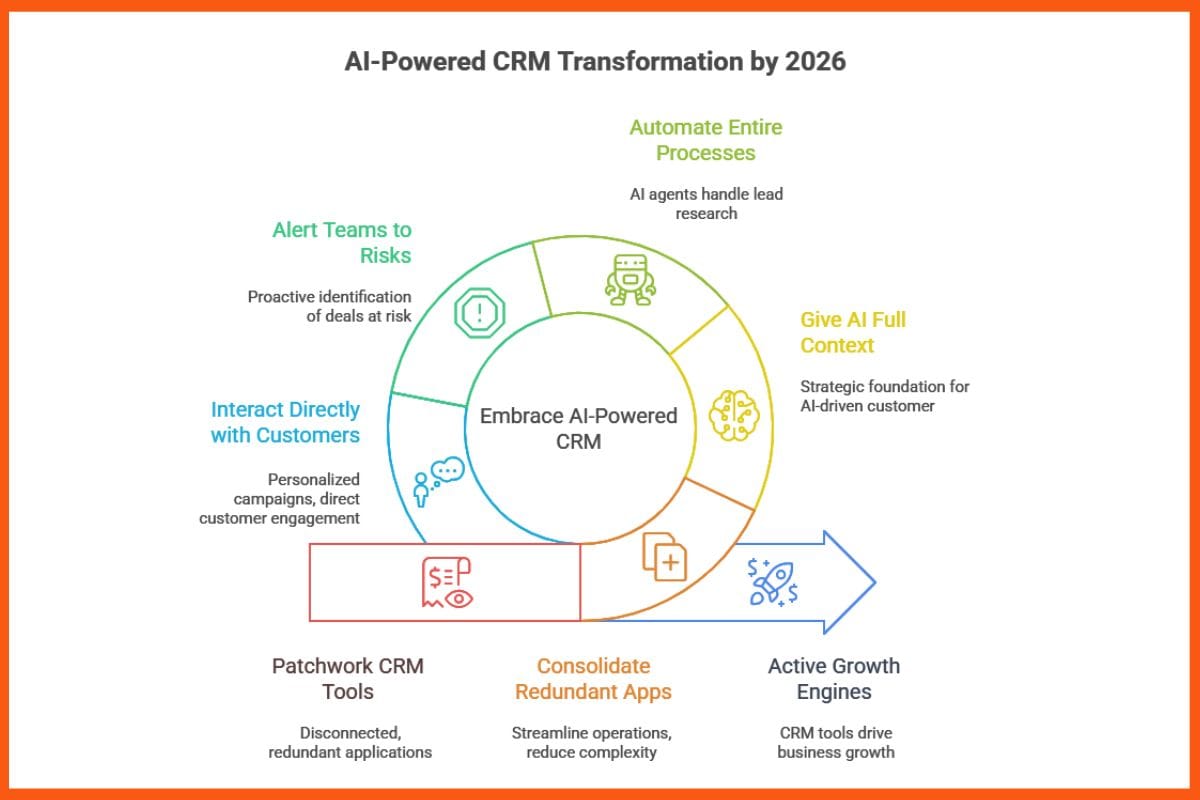
All signs point to AI-powered unified CRMs becoming the new normal by 2026. IDC and other industry watchers predict an accelerating shift: businesses that embrace integrated, intelligent CRM platforms will far outpace those clinging to patchwork tools. A recent survey found that over half of companies are already consolidating redundant apps, suggesting a consolidation wave.
Looking ahead, the winners will be those who give AI full, company-wide context. As one viewpoint puts it, “the companies that will lead... are those that treat CRM as the strategic foundation” of an AI-driven customer.
By 2026, AI agents and analytics won’t just enhance CRM, they’ll transform it. We’ll see AI automating entire processes (like lead research and personalized campaigns), alerting teams to deals at risk, and even interacting directly with customers. In short, CRM tools will evolve from passive record-keeping into active growth engines.
Conclusion
Fragmented tools are already a bottleneck, and that problem will only grow. By contrast, unified CRMs powered by AI promise to unlock faster growth, better forecasting, and seamless customer journeys. For growth-focused businesses, AI-driven centralization is no longer an option but an imperative. Those who switch to an integrated, AI-enabled CRM platform now will gain a clear advantage. In 2026, the companies still operating in digital chaos simply won’t be able to keep up.
 Niku Mandal
FAQs
What is a unified CRM and why do businesses need it?
A unified CRM is an all-in-one platform that centralizes sales, marketing, and customer support data. Businesses need it to eliminate silos, reduce manual work, and maintain a single, consistent view of every customer.
How do fragmented systems affect customer experience?
Fragmented tools force teams to work in isolated systems, causing inconsistent service, repeated customer queries, slow responses, and poor personalization—leading to frustration and churn.
What role does AI play in modern CRM platforms?
AI enhances CRMs by automating workflows, scoring leads, predicting trends, routing tickets intelligently, and offering real-time insights—helping teams make faster, smarter decisions.