

AI Tools for Business Development: Prospecting, Outreach & Sales Tools
📰 News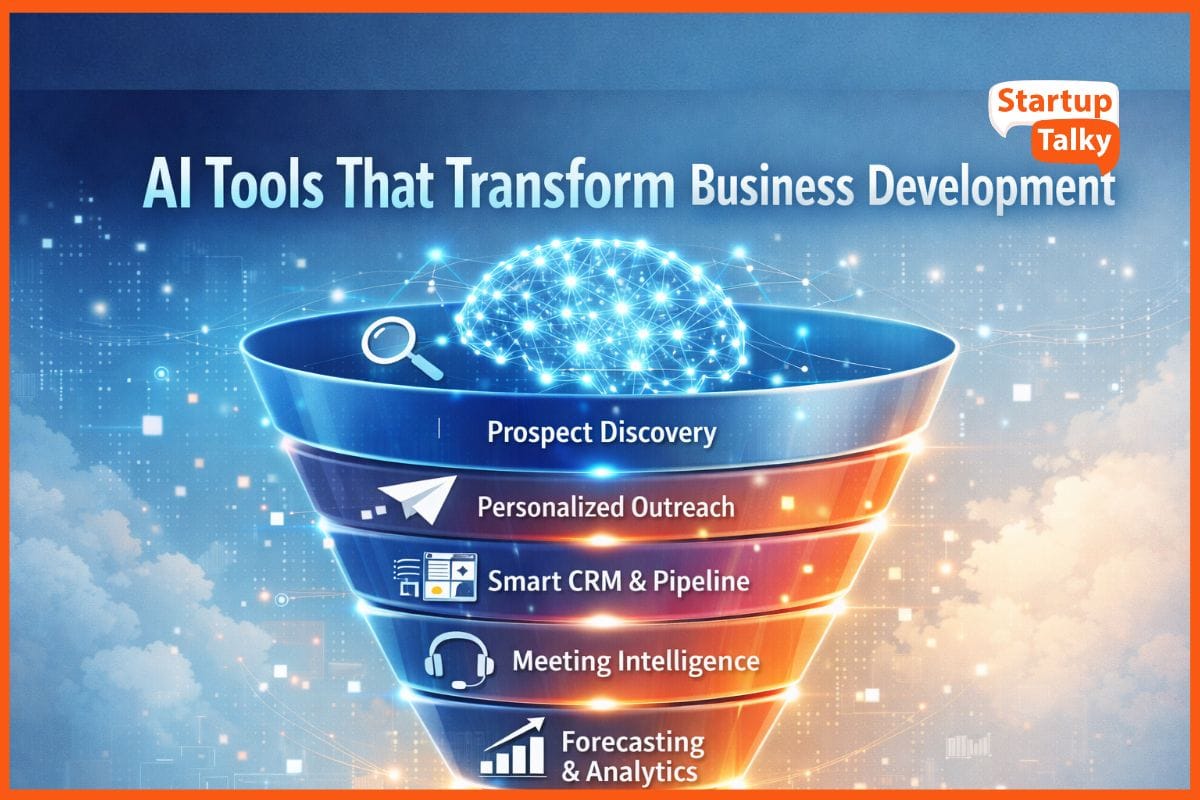
When I looked at how business development (BD) teams actually work, I realised that most tools solve only one part of the funnel. The real momentum killers aren’t closing deals—they’re in the early stages: prospecting, personalised outreach, and consistent follow-up. Cold outreach often gets ignored, manual prospect research is a time sink, and CRMs can quickly become cluttered. Long sales cycles and weak pipeline visibility only make things worse.
Business development today is no longer just about closing deals, it begins with finding the right prospects, crafting personalised messages, managing pipelines, and forecasting revenue. AI is stepping in, not as a magic bullet, but as a strategic partner to streamline every stage of the BD workflow. By automating repetitive tasks, providing deeper insights, and supporting data-driven decisions, AI allows teams to focus on high-value interactions that drive growth.
In this article, let’s discuss AI tools for business development that can help you make your workflow easier, improve outreach, and boost sales performance.
AI Tools for Business Development Comparison
| Stage | Tool | Key Benefit | Best For |
|---|---|---|---|
| Prospect Discovery | Apollo.io | Extensive lead database with AI-driven contact discovery | Solo founders, small teams |
| Prospect Discovery | ZoomInfo Copilot | Real-time intent signals and deep market intelligence | Enterprises needing detailed insights |
| Prospect Discovery | Clay | Automates lead research across 100+ data sources | Teams building targeted lists |
| Personalised Outreach | Lavender | AI email coach for better tone, structure & deliverability | Individuals & small teams |
| Personalised Outreach | HubSpot AI (Breeze) | Generates personalised emails & LinkedIn messages at scale | BD teams using HubSpot ecosystem |
| CRM & Pipeline | Salesforce Einstein | Predictive lead scoring & automated CRM updates | Enterprise sales teams |
| CRM & Pipeline | HubSpot Smart CRM | AI-powered deal scoring & automated CRM management | Growing BD teams |
| Meeting Intelligence | Gong | Conversation insights, objection analysis & follow-ups | Enterprise sales & coaching |
| Meeting Intelligence | Fireflies.ai | AI meeting assistant, transcription & summaries | Teams needing meeting efficiency |
| Forecasting & Analytics | Clari | AI-driven revenue forecasting & pipeline inspection | Enterprise revenue teams |
| Forecasting & Analytics | Salesforce Revenue Intelligence | Advanced trend analysis & predictive revenue insights | Salesforce power users |
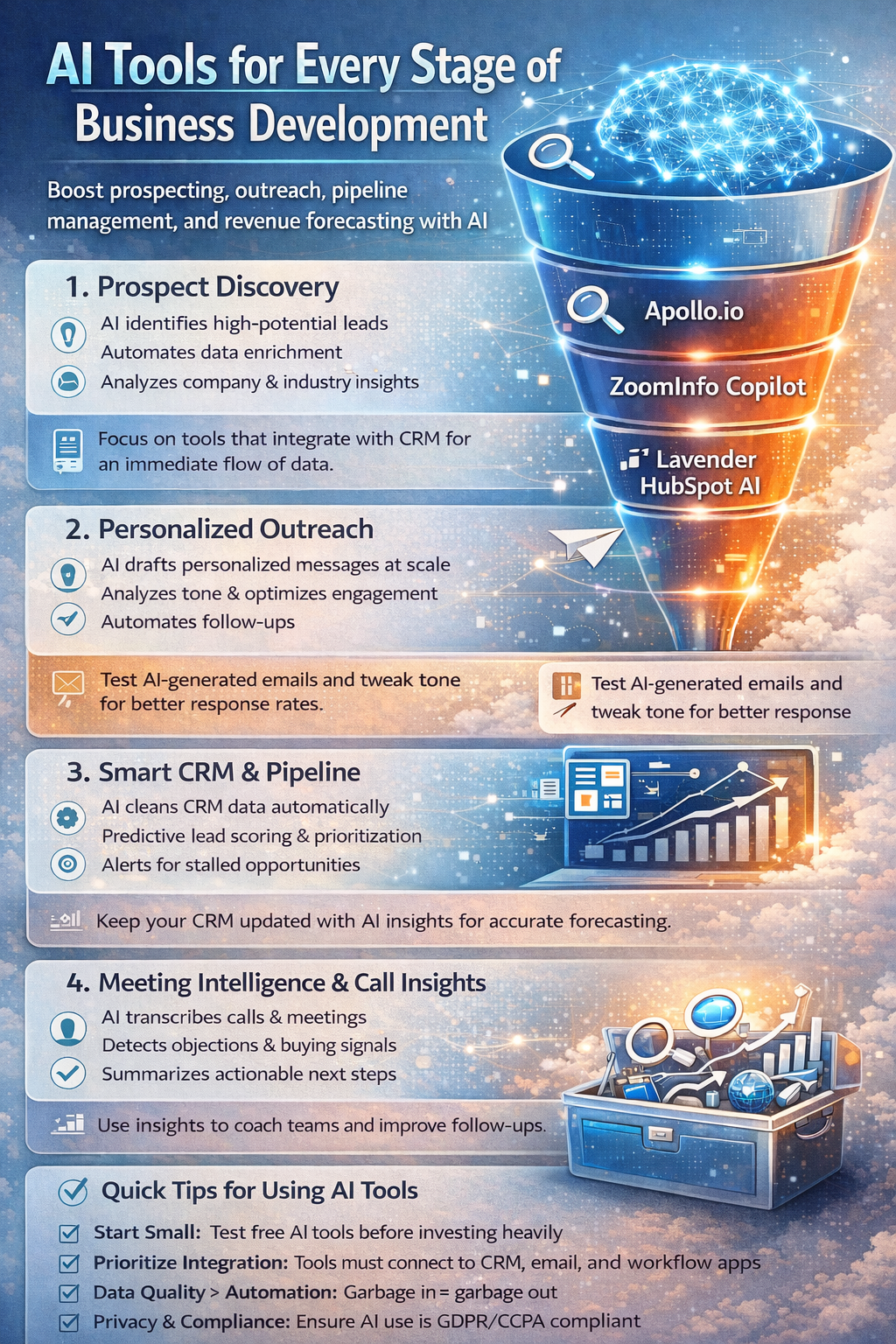
The 5 Stages of Modern Business Development
Instead of a generic list of tools, I've organised them by the critical stages of the business development workflow. This approach highlights how AI can integrate seamlessly into your existing processes, enhancing efficiency and effectiveness where it matters most.
Stage 1: Prospect Discovery
Effective business development begins with identifying the right prospects. AI tools in this stage are designed to provide deep lead intelligence, enrich data, and conduct comprehensive company research, ensuring you're targeting the most promising opportunities.
- Apollo.io: This platform offers an extensive database of over 275 million contacts, leveraging AI for precise prospecting and lead generation. It includes features like email sequencing and strong CRM integration, making it a powerful tool for initial outreach. Pricing starts with a free tier, with paid plans ranging from $49 to $119 per month, depending on features and contact credits.
- ZoomInfo Copilot: For teams requiring more in-depth market intelligence, ZoomInfo Copilot provides real-time intent signals and AI-generated account summaries. It's built on a foundation of accurate B2B data, offering unparalleled insights into potential clients. While pricing is typically enterprise-level, often ranging from $15,000 to $40,000 annually, its comprehensive data can justify the investment for larger organizations.
- Clay: Clay stands out by integrating over 100 data providers and employing AI research agents to automate data enrichment and contact discovery. It's particularly useful for building highly targeted lead lists. Clay offers a free plan, with paid tiers from $149 to $800 per month, based on usage and features.
 Rishi Mundra
Stage 2: Personalised Outreach at Scale
Once prospects are identified, the next challenge is crafting personalised messages that resonate and can be delivered at scale. AI tools here focus on generating tailored content, analysing tone, and automating follow-ups to maximise engagement.
- Lavender: As an AI email coach, Lavender provides real-time feedback on your emails, helping you write more effective and personalised messages. It offers insights into tone and deliverability, significantly improving reply rates. Lavender has a free plan, with individual paid plans at $29 (Starter) and $49 (Pro) per month, and team plans starting from $69 per user per month.
- HubSpot AI (Breeze): Integrated within the HubSpot ecosystem, its AI capabilities assist in writing personalised cold emails, generating LinkedIn messages, and automating follow-up sequences. This allows BD teams to maintain a human touch while scaling their outreach efforts. HubSpot offers free tools, with advanced AI features available in their Starter ($15-20/month), Professional, and Enterprise plans.
Stage 3: Smart CRM & Pipeline Intelligence
Managing a growing pipeline requires intelligent systems that can predict deal likelihood, score leads, and keep CRM data clean and up-to-date. AI in this stage transforms your CRM from a data repository into a proactive intelligence hub.
- Salesforce Einstein / Agentforce: As an add-on to Salesforce Sales Cloud, Einstein provides predictive lead scoring, automated activity capture, and AI-powered agents to streamline CRM processes. Sales Cloud itself ranges from $175 to $350 per user per month for Enterprise and Unlimited editions, with Einstein add-ons typically costing an additional $50 to $150 per user per month.
- HubSpot Smart CRM: HubSpot's CRM, enhanced with AI, offers features like AI-powered deal scoring and automated CRM updates. This ensures that your pipeline accurately reflects the most promising opportunities and reduces manual data entry. These features are integrated into HubSpot's Sales Hub plans.
Stage 4: Meeting Intelligence & Call Insights
Sales calls are rich with valuable information, but extracting insights manually is nearly impossible. AI tools in this stage transcribe calls, analyse objections, identify buying signals, and even generate follow-up emails, turning conversations into actionable data.
- Gong: A leader in conversation intelligence, Gong transcribes sales calls, analyses objections, and identifies key buying signals. It provides deep insights into sales performance and customer interactions, helping teams refine their strategies. Gong's pricing is custom, based on user count and platform fees, but typically involves a per-user cost of $100-$200 per month.
- Fireflies.ai: This AI meeting assistant automatically records, transcribes, and summarises meetings. Features like AskFred, an AI assistant, and talk-time analytics provide quick access to key information and insights. Fireflies.ai offers a free plan, with Pro ($10/month), Business ($19/month), and Enterprise ($39/month) plans available when billed annually.
Rishi Mundra
Stage 5: Forecasting & Revenue Analytics
Accurate forecasting and revenue analytics are crucial for strategic planning. AI tools here predict revenue, identify stalled deals, model growth, and generate performance insights, giving leaders a clear view of their business development trajectory.
- Clari: Clari is an enterprise-focused platform that provides AI-driven forecasting, pipeline inspection, and RevAI deal scoring. It helps revenue teams predict outcomes with greater accuracy and identify risks early. Clari's pricing is custom, tailored to enterprise needs.
- Salesforce Revenue Intelligence: Integrated within Salesforce's higher-tier editions or as an add-on, this tool offers advanced revenue forecasting and trend analysis. It helps businesses understand their revenue drivers and make data-backed decisions.
What Actually Matters in AI for Business Development (Not Features)
In my evaluation, the integration ecosystem mattered more than raw AI writing quality. The ability of an AI tool to seamlessly connect with existing CRM, email, and communication platforms is paramount. Without strong integrations, even the most advanced AI becomes another siloed tool, adding to complexity rather than reducing it. Accuracy over automation is another critical factor; flawed AI-driven insights can be more detrimental than no insights at all. Data freshness is also key, especially in fast-moving markets. Finally, understanding AI hallucination risks and ensuring privacy and compliance are non-negotiable for any serious business development operation.
Quick Decision Grid
| If You Need… | Use This Type of AI Tool |
|---|---|
| Better lead research | AI data intelligence platforms |
| Faster cold emails | AI outreach writers |
| Cleaner CRM | AI CRM automation |
| Smarter forecasting | AI revenue intelligence |
My Practical Recommendations (Segmented)
- If you’re a solo founder: Start with free or low-cost tools like Apollo.io (free tier) for prospecting and Lavender (free/Starter plan) for email optimisation. Focus on tools that offer immediate value without a steep learning curve or significant investment.
- If you’re building your first BD team: Consider a foundational CRM like HubSpot with its integrated AI features. Supplement with Fireflies.ai for meeting insights to ensure consistent coaching and knowledge sharing.
- If you’re an enterprise sales leader: Invest in comprehensive platforms like ZoomInfo Copilot for deep market intelligence, Salesforce Einstein for advanced CRM capabilities, and Gong for conversation intelligence. These tools provide the scale and depth required for large, complex sales operations.
- If you’re outbound-heavy: Prioritise tools like Apollo.io and Clay for lead generation and data enrichment, combined with Lavender for optimising cold outreach. The focus should be on efficiency and effectiveness in reaching new prospects.
- If you’re relationship-driven: Tools that enhance communication and understanding, such as Gong and Fireflies.ai, are invaluable. They help in capturing nuances from conversations and building stronger client relationships through better follow-up and personalised engagement.
The Future of AI in Business Development
The trajectory of AI in business development points towards increasingly sophisticated co-pilot functionalities for sales teams. We're moving beyond basic automation to predictive deal strategies and hyper-personalised outreach driven by autonomous outbound campaigns. Voice-AI negotiation prep will become more common, offering real-time coaching and strategic advice during critical conversations. This future is analytical, data-driven, and focused on augmenting human capabilities rather than replacing them, allowing BD professionals to focus on high-value strategic interactions.
Rishi Mundra
FAQs
What are AI tools for business development?
AI tools for business development are software solutions that automate and enhance tasks like prospecting, outreach, CRM management, meeting analysis, and revenue forecasting, helping teams save time and focus on high-value activities.
How can AI improve prospecting and lead generation?
AI tools analyse large datasets to identify the most promising leads, enrich contact information, and provide insights about potential clients, making prospecting faster, more accurate, and highly targeted.
Which AI tools are best for personalising outreach?
Tools like Lavender and HubSpot AI help craft personalised emails, LinkedIn messages, and follow-ups at scale, improving engagement rates and saving hours of manual writing.
Can AI help with forecasting and revenue analytics?
Yes. Platforms like Clari and Salesforce Revenue Intelligence use AI to predict revenue, identify stalled deals, model growth scenarios, and provide actionable insights for data-driven decision-making.