

Amit Banka of WeNaturalists on Youth-Led Climate Action, Green Skills, and Building a Scalable Sustainability Ecosystem
News 📰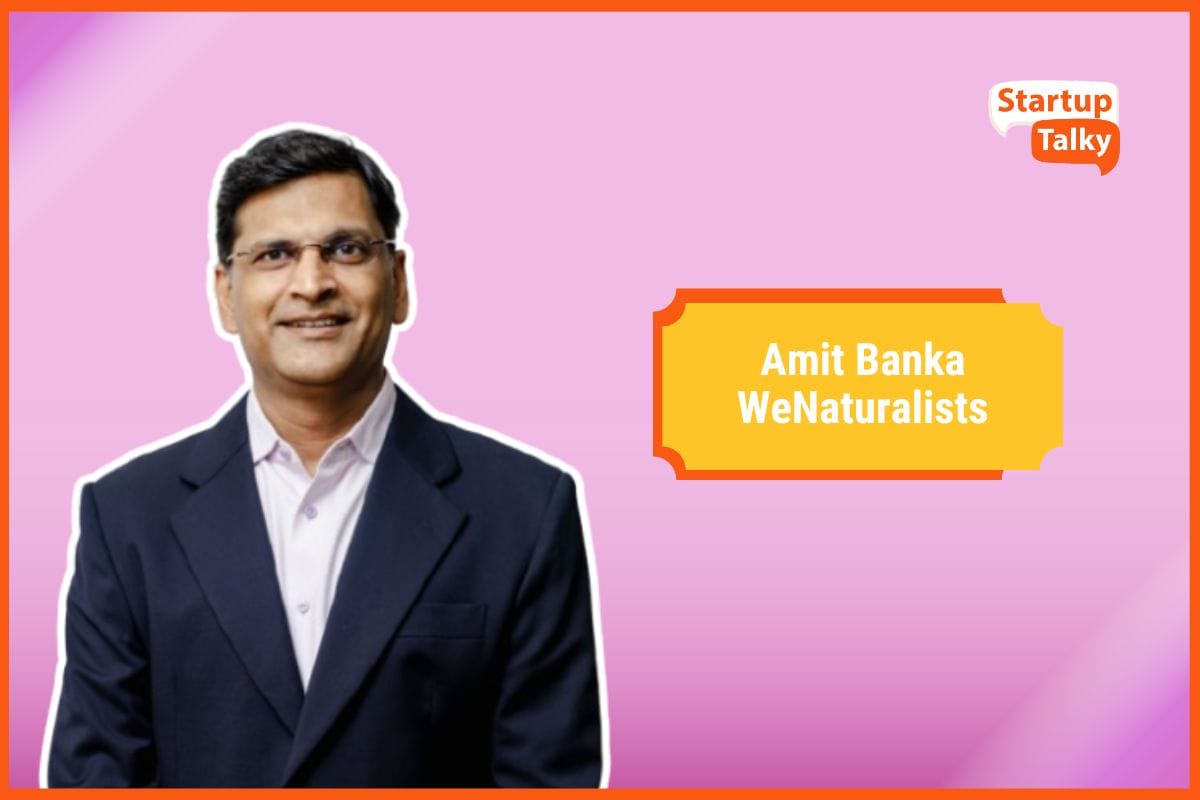
StartupTalky presents Recap'25, a series of exclusive interviews where we connect with founders and industry leaders to reflect on their journey in 2025 and discuss their vision for the future.
In this edition of Recap’25, StartupTalky speaks with Amit Banka, Founder and CEO of WeNaturalists, who reflects on a year marked by rapid community growth, youth-led climate action, and the use of digital and AI tools to drive measurable impact. He shares insights on evolving sustainability careers, green skills, and WeNaturalists’ vision to make climate action accessible, collaborative, and economically viable.
StartupTalky: WeNaturalists now brings together professionals, youth, and organisations under one global ecosystem. What were the biggest platform developments or community milestones you achieved in 2025?
Amit Banka: Digital Transformation Enhancements: WeNaturalists is working towards refining its core digital tools to prioritize seamless project management, collaboration, and impact scaling for over 500k global members, resulting in higher efficacy for professionals and organizations.
- Experiential biodiversity trails: Dozens of immersive trails across Mumbai (monsoon biodiversity, winter birding, shore walks, nature journaling), plus pilots in Pune and New Delhi, drew massive participation and positive feedback, fostering deeper nature connections for youth and professionals.
- Campus Champions Program Expansion: Impacted colleges nationwide through film screenings, water audits, climate action learning sessions, and environmental events for specially-abled students; kick-started awareness building on the Under 25 platform, focused on hosting missions, events, and interactions with the sole focus on making college campuses sustainable and making climate action "cool" and mainstream.
- Grassroots Ecosystem Building: Developed partnerships with naturalists, NGOs, and grassroots organizations to synergize for upskilling, community development, commerce models, and stakeholder empowerment, uniting professionals, youth, and orgs in a robust global network to create impact on the ground while keeping biodiversity and naturalists at the core.
StartupTalky: With over 500,000 members worldwide, what behavioural or engagement shifts did you notice this year among climate professionals, educators, and young learners?
Amit Banka: Youth-Driven Content Surge: Gen Z (ages 13–27) led 89% of eco-content creation on WeNaturalists in 2024, with nature posts up 34% since 2021 and 80% of last year's total already posted by August 2025, signaling accelerated grassroots digital activism among young learners.
- Tier 2–3 City Boom: Green job interest from smaller cities like Indore, Ranchi, and Kochi surged 50% year-on-year, now comprising 35% of seekers (up from 25% three years ago), reflecting broader engagement shifts among professionals and educators beyond metros.
- Gen Z Career Pivot: 63% of green job seekers are Gen Z (21–30), with 24% mid-career (31–40) professionals transitioning, driven by structured climate pathways and upskilling in renewables, EVs, and ESG—marking a behavioral move from volunteering to professional commitment.
- Individual-Led Momentum: 97% of posts came from individuals vs. 3% organizations, emphasizing decentralized, purpose-driven participation by climate professionals and youth over institutional efforts.
- Platform Acceleration: Amid 500,000+ global members, 2025 shows record participation via digital tools for project management, collaborations, and monetization, fostering deeper networking and measurable impact among all groups.
StartupTalky: Sustainability work often suffers from fragmentation. How did digital tools or structured workflows help organisations and individuals create more measurable impact in 2025?
Amit Banka: When you give people structured workflows and transparent tools, impact stops being anecdotal and becomes auditable. Consider what happened with our Projects feature on WeNaturalists. Small teams that were juggling spreadsheets and WhatsApp groups suddenly had one clean space to document, assign roles, track progress, and measure outcomes. Organisations using our platform saw efficiency gains not because they became better people, but because their work became visible, trackable, and shareable.
Structured workflows democratize accountability. When a forest ranger and an NGO director use the same project management tool, they speak the same language about impact. We've moved from "we're doing good work" to "here's exactly what we've done, and here's what we're learning." That's measurement that matters.
StartupTalky: As climate narratives evolved this year, which themes, such as conservation, circularity, adaptation, or green skills, gained the strongest traction across your global community?
Amit Banka: If 2024 was about awareness, 2025 became the year of agency. What's fascinating is how Gen Z has reframed the conversation. They're not talking about climate doom; they're talking about green careers, circular systems, and adaptation as opportunity.
Green skills have become the golden thread. Circularity is no longer theoretical. When World Cleanup Day 2025 became a global movement against fast fashion, powered by conversations about the circular economy, something changed. People saw connection between their consumption, waste, and system redesign. It became less about individual guilt and more about systemic reimagining.
Conservation, traditionally the domain of NGOs and academics, got democratized. Tribal leaders rewilding 5,000 hectares, coastal communities building mangrove resilience, urban communities greening slums — these became equally celebrated as traditional conservation work.
Adaptation is the narrative that's still emerging but gaining momentum. People aren't just asking "How do we reduce emissions?" They're asking "How do I build resilience in my community?" The hyperlocal focus — from Delhi's air crises to Rajasthan's water scarcity to coastal Tamil Nadu's resilience — shows people are connecting global climate action to their lived reality. That's where real agency lives.
StartupTalky: AI is becoming a powerful enabler for climate education and program management. What role did AI or automation play in improving learning journeys, community engagement, or outcome tracking on your platform?
Amit Banka: AI can either deepen disparity or dissolve it. At WeNaturalists, we're betting on the latter.
On the learning journey front, AI-powered content personalization means a student in Tier 2 Indore accessing our platform gets the same quality curriculum recommendations as someone in Mumbai. AI sorting through thousands of case studies, success stories, and educational resources to match them with individual learning goals — that's power distribution.
But here's the subtler application: AI on citizen data. Imagine a community monitoring local biodiversity, logging ecological observations through a simple app. AI process that ground-level data, cross-references it with satellite imagery, and suddenly a tribal community's knowledge becomes scientific data. That's accountability with dignity. That's bringing every contributor to a level playing field — which is a deep desire of mine for WeNaturalists.
StartupTalky: Looking ahead to 2026, where do you see the biggest opportunities for scaling climate action, whether through partnerships, digital transformation, localised programs, or creator-driven content?
Amit Banka: India will have 30 million green jobs in the next 25 years. But there's a chasm between climate passion and climate careers. Mid-tier creators on our platform are having readymade templates and tools to earn through content, brand partnerships, and platform monetization. That's sustainable livelihoods emerging from climate storytelling. In 2026, we're scaling monetization infrastructure so that the 550,000 passionate voices don't have to choose between climate action and rent.
Small NGOs and grassroots activists don't need enterprise-level software costing lakhs monthly. Our tools are built for them — project management, fundraising, community building, impact tracking — all at a cost that doesn't bleed their already-thin budgets. That's how we scale collectively.
The biggest opportunity? Making climate action visible and viable. When a tribal leader, a climate-tech founder, and a school teacher see each other's work on WeNaturalists, when they collaborate, when they see economic opportunity — that's the network effect that scales.
StartupTalky: With rapid climate events and shifting policy priorities worldwide, what long-term changes do you foresee in how people learn about, engage with, and build careers in sustainability?
Amit Banka: We're witnessing a fundamental rewiring. People aren't asking "Should I care about climate?" anymore. They're asking "How can I build a life around it?"
Learning is shifting from guilt to capability. Traditional climate education triggered anxiety and paralysis. "Here's what's broken, feel bad, feel powerless." What's changed is clear, actionable learning pathways. Career in sustainability is no longer peripheral. In 2015, sustainability was a CSR responsibility. By 2025, it's a competitive advantage. Companies across sectors — real estate, FMCG, finance, energy — are hunting for ESG specialists, carbon experts, sustainability architects. The job market has spoken: green work is essential work
Gen Zs are not waiting for traditional institutions to validate their ideas. They're documenting their work, crowdsourcing solutions, building movements peer-to-peer.
But here's the uncomfortable truth: climate action is becoming more complex, not simpler. It's entangled with policy, economics, justice, and livelihoods. Shallow engagement — plant a tree for a photo — won't cut it. People will need to grapple with circularity, adaptation costs, just transitions, indigenous knowledge. That means deeper, lifelong learning. Climate work isn't a career pivot; it's a career identity.
In the very long term — 2030 and beyond — we'll see climate work become indistinguishable from just... work. Because by then, every organization, every economy, every life will have had to account for planetary boundaries. There won't be "climate careers" — there will just be careers done responsibly, sustainably, in ways that honor both people and planet.
Explore more Recap'25 interviews here.