

Best AI Microlearning Platforms That'll Help You Boost Skills Fast with Bite-Sized Lessons
Collections 🗒️
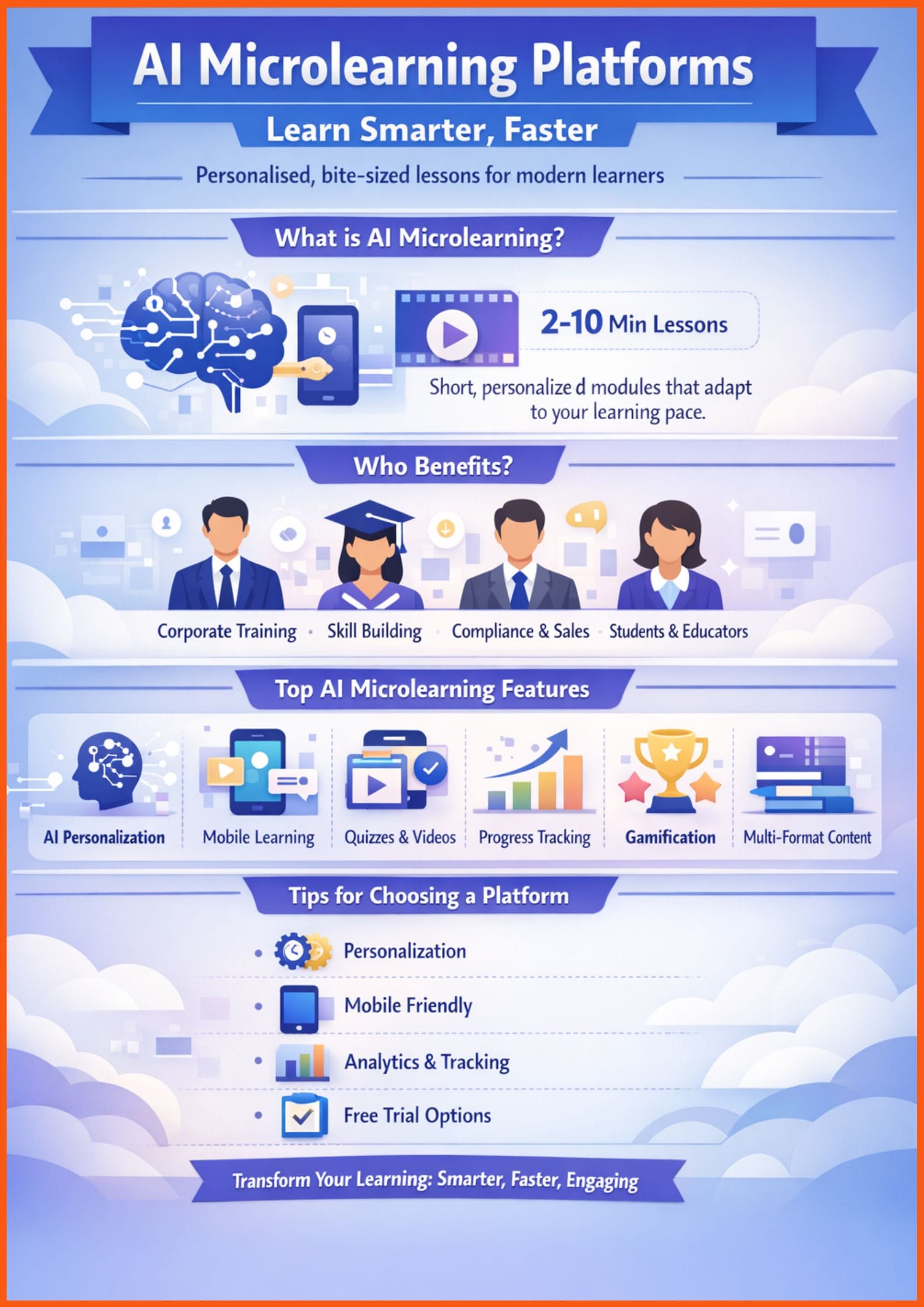
AI microlearning platforms break content into short 2-10 minute modules. They use artificial intelligence to create personalised learning paths and adjust difficulty levels based on performance.
These platforms are gaining popularity because short, focused lessons can improve knowledge retention and make skill-building more manageable.
Common use cases include workplace training, compliance refreshers, sales enablement, and student learning, where users want to build skills on the go.
Best AI Microlearning Platforms Comparison
| Platform | Key Features | Pros | Cons | Best For |
|---|---|---|---|---|
| Disprz | AI-personalised learning paths, bite-sized video & quiz modules, real-time analytics, AI-assisted content authoring & localisation, gamification | Strong focus on retention, enterprise-ready, multilingual support | Learning curve for content creation, pricing increases with team size | Corporate training & L&D teams |
| Thinkific | AI content generation, support for video/flashcards/quizzes, mobile-friendly with offline access, built-in assessments, easy course templates | Quick course setup, good monetisation options | Limited enterprise analytics, advanced AI features restricted in free tier | Individual creators & small teams |
| Mindsmith | AI-generated text & video content, adaptive learning paths, engagement analytics, LMS integrations, gamification | Reduces content development time, strong adaptive learning | Enterprise-focused pricing, limited free access | Workplace training & engagement |
| Absorb LMS | Skill-gap analysis, multi-format content support, mobile app (offline), AI lesson recommendations, compliance tracking | Highly scalable, strong integrations | Higher pricing, interface can feel dated | Large organisations & enterprise training |
| Litmos | Smart lesson recommendations, short video & text modules, mobile app, points & badges, learner analytics | Strong mobile experience, fast implementation | Content library may feel generic, per-user pricing adds up | Sales & field teams |
| Disco | AI-curated learning paths, interactive content, mobile-responsive, engagement analytics, social learning features | Encourages peer learning, user-friendly | Newer platform, analytics less advanced | Community-driven learning programmes |
| Trost Learning | ML-based personalisation, multi-device support, gamified content, performance dashboards, easy content updates | Customisable learning paths, ROI-focused | Less brand recognition, onboarding may take time | Global corporate learning programmes |
How I Chose These Tools
I tested more than a dozen platforms by signing up for trials and using them for real scenarios, such as learning coding basics and leadership skills.
My selection criteria included:
- Quality of AI-driven personalisation
- Variety of content formats (video, quizzes, flashcards)
- Ease of use on mobile
- Analytics and progress tracking
- Transparent pricing and availability of free tiers
I prioritised platforms with strong adaptive learning and smooth mobile experiences. I also considered usability, as complex interfaces can reduce daily engagement.
Top AI Microlearning Platforms
Disprz
Disprz offers an enterprise-grade AI-driven learning and skilling platform that blends microlearning with full learning management capabilities. It enables organisations to deliver bite-sized interactive content (videos, quizzes, activities) on mobile with multilingual support and strong performance analytics. The platform also supports blended learning (online + in-person), detailed assessments, and just-in-time microlearning workflows that help learners stay engaged and competent. Disprz integrates with HR systems for role-based training paths and compliance tracking, making it ideal for large distributed workforces.
Key Features
- AI-personalised learning paths
- Bite-sized video and quiz modules
- Real-time analytics
- AI-assisted content authoring and localisation
- Gamification elements like badges
Pros
- Strong focus on retention through short lessons
- Well-suited for corporate environments
Cons
- Learning curve for content creation
- Pricing increases with team size
Best For: Corporate training and L&D teams
Thinkific
Thinkific is a comprehensive course creation and learning commerce platform that helps educators and businesses build, market, and sell online courses using drag-and-drop tools. It includes AI-assisted content tools like course outlines and quiz generatorsoutlines that speed up development and improve learner experience. Thinkific also provides analytics, branded mobile access, community features, and built-in commerce (payments, sales automation) so creators can manage both learning and revenue in one place.
Key Features
- AI content generation
- Support for video, flashcards and quizzes
- Mobile-friendly with offline access
- Built-in assessments
- Easy course templates
Pros
- Quick course setup
- Good monetisation options
Cons
- Limited enterprise analytics
- Advanced AI features are restricted in the free tier
Best For: Individual creators and small teams
 Nitin Konde
Mindsmith
Mindsmith is a generative AI eLearning authoring tool that lets instructional designers and subject experts rapidly build interactive lessons with multimedia, quizzes, flashcards, and branching scenarios. Its AI engine can generate structured lesson content from documents or prompts, reducing manual effort and time to create learning modules. The platform supports real-time collaboration, SCORM exports, mobile-optimized delivery, and analytics, making it easier for teams to scale consistent, high-quality education across audiences.
Key Features
- AI-generated content (text and video)
- Adaptive learning paths
- Engagement analytics
- LMS integrations
- Gamification features
Pros
- Reduces content development time
- Strong adaptive learning capabilities
Cons
- Enterprise-focused pricing
- Limited free access
Best For: Workplace training and engagement
Absorb LMS
Absorb LMS is a corporate learning management system that combines intelligent automation with AI-powered recommendations and reporting. It supports multi-format content (video, quizzes, infographics), mobile delivery (offline included), and deep analytics to monitor skill gaps and learner progress. Absorb also enables automated compliance tracking, e-commerce support, and enterprise integrations to embed learning into daily workflows at scale, ideal for organisations prioritising structured growth and measurable training outcomes.
Key Features
- Skill-gap analysis
- Multi-format content support
- Mobile app with offline access
- AI lesson recommendations
- Compliance tracking
Pros
- Highly scalable
- Strong integration capabilities
Cons
- Higher pricing
- Interface can feel dated in places
Best For: Large organisations and enterprise training
Litmos
Litmos is a scalable cloud-based LMS built for fast deployment and continuous training across distributed teams. It combines AI analytics and adaptive assessments with gamification (points, badges) to keep learners motivated. The platform supports mobile learning, compliance tracking, and prebuilt content templates that help organisations launch training quickly. Deep integrations with tools like Salesforce and Teams ensure training fits seamlessly into work routines without disruption.
Key Features
- Smart lesson recommendations
- Short video and text modules
- Dedicated mobile app
- Points and badges
- Learner analytics
Pros
- Strong mobile experience
- Fast implementation
Cons
- Content library may feel generic
- Per-user pricing adds up
Best For: Sales and field teams
Vivek Dev Jacob
Disco
Disco uses AI to help organisations design, deliver, and scale modern learning experiences with an emphasis on social engagement. It incorporates intelligent curriculum generation (outlines, quizzes, activities), community features (forums, group events), and real-time analytics for complete visibility into learner performance. Disco’s approach blends adaptive learning paths with collaborative elements, making it ideal for teams that value shared learning and dynamic training programmes.
Key Features
- AI-curated learning paths
- Interactive content formats
- Mobile-responsive design
- Engagement analytics
- Social learning features
Pros
- Encourages peer learning
- User-friendly interface
Cons
- Relatively newer platform
- Analytics are less advanced than competitors
Best For: Community-driven learning programmes
Trost Learning
Trost Learning focuses on purpose-driven microlearning with AI personalisation aimed at global corporate teams. It uses machine learning to tailor learning paths and supports gamified quizzes, mobile access, multi-device delivery, and performance dashboards for ROI tracking. Its easy content update capabilities and engagement-focused design help maintain learner interest and measure the business impact of training initiatives.
Key Features
- Machine learning-based personalisation
- Multi-device support
- Gamified content
- Performance dashboards
- Easy content updates
Pros
- Customisable learning paths
- Focus on measurable ROI
Cons
- Less brand recognition
- Onboarding may take time
Best For: Global corporate learning programmes
Vivek Dev Jacob
Personal Experience & Results
During testing, Mindsmith delivered the most accurate adaptive recommendations. After two sessions, it adjusted lessons to match my coding goals effectively.
Thinkific was the easiest platform to set up quickly. Disprz maintained engagement with adaptive quizzes that felt balanced and challenging.
Absorb LMS helped identify learning gaps clearly during leadership modules. Litmos stood out for mobile use, especially during short commute sessions.
Final Recommendation
Disprz stands out as the best overall choice for organisations seeking strong AI personalisation combined with enterprise-ready features.
For beginners or budget-conscious users, Thinkific’s free tier is a practical starting point. Mindsmith is ideal for users who want deeper adaptive learning capabilities.
Conclusion
AI microlearning platforms are well-suited for modern, fast-paced learning needs. Their short, personalised modules make upskilling more manageable and engaging.
As AI continues to evolve, expect more real-time tutoring features, smarter skill assessments, and deeper performance analytics.
FAQs
What is an AI microlearning platform?
AI microlearning platforms break learning into short 2–10 minute modules and use artificial intelligence to personalise content, adjust difficulty, and improve knowledge retention for learners on the go.
Who can benefit from AI microlearning platforms?
These platforms are ideal for corporate training, compliance refreshers, sales enablement, educators, and students who want flexible, engaging, and adaptive learning experiences.
What are the best AI microlearning platforms?
Some of the top tools include Disprz (best for enterprise training), Thinkific (best for individual creators), Mindsmith (best for adaptive learning), Absorb LMS and Litmos (great for large organisations), Disco (best for social learning), and Trost Learning (excellent for global corporate programs).
How do I choose the right AI microlearning platform?
Choose platforms based on AI‑driven personalisation, variety of content formats (video, quizzes, flashcards), mobile experience, analytics and progress tracking, ease of use, and pricing, including available free tiers to test features before committing.