

Bharath Krishna Rao of Emobi on Building Reliable EVs, Advancing Telematics, and Powering India’s Micro-Mobility Revolution
News 📰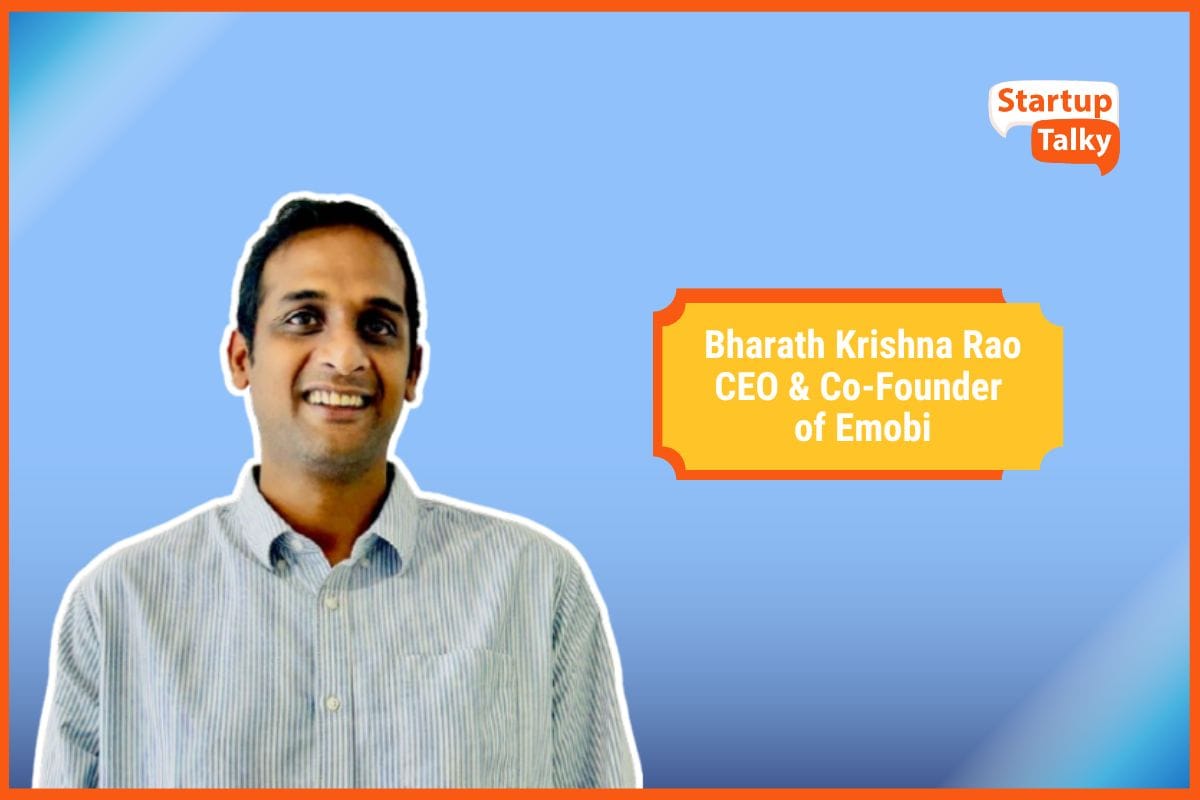
StartupTalky presents Recap'25, a series of exclusive interviews where we connect with founders and industry leaders to reflect on their journey in 2025 and discuss their vision for the future.
India’s EV and last-mile mobility sector is entering a new phase as demand grows for reliable, well-engineered electric two-wheelers and smarter fleet solutions. In this fast-evolving landscape, Emobi is making its mark with IoT-powered vehicles, advanced battery intelligence, and a micro-factory manufacturing model built for scale.
In this edition of Recap’25, StartupTalky speaks with Bharath Krishna Rao, CEO & Co-Founder of Emobi, who reflects on a breakthrough year—ranging from vehicle certifications and mass production readiness to strategic partnerships across powertrains and charging networks. Rao shares key market shifts, tech advancements, and Emobi’s vision of enabling micro-fleet entrepreneurship, along with practical insights for founders building in India’s EV ecosystem.
StartupTalky: How would you summarise your Emobi's journey in 2025? What key milestones, product updates, or deployments made this year special?
Mr. Bharath Krishna Rao: 2025 has been a great year for us, with our vehicle models completing extended on road testing, getting certified, completing tooling and moving from pilot production to mass manufacturing. We now have certified products ready for mass production across low speed (<25kmph), medium speed (<55kmph) and high speed (<100kmph) models ready for launch to the market. Further our IOT and cloud based fleet management software systems have also completed over a year of on road deployments and have reached a level of readiness where we not only are able to offer specific vehicle custom built for B2B mobility, but also the key enabling IOT devices and Fleet Management Software bundled with the vehicle to assist individuals to start micro-fleets with minimal investment and no development lead times.
StartupTalky: What were the biggest challenges you faced in the EV and mobility sector this year, and how did your team navigate them?
Mr. Bharath Krishna Rao: As we have primarily been preparing for transitioning from pilot production we had to tool up the vehicle platforms in readiness for mass production. This meant aligning with suitable partners to promote our micro factory concepts and assist in tooling of the vehicle platforms. We have strategically tooled up the vehicle components with a specific focus of opening up more micro factories in Delhi NCR market serving North India and Bangalore region serving southern markets.
StartupTalky: How has demand for electric two-wheelers / last-mile mobility changed in the past 12 months? Any shifts in adoption, customer segments, or use cases?
Mr. Bharath Krishna Rao: We have seen increased appreciation from fleet operators and last mile riders for better engineered and built vehicles. Riders are more knowledgeable of the differences between various vehicles in the market on offer for them to lease, and have shown a greater propensity for paying slightly more for a better engineered product which provides them reliability and durability for their daily operations. We expect this trend to continue and increased focus on TCO economics in addition to the up front cost of the product, which we believe shows signs of the market maturing.
StartupTalky: How is technology, especially AI, telematics, and battery intelligence, shaping your product roadmap?
Mr. Bharath Krishna Rao: We have embedded IOT hardware and cloud based software platforms into our vehicle offerings, and are able to procure all critical parameters of the battery and power train, and also monitor fleet uptimes in real time. This data allows us to now build further machine learning algorithms to better suggest operating parameters for AI and compare with the long term battery life cycle predictions vs real world performance and improve our prediction models. We see these as our strengths that we will be further building upon.
StartupTalky: What operational or manufacturing learnings helped you improve performance, cost efficiency, or reliability this year?
Mr. Bharath Krishna Rao: We have established a clear SOP for our assembly operations and have taken our proprietary micro factory ERP software systems to completion. This development is critical and crucial for us to be able to manage a plethora of distributed micro factories in various regions and ensure final product quality irrespective of the place of manufacturing of the vehicle. This allows us to offer significantly higher uptime support for our after sales service teams and reduces costs of serving different markets, which over a function of time to be more uniform across different markets we offer our vehicles in.
StartupTalky: What partnerships, collaborations, or ecosystem developments played a key role in your company’s growth in 2025?
Mr. Bharath Krishna Rao: We have key powertrain partners with manufacturers who are manufacturing in India, especially on the High Speed vehicle platform EV power train technology developed by Musashi, this allows us access to a very well engineered product, which works seamlessly with our battery swapping partner’s batteries and our own batteries. In addition to this we have also partnered with Ather and are in conversation with Bolt to have our vehicles onboarded and compatible with their established charging networks, this allows us to use the standardised LEVDC based Type 7 connectors and charging protocols into our vehicles to also be able to offer fast charging capabilities in addition to the swapping variants we offer in our vehicles.
StartupTalky: What metrics matter the most to you when evaluating product success and market fit in the EV mobility space? (e.g., uptime, TCO, charging time, safety, range)
Mr. Bharath Krishna Rao: We primarily look at attrition and continuity of usage by our end customers who are primarily last mile delivery workers, and their confidence in our vehicle platforms and the pricing the vehicles are being offered through our partners Muvnw reiterate that the market is very happy to have a robust, reliable vehicle even if it is at a premium to current offerings in the market. The entire pipeline of riders built by Muvnw has happened organically with a practically “zero” cost of customer acquisition, purely based on word of mouth of our products by our existing customers. Also being a vehicle that has been custom designed and developed by us in India our vehicles look distinctively different from our competitors especially those who are assembling vehicle kits being imported from China.
StartupTalky: Looking ahead to 2026, what opportunities do you see emerging in India’s EV and last-mile mobility market?
Mr. Bharath Krishna Rao: We are increasingly seeing a transition from third party logistic based fleet operations to unorganised rider based operations, this will result in riders looking to lease vehicles directly from platforms like Muvnw and use them on those platforms that ideally fit their requirements. This transition would further emphasise the need for robust, durable vehicle platforms that the rider chooses to ride as opposed to being assigned to ride in TPL based operations. This combined with lease-to-own models we are running with our partner Tekinverse, will play well in the transition we are seeing in the last mile mobility space, where riders will be able to ride and buy the vehicles by paying weekly based rental payments, and be financed for refurbishing the vehicle, and thus acquire a refurbished vehicle with OEM warranties at a significantly lower price than new vehicles.
StartupTalky: What is your long-term vision for Emobi, and what strategic steps are planned for the next phase of growth?
Mr. Bharath Krishna Rao: Our long term vision is to enable employment generation opportunities through our partner networks by establishing micro factories that supply vehicles to micro fleet partners and to manage these operations through centralised control of operations, design, engineering and supply chain management. This model would enable us to scale our manufacturing operations and locations at a speed that would enable us to have a meaningful global impact of accelerating EV adoption and use of renewable energy for charging of EVs not just in India but also in key global markets.
StartupTalky: What practical advice would you give to founders building in India’s EV ecosystem today?
Mr. Bharath Krishna Rao: My advice to a founder who has chosen to build products or services as part of India’s EV ecosystem would be to first identify the key gap or market need they are looking to address, and then to continue to stick with the chosen path till the end, despite the temptation to pivot, as in a growing market there are multiple opportunities that arise at the similar time, and its important for an entrepreneur to not waver from their chosen path, which could run the risk of further delaying their deployments and GTM strategies.
Explore more Recap'25 interviews here.