

DP Jhawar on ProV’s Farm-to-Shelf Model, Profitable Growth, and the Road to ₹1,000 Crore
📝Interviews
StartupTalky presents Recap'25, a series of exclusive interviews where we connect with founders and industry leaders to reflect on their journey in 2025 and discuss their vision for the future.
In this edition of Recap’25, StartupTalky speaks with DP Jhawar, Founder & CEO of ProV, one of India’s fastest-growing branded dry fruits and healthy snacking companies. In 2025, ProV emerged as a category leader, crossing INR 418 crore in revenue within the first eight months of the year and strengthening its position among the top three branded players in the segment.
DP shares how ProV’s end-to-end farm-to-shelf model, diversified distribution strategy, and focus on value-added products like flavoured makhanas and trail mixes enabled profitable growth in a highly competitive market. He also reflects on evolving consumer snacking behaviour, the growing role of quick commerce, and ProV’s roadmap toward achieving ₹1,000 crore in brand sales over the next few years.
StartupTalky: 2025 has been a strong year for ProV. What were the top 2–3 milestones that defined this year for the brand and the business?
DP Jhawar: ProV crossed INR 418 crore revenue within the first eight months of 2025, which surpassed the last FY25 brand revenues of 417Cr. And we are on track to achieve a turnover of 600Cr in FY6. Also, nearly 50% of this revenue is from value-added products. We are today among the top 3 branded dry fruits and healthy snacking players in India. This validated both consumer trust and our integrated farm-to-shelf model. We are quite excited about our newly launched flavoured Makhana, which has received good reviews from the market and will prove to be a game-changer, going ahead.
StartupTalky: ProV has scaled profitably in a competitive, healthy snacking market. What is the core USP that truly differentiates ProV from other nuts and dry fruit brands in India today?
DP Jhawar: Many brands in India operate either as traders or as marketing-led labels, but ProV Foods is different. We think our core USP is the fact that we have end-to-end control over the value chain, which enables us to deliver consistent quality, competitive pricing and scale simultaneously.
FY25 saw ProV achieve INR 417 crore in brand sales and INR 7.4 crore PAT.
StartupTalky: What key levers, distribution, pricing, product mix, or operations drove this profitable growth?
DP Jhawar: The robust and profit-making growth that ProV was able to achieve during FY25 was due to a well-balanced growth strategy, optimal pricing, a superior product mix, and effectively managed business operations. This was achieved through different distribution segments, namely General Trade, Modern Trade, E-commerce, and Q-commerce, without depending on any single segment. Additionally, the higher margin contribution from value-added categories like flavoured Makhanas, Trail Mixes, and Seeds helped.
StartupTalky: Healthy snacking is evolving fast in India. What clear shift in consumer behaviour did you notice in 2025?
DP Jhawar: In the year 2025, we saw a significant growth of impulse driven behaviour in healthy snacking. The consumption pattern drifted from the previous habit of occasional buying during festivals. The growing awareness of nutrition and the requirement of resealable packaging options also led the way. Additionally, the emergence of quick commerce proved favourable for impulse consumption.
StartupTalky: ProV operates across multiple price points from ProV Select to ProV Regal and Minis. How important is this portfolio strategy in reaching mass and premium consumers alike?
DP Jhawar: We operate across multiple price points with our different ranges, namely- Select, Premium, Regal, Fusion and Flavours, and thus we meet consumers' demand at different income levels, occasions, and usage moments. Entry packs, such as Mini drive trial and penetration, while premium and value-added SKUs drive margins and brand aspiration. Importantly, all tiers are anchored in the same quality and sourcing standards, which allows ProV to grow both mass reach and premium credibility without diluting trust.
StartupTalky: Distribution seems to be a major strength for ProV. Which channel, general trade, e-commerce, or quick commerce, performed best for you in 2025, and why?
DP Jhawar: For the year 2025, the largest in size was the General Trade business, followed closely by the Modern Trade Business, whereas Q-commerce was the fastest-growing channel for ProV. General Trade Business offered steady volume sales and greater penetration of products in more households, particularly in Tier 2-3 cities, and basically comprised the core of our operations. But what was unique about the Q-commerce channel was that it was influential in encouraging trials, impulse purchases, and repeats, thereby making healthy snacking a habit. E-commerce was activated by adding strength to the range and discovery, but the major advantage lay in the fact that all three were working together as complementary channels.
StartupTalky: The healthy snacking category is evolving rapidly. What shifts in Indian consumer behaviour did you observe most clearly in 2025?
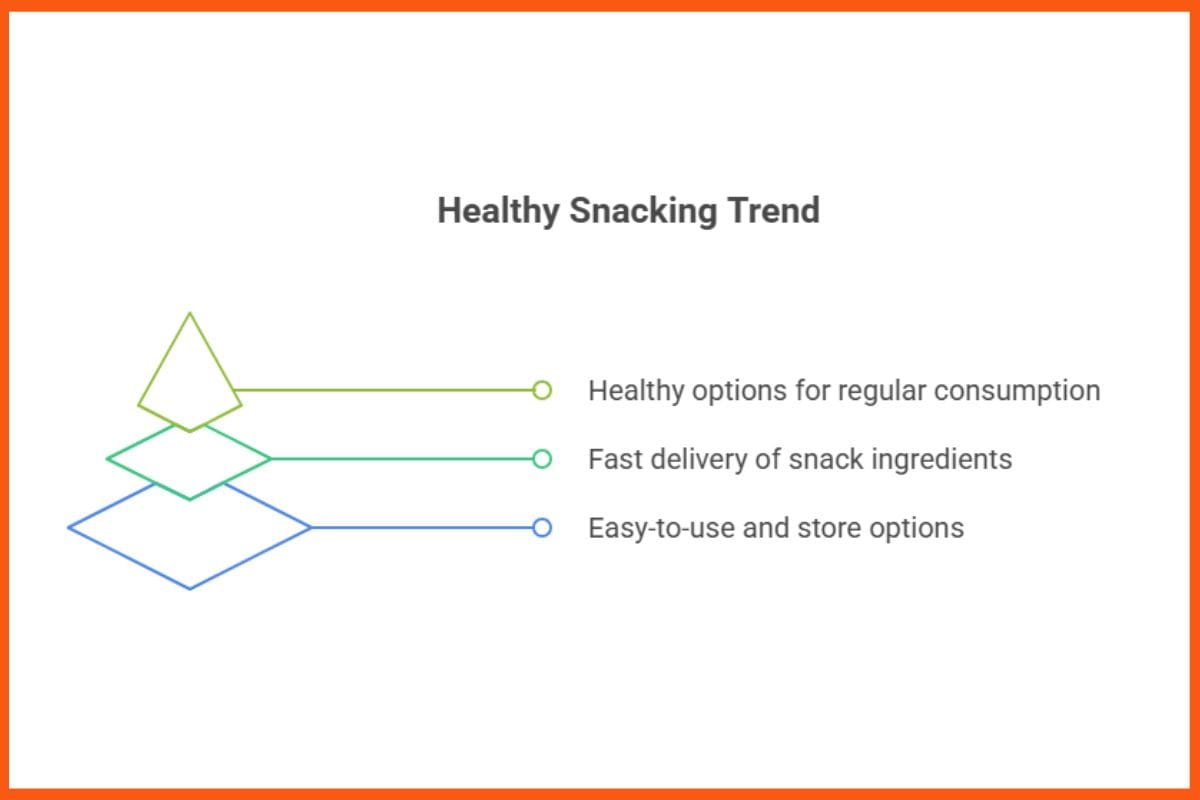
DP Jhawar: The year 2025 saw a prominent shift where consumers increasingly started regular consumption of healthy snacking rather than resorting to them as occasion-based munchies. Dry fruits and nuts, seeds, and even makhanas and mixtures made it to the list as functional, frequent snacks rather often preferred as occasion-based or as value-for-money ingredients. This trend has been observed in relation to increasing demands for convenience packaging and re-sealable and readily available ingredients through quick-commerce platforms.
StartupTalky: Looking ahead to FY28 and the INR 1,000 crore brand sales target, what are the top 2 priorities that will drive ProV’s next phase of growth?
DP Jhawar: For FY 2028, ProV expects the future growth of the business to be driven by two key strategies. The first strategy is improving distribution capacity. This includes the development of General Trade business across major populated areas, the development of Q-commerce and D2C platforms, and setting up new processing capacities for handling the growing output with the same level of quality and profit margins. The second strategy would be the improvement of product-driven growth. This would include the development of value-added snacking products beyond the development of basic dried fruits, identifying consumer data-driven categories of products that would be purchased on a frequent basis to improve scale and profit, with the overall brand objective of touching overall sales of INR 1,000 crores.
 Muskaan Kapoor
Explore more Recap'25 interviews here.