
2026 AI Tool Stacks: How Modular AI Tools Can Help Startups Fully Automate Their Workflows
🛠️Tools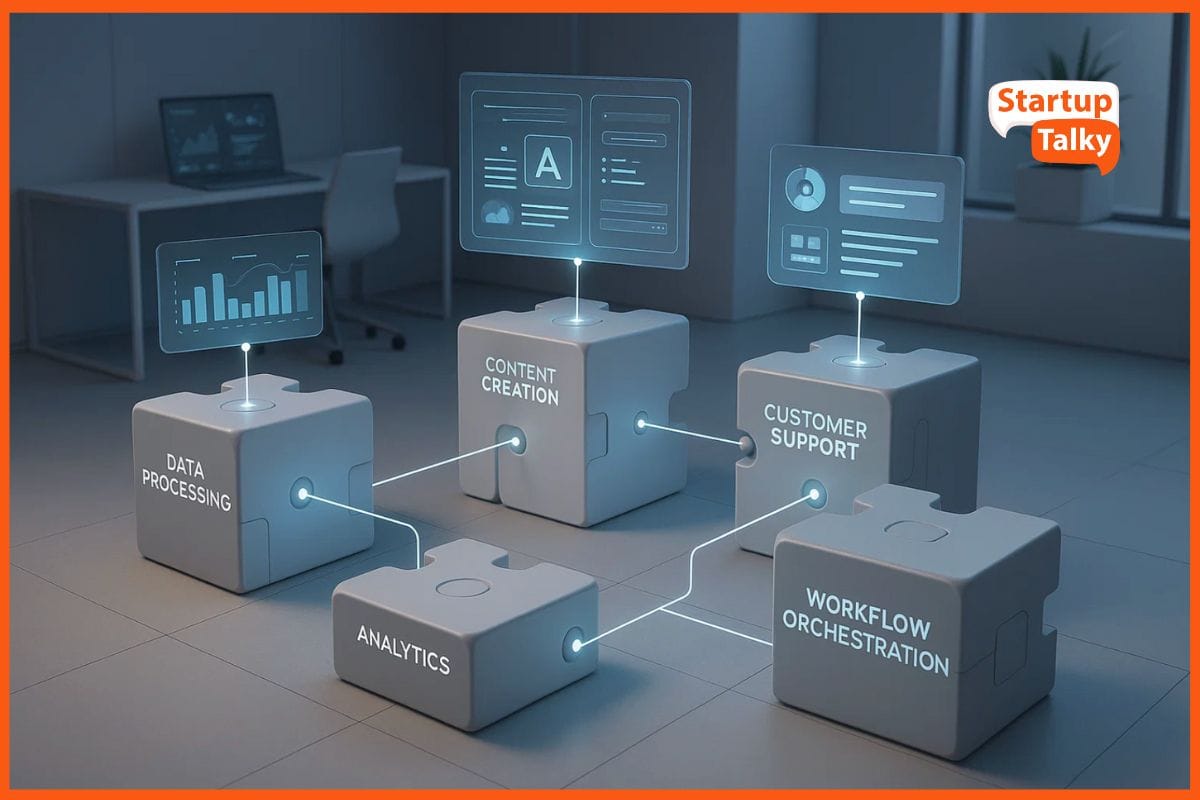
In 2026, new business ventures known as startups will have to deal with a new reality: they may either advance briskly or not at all. AI technologies have come a long way since they were first used in high-tech add-ons. Now, they are important components of the building that can handle sales, onboarding, support, content creation, and even some areas of product development. But most business owners still have the same problem, asking themselves: “How can I make all of these technologies work together in one meaningful system?”
This article talks about how businesses will possibly develop an AI toolkit that’s useful, scalable, and boosts productivity, makes work easier, and gives small teams the same power as big corporations.
Before you get into the text structure, you should remember that strong digital security is needed for strong automation. Many teams download CyberGhost VPN and exploit it to protect their AI-powered and remote work from prying eyes. It stops data from moving between different systems, properly building an AI-driven infrastructure from scratch.
What Does It Mean to Have a Stack of AI Tools?
A stack of AI tools is a well-organized set of technologies that operate together to automate some business operations and make it easy for jobs to move across tools. The goal is not to find “the one AI tool that rules them all.” It’s all about getting the right combination, with each link in the chain doing one thing really well.
The Harvard Business Review found that companies that use interconnected AI systems instead of separate ones saw a big rise in productivity. This is because links that connect the full workflow make automation work better. This change means that the biggest team is no longer the ideal one for entrepreneurs; the one that’s most automated is.
Important Parts of an AI Startup Stack for 2026
Five levels of automation are present in most successful startups. These help the stack expand with the business and make the process of choosing tools more organized.
- AI Knowledge and Documentation Systems
Slite AI and Notion AI are two systems that put together all of an organization’s internal records, standard operating procedures (SOPs), workflows, and playbooks. AI-indexed documents help new hires learn faster, help teams work together better, and save teams time by making it easier for them to find what they need.
- Making AI Brands and Content Automated
This layer makes it possible for websites, blogs, social media posts, and multimedia to operate. Some of the tools that have helped businesses keep productive at a level that used to only be possible with a full editing team are Jasper, Canva AI, and Descript. Adding marketing AI tools to this layer makes sense, too. StartUpTalky gives visitors who wish to learn more about marketing automation a helpful look at how AI marketing technologies can help them reach their goals.
- Using AI to Make CRM Better and Sales Faster
Modern sales stacks include AI-driven personalization, CRM automation, and tools for finding new customers. With tools like Apollo AI, Clay, and HubSpot AI, you can find leads, add information to their profiles, contact them personally, and even guess how they will act in the pipeline. Founders usually observe big changes here first: less work by hand, more conversations, and better tracking of conversions.
- The AI Operations and Orchestration Layer
The orchestration layer makes sure that everything is in order. New multi-agent systems and apps like Zapier AI and Make.com can easily move data between departments. This is where user behavior signals help with onboarding, where content insights go into analytics systems, or where an AI chatbot obtains a lead and starts updating a CRM. A solid orchestration layer makes sure that the stack works as a whole system and not simply a set of tools. This stops information from getting locked in one spot.
- Tools for AI-Powered Experience, Support, and Safety
Intercom AI and Freshdesk AI are two examples of AI-powered support platforms that can already answer 60 to 70 percent of the most common client concerns. At the same time, prediction algorithms look at how people are feeling and how likely they are to leave. Because these systems handle private information like user history, usage stats, and personal identifiers, founders usually add security layers early on. VPN, such as the one mentioned above, is one tool that helps keep information safe when automated systems communicate data and when tasks are spread out.
Practical Workflow for Your Startup That’s Automated
Here’s an example of how a founder could use these AI layers to make a process work better.
AI makes content and other assets for the top of the funnel.
Your content AI can make videos, blog entries, landing sites, and posts for social media. AI SEO tools make them better for search.
This is how to get more leads without hiring more personnel to handle marketing.
AI automatically finds and validates leads.
Visitors can use either dynamic website flows or AI chat widgets.
AI recognizes what the aim is, maintains track of the details, and sends the data to CRM in the proper order.
AI makes sales calls more personal.
AI makes targeted email sequences, sets up follow-ups, and gives prospects a grade depending on how well they meet the demographic and how they act once they are in the CRM. Sales teams are more focused on talking about the big picture than on their admin-related tasks.
AI teaches users how to use stuff and get started with them.
AI tells new users exactly how to get started, proposes useful features, and keeps track of any problems that show up during trials or demos. This makes it less probable that customers will leave and more likely that product-led growth will happen.
AI handles loops for help and feedback.
AI support systems can answer right away, learn more about the problem, prepare human handover paperwork when needed, and figure out how people are feeling. When these insights are sent back to the product teams automatically, the feedback loop is complete.
Startup founder gets AI dashboards in real time
Analytics dashboards show you everything that happens, such as clicks, conversions, drop-offs, and behavior patterns. You’re not just acquiring information. You’re obtaining information that will help you choose.
Why Modular Stacks Are Better Than All-in-One Choices
At first, a lot of new businesses desire “one platform to automate everything.” In real life, these plans almost seldom function successfully in every area.
Modular stacks work better because they let you:
- add new tools more easily;
- make changes more quickly when new AI tools come out;
- swap out weak links without having to rebuild your whole system; and
- scale each layer separately.
In 2026, it will be more important to be able to modify than to be complete. Entrepreneurs may grow without being tied back by a small ecosystem when they adopt a modular AI stack.
The Best Ways to Build Your AI Tool Stack for 2026
To keep things simple yet effective, we’ll lay down only two points here:
Start with one workflow.
Choose one job to automate, like onboarding, sales, or writing. You should only grow once the first system is working correctly.
Security and data flow should be prioritized.
Tools that aid with data flow and security must work effectively together. If they don’t, automation makes things worse instead of better. Automation also makes things safer. VPN is a privacy layer that protects AI-powered and remote technologies from the start, so that they can work safely and lawfully.
Upcoming Stage: Micro-Departments Run by AI Agents
As we get closer to 2026, AI agents will start to replace static workflows. These agents work together as virtual teams to do research, make plans, analyze, improve, and assign other agents tasks.
Business owners will transition from “managing tasks” to “managing systems.” People who start using multi-agent processes early will realize levels of productivity and efficiency that have never been seen before.
Let’s Sum Up
AI tool stacks are the main tools that fast-growing businesses use to run their lines of work. When put together correctly, they make marketing, sales, onboarding, product, and support easier while cutting down on a lot of manual work and improving the quality of work.
The organizations that use the best automated technologies, not the most people, will be the most successful in 2026. By thinking in layers, putting integration first, and using strong security measures to keep workflows secure, founders may design a stack that lets them grow, like, immediately.