

How to build emotionally intelligent workplaces with AI as an enabler?
✍️ Opinions
This article has been contributed by Anish Singh, Founder of All Things People
In startups, we talk endlessly about strategy, funding rounds, product roadmaps and growth curves. But if you have ever built a team from scratch, you know that none of that matters if the people working with you feel unheard or emotionally disconnected. A company rarely breaks because of a bad plan. It usually breaks because people slowly lose the emotional energy to show up for each other.
That is why emotional intelligence is not a “nice to have” anymore. It has become the heartbeat of a healthy workplace. It shapes how people speak to one another, how they handle tough moments, how they respond when something feels unfair, and how safe they feel bringing their full selves to work. Research only reinforces what most founders learn through experience. A study published in BMC Psychology found that employees with higher emotional intelligence feel more satisfied and more committed to their workplaces, and they are far less likely to consider leaving. Another insight from RocheMartin suggests that emotional intelligence contributes to nearly 58 percent of job success. You can sense that in any team. Emotionally aware people make the culture feel lighter, calmer and more hopeful.
But as companies grow, it becomes difficult for leaders to sense every shift in emotion or every silent discomfort. This is where AI, used with the right intention, can help. The goal is not to replace the human touch. It is to understand the human side of work more clearly.
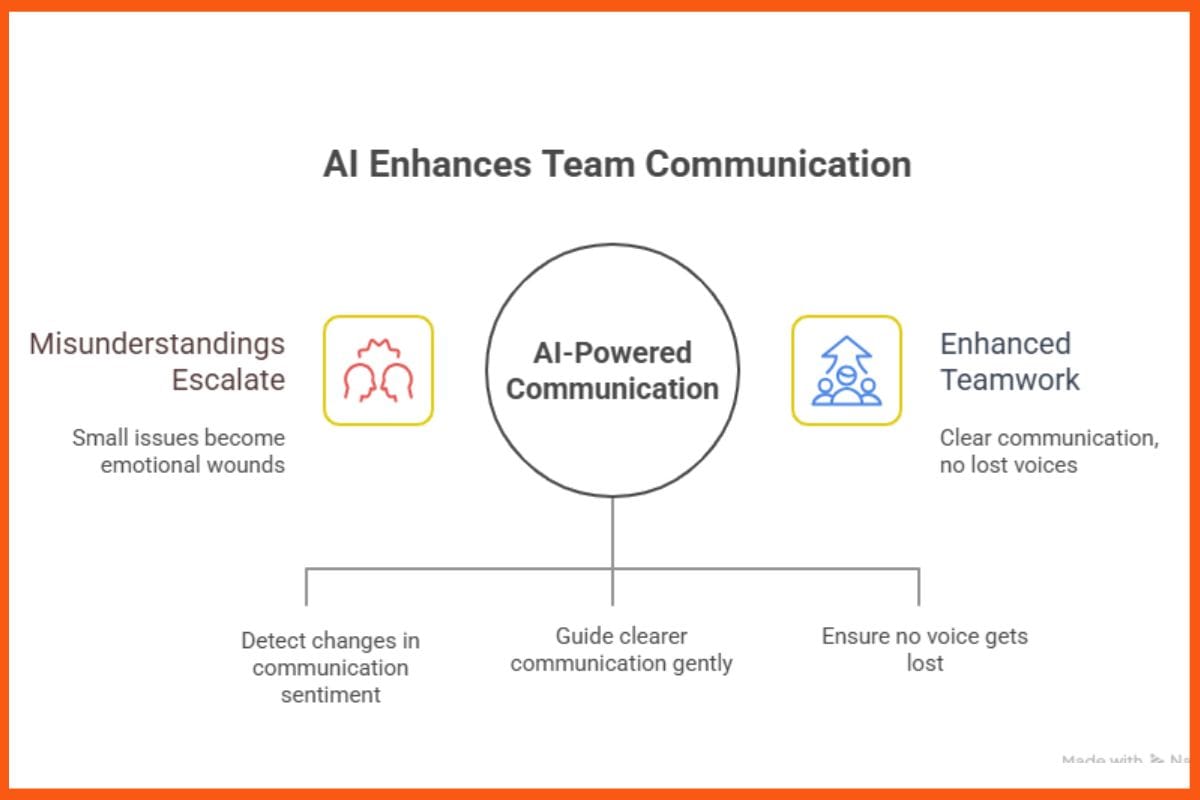
AI can quietly pick up patterns that we often miss. It can sense changes in sentiment across communication channels and help leaders step in before a small misunderstanding becomes a bigger emotional wound. In diverse teams where people express themselves differently, AI can gently guide clearer communication and make sure no voice gets lost in translation.
It also helps in learning and development. Everyone grows differently. Some people need more encouragement, some need clarity, some need emotional grounding. AI can understand how each person learns and responds to situations, and then offer pathways that build empathy, listening skills and self awareness. It is a simple idea: help people grow in a way that feels personal.
Feedback becomes more human when it is timely. SHRM notes that 89 percent of HR professionals believe AI improves efficiency in talent processes. That simply means feedback reaches people earlier, when it can make a real difference. When feedback comes with care and without delay, it builds trust.
Where AI becomes especially powerful is in supporting well being. Emotional exhaustion rarely arrives loudly. It begins quietly, in small patterns. AI can see these patterns early and give leaders a chance to offer support before burnout settles in. A BMC Psychology study reminds us that higher emotional intelligence is directly linked to greater job satisfaction and lower turnover intention. At the same time, a BCG survey found that employees in AI driven companies often worry more about job security. This tells us something important. The technology only works when leaders use it with compassion, communication and responsibility.
AI can also help leaders grow. It can reflect back the tone and clarity of their communication and gently highlight areas that may hurt team morale without them realising it. Considering that 90 percent of high performers show strong emotional intelligence, as noted by ElectroIQ, leadership development becomes essential for culture building.
Bias, inclusion and fairness also benefit from AI’s neutral eye. It can spot patterns we overlook in hiring or performance evaluations. It can create safe spaces for people to express themselves anonymously. When every voice gets a chance to be heard, emotional intelligence becomes a shared culture, not an individual trait.
Even then, AI comes with responsibilities. People deserve to know what is being analysed and why. They deserve privacy. They deserve fairness. AIHR research shows that only about 35 percent of HR professionals feel confident using AI tools, which means we still have a long way to go in making sure organisations handle this space with maturity.
But the heart of the conversation is simple. Emotional intelligence is human. It lives in how we speak, how we listen, how we comfort, how we resolve. AI can help us understand these emotions with more clarity, but it can never replace human warmth.
The future of work belongs to leaders who combine both worlds. People want to feel seen. They want to feel valued. They want a workplace that supports their emotional life, not drains it. When AI is used as a quiet enabler rather than a loud replacement, it helps create workplaces where people grow without fear, communicate without hesitation and feel supported in ways that matter deeply.
That is the culture every growing company deserves. And that is the culture emotionally intelligent leaders will build.
 Avinash kumar mahato