Swiggy Hikes Platform Fee to ₹17.58 After Zomato Move, Food Delivery Gets Costlier Again
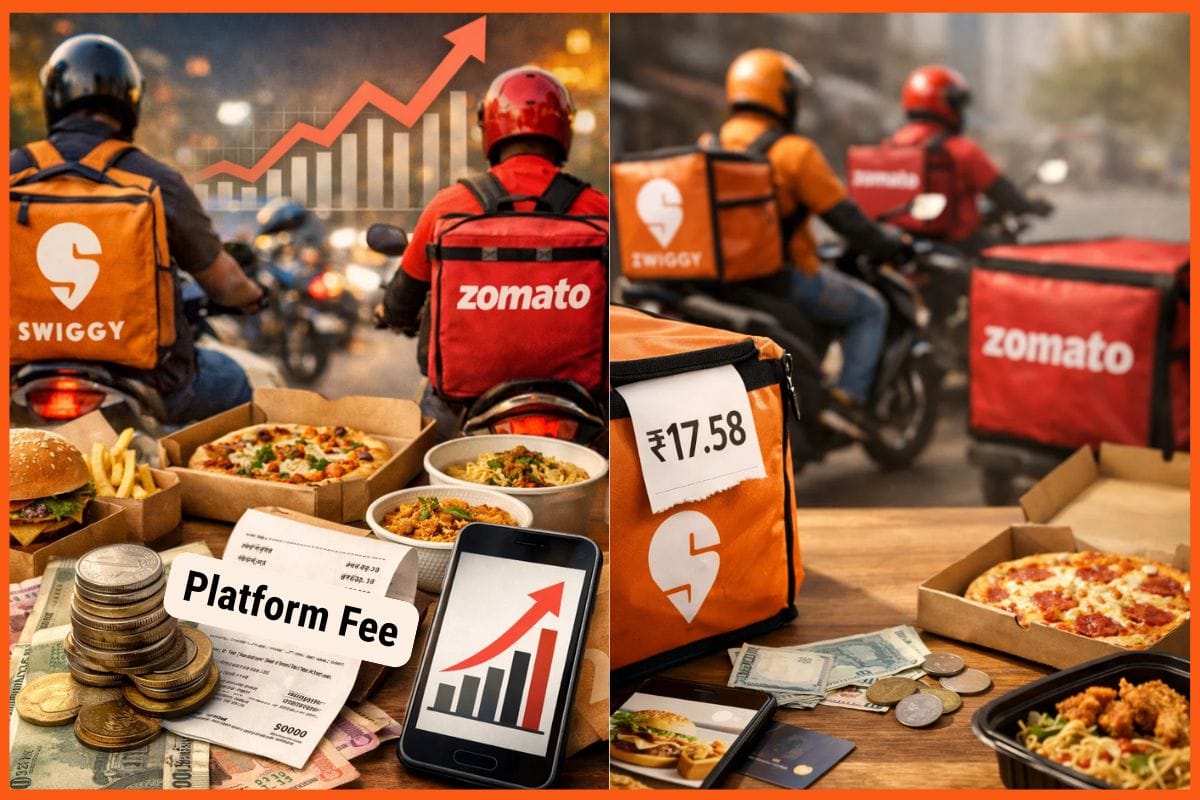
India’s food delivery market is seeing another round of price increases. Days after Zomato raised its platform fee, Swiggy has now followed suit, increasing the charge customers pay per order. The move reflects a broader trend in the industry as companies look to improve margins amid rising costs.
Swiggy Platform Fee Increased to INR 17.58: What Changed?
Swiggy has raised its platform fee from INR 14.99 to INR 17.58 per order (including GST), marking an increase of around 17%.
This fee is applied to every order, over and above delivery charges, restaurant prices, and taxes. For users, this means a direct increase in the final bill, even before adding tips or surge pricing.
The change has already been rolled out on the app across multiple cities. While the increase may seem small per order, it adds up significantly for frequent users.
Zomato vs Swiggy: Fee Hikes Trigger Pricing Race
The latest move comes just days after Zomato increased its platform fee to around INR 14.90 per order (pre-GST), up from INR 12.50 earlier.
When GST is added, Zomato’s total platform fee comes close to Swiggy’s updated pricing, effectively keeping both platforms at similar levels.
Platform Fee Comparison (March 2026)
| Platform | Previous Fee | New Fee | GST Included | Approx Final Cost |
|---|---|---|---|---|
| Swiggy | INR 14.99 | INR 17.58 | Yes | INR 17.58 |
| Zomato | INR 12.50 | INR 14.90 | No | ~INR 17.58 (with GST) |
This near-parity suggests a coordinated pricing pattern in a duopoly market, where one player’s move is quickly matched by the other.
Why Are Food Delivery Platforms Increasing Fees?
Industry experts point to one key reason: profitability.
Platform fees are among the few charges directly controlled by companies. Unlike restaurant commissions or delivery costs, these fees go straight to the platform’s revenue. Over time, both Swiggy and Zomato have steadily increased these charges, from as low as INR 2 in 2023 to nearly INR 18 now.
Analysts believe the recent hikes are aimed at:
- Improving margins in the core food delivery business
- Funding expansion into quick commerce and new services
- Offsetting rising operational and logistics costs
Zomato’s recent increase, for example, has been seen as a strategy to strengthen profitability while demand remains stable.
Impact on Customers and the Market
For consumers, the immediate impact is clear: ordering food online is getting more expensive.
Even a small increase of INR 2-INR 3 per order can significantly raise monthly spending for frequent users. Combined with delivery fees, surge pricing, and taxes, the total cost of ordering food has steadily climbed.
At the same time, demand has not shown any sharp decline so far. This indicates that both platforms may have more room to increase prices without losing users in the short term.
What Happens Next?
With both major players now charging nearly identical platform fees, the focus may shift to:
- Subscription benefits (like free delivery plans)
- Discounts and loyalty programmes
- Expansion into quick commerce
However, if prices continue to rise, customers could begin exploring alternatives such as direct restaurant ordering or competing platforms.
 Nitin Konde