

Rahul Ranjan of Mrig Sight Media on Reframing Digital Trust, Scaling Signal-Driven Marketing, and Shaping the Future of India’s Content-First Advertising
News 📰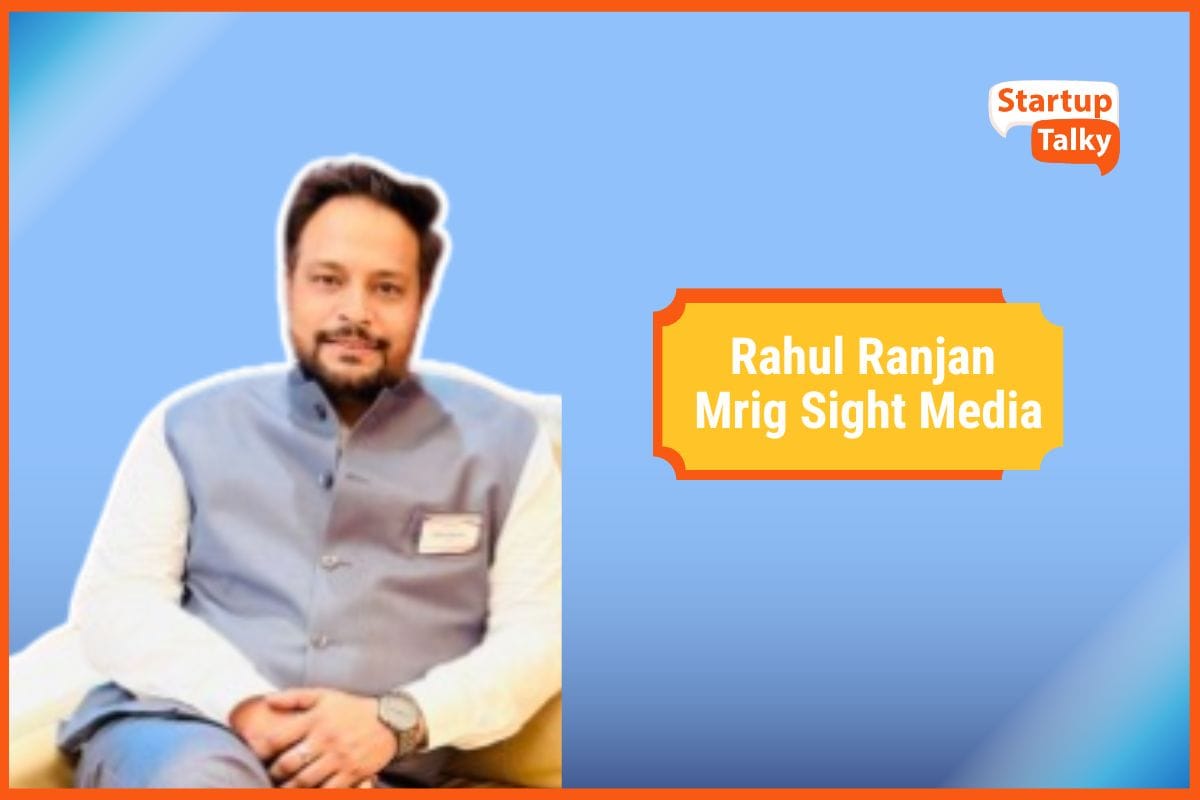
StartupTalky presents Recap'25, a series of exclusive interviews where we connect with founders and industry leaders to reflect on their journey in 2025 and discuss their vision for the future.
The digital marketing landscape in India is undergoing one of its most transformative phases yet. With consumers demanding authenticity, brands shifting toward value-driven storytelling, and AI reshaping everything from creative workflows to media planning, agencies have had to rethink how they build trust, scale campaigns, and deliver measurable outcomes. At the forefront of this shift is Mrig Sight Media, a full-service digital agency that has spent 2025 navigating shrinking attention spans, evolving content formats, and rapid advancements in marketing technology.
In this edition of Recap’25, StartupTalky speaks with Mr. Rahul Ranjan, Managing Director of Mrig Sight Media, to unpack the biggest behavioural and industry changes of the year. Ranjan reflects on how consumers moved from surface-level content to community-led research, how micro-creators and longer-form storytelling regained prominence, and how AI-driven signals now guide creative, performance, and media strategies. He breaks down the campaigns that delivered exceptional results, the sectors that outperformed expectations, the tools redefining agency workflows, and the mindset brands must adopt as they prepare for 2026.
StartupTalky: How would you describe the biggest shifts in digital marketing in 2025? What stood out most in consumer behaviour, content formats, or brand expectations?
Mr Rahul Ranjan: As of 2025, due to changes in consumer evaluation and trust of brands, the way consumers interact with digital marketing shifted from a singular search platform to more of a collective form of research between TikTok demos, YouTube breakdowns, Reddit discussions, LinkedIn expert posts, and newsletters. Because of the overexposure of content flooded by AI technology, consumers can now identify low-quality or shallow materials and are seeking expert opinions as well as first-hand accounts. Actual communities with WhatsApp subgroups, micro-cohorts, and private forums emerged as more influential than social media followers. Trust became established based on proof, processes being transparent, and a true user experience. The way that creators marketed themselves evolved, with micro-creators being used to educate their followers instead of marketing products. As consumers wanted more information, they reached for longer-form content again after being inundated with low-quality and short-form content. The creation of a plethora of low-quality and short-form pieces will continue to be an ongoing trend in the near future.
StartupTalky: Which campaigns or strategies delivered the strongest results for your clients this year? What learnings shaped your approach going forward?
Mr Rahul Ranjan: The campaigns that did best this year were those that focused on super contextually relevant content, as opposed to broad-level pushes in large, generic advertising. Content created in response to current events (i.e., a spike in gas prices or a cold and flu season) had much more engagement and conversion rates than planned calendars. Search engine optimisation (SEO) also improved significantly by developing stories that addressed consumer search intent; therefore, answering consumers' questions became a valid way to develop high-response stories (content).
In some trust-sensitive categories, creative work that used a "proof-first" strategy (e.g., process videos, certificates, dashboard data) performed better than emotion-based approaches. We have also made major changes to our marketing structures; we have moved away from traditional marketing personas to behaviour-based segmentation. We have changed our focus away from the volume of posts to the speed at which they are placed. We have developed a test-first strategy. We have aligned our Brand & Performance teams to a single metric. With this evolution of our strategy, we will continue to modify it until 2026.
StartupTalky: AI adoption grew across the digital marketing industry in 2025. How has AI changed the way Mrig Sight Media works across creative, media planning, performance, or client servicing?
Mr Rahul Ranjan: This year, the biggest change in how we operate has been the change from assumption-based work to signal-driven workflows. As a result of this shift, creative ideas are based on real audience behaviour (trends, comments, leavings, and hook tests), so campaigns start with a stronger footing than previously would have been achieved on day 1 due to the assumption of how they would perform. Media planning is now executed as efficiently as possible due to the use of real-time cost and demand signals, leading to better budget accuracy and elimination of wasted media spend. Low-risk A/B testing, behavioural audience clustering, and auto-optimising of creative materials have exponentially increased the velocity at which performance teams are able to scale. Client servicing is no longer about completing operational reports but is about providing strategic insight, which ultimately creates a better decision-making process and fosters client trust. As we grow into the full-funnel capabilities that technology provides, we’ll now function as an entirely integrated agency and develop new efficiencies through technology and innovate our process without the restrictions of traditional human creativity.
StartupTalky: As a full-service digital agency, what were the toughest challenges you faced this year, and how did you tackle them?
Mr Rahul Ranjan: In 2025, we encountered several issues that contributed to the decline in attention span, such as shrinking budgets, algorithm changes, and greater emphasis on 'performance' and the associated measurements. Thus, to build our resources, we developed a three-second hook and a 'test fast' approach to our testing methodology. In addition, our methodology has placed an emphasis on ensuring that the user receives a consistent level of value from our resources through continuous testing. As a result of client budget constraints, we have developed a more results-focused approach to planning and forecasting by utilising detailed budget analyses and minimising waste. Due to instability in platform algorithms, we have created a buffer against risk, experimented with different formats of content, and expanded our community relationships. To accommodate the increased pace at which work must be completed, we have transitioned to a pod-based workflow system, standardising reporting processes across all pods. In addition, we have eliminated burnout by implementing dedicated periods for deep work, providing opportunities for employees to swap roles and acquire new skills. Finally, we have been launching new ways of partnering strategically with clients by building stronger strategic thought processes and developing measures of their success versus our company.
StartupTalky: What metrics matter most today when evaluating the success of a campaign or long-term brand engagement?
Mr Rahul Ranjan: Vanity metrics no longer dominate our measurement methodology; instead, we now evaluate campaigns based on the dollar amount a campaign can generate, plus qualified leads, bookings, and repeat customers. While measuring cost-efficiency is also important, we are now measuring cost-per-lead, cost-per-action, return on ad spend, and cost-per-result weekly and not just at the end of the campaign. Additionally, we now measure engagement based upon meaningful actions such as saves, shares, watch-through rate, depth of scroll, and time spent on the website, rather than merely counting the number of people who clicked on the campaign ad. Traffic quality will continue to be measured using metrics like bounce rates, number of pages visited per session, and conversion path.
StartupTalky: Which sectors or client categories showed maximum growth momentum this year? Any category that behaved differently from expectations?
Mr Rahul Ranjan: Industry trends shifted drastically as we moved through 2021, with significant growth in travel and hospitality from short-term experiential trips and high-performing brand-building creative to the extreme highs and lows of the beauty and personal care sector; the functional/problem-solving segment of their industry continues to significantly outperform aspirational/trending segments. The real estate sector was the biggest surprise, remaining relatively strong due to a level of confidence in wage growth, along with the rapid growth of digital-first sales and multiyear leasing. Education slowed down significantly, but began to focus more on the result (placement). Healthcare & Wellness continues to grow very quickly in terms of prevention, and particularly in women's health. The finance sector has seen mixed results, with growth in the areas of insurance and savings apps and declines in the area of high-value loans. As consumers pursue higher returns on their travel investments, the e-commerce industry seems to be trailing other industries, particularly G/MC (Grove Collaborative/MY GOODNESS) companies that are leading their sector toward more sustainable options.
StartupTalky: What tools have become essential for your team in 2025? Are there any AI tools or platforms that now play a major role in your workflow?
Mr Rahul Ranjan: In 2025, businesses will utilise hardware and software more broadly across all aspects of business as opposed to simply utilising more devices/solutions. Agencies began to depend on real-time listening, which utilises real-time behavioural data, to inform their strategic development and not rely on assumptions. Rapid-production tools (e.g., the ability to develop creative campaigns in hours instead of days) have dramatically decreased the time required to develop a creative timeline with instant visualisation and feedback/approval after submission to the client, and they have created a unified workflow system (e.g., shared dashboard/automated hand-offs) that eliminates interdepartmental delays when completing tasks. Performance platforms have enabled same-day optimisation, rather than having to wait a week to assess performance. Attribution tools provide clarity on which channels generated revenue. Trend-mapping tools enable teams to publish content during peak cultural moments. Through their use of such tools, instead of reacting as a response mechanism, they will act more strategically/preventively, and proactively as a result of insight gained from the experience of both the agencies and the clients by utilising the benefits of these tools.
StartupTalky: Looking ahead to 2026, what trends in content, paid media, or tech-led marketing do you think will shape brand strategy?
Mr Rahul Ranjan: By 2026, the ability for businesses to market effectively will likely depend on their ability to source content quickly through internal production teams. Companies will be able to create content and publish on an ongoing basis without the need for seasonal messaging. Short-form videos that focus on consumer experience will take hold, using advanced methods of targeting at a micro-segmented level based on consumers' behaviour patterns, such as "silent shoppers" and "midnight shoppers". The way to search online will change to voice, video, and image search to discover products and services, and encourage companies to optimise their content across all search methods. The level of CRM & retention for companies will rise as customer acquisition becomes more expensive & competitive, necessitating the development of individualised lifecycle journeys for each customer. The adoption of full-funnel measurement of all marketing activities instead of fragmented reporting will occur, while interactive content and the development of niche communities will create trust in a commercial brand. As we see technology further integrated into the workflow of businesses and the development of brands, brands will be able to develop more in-depth and relevant market and consumer knowledge, and will continue to maintain a strong international market presence
StartupTalky: What is your long-term vision for Mrig Sight Media , and what strategic moves are planned for the next phase of growth?
Mr Rahul Ranjan: As we develop an integrated agency model for both our corporate and client brand strategies, we are focused on growing our agencies into highly specialised businesses with industry expertise and knowledge beyond just executing digital campaigns. Over the next few years, we will build out both our capability and capacity within the agency to meet the growing client demand for multi-channel marketing strategies. Specifically, we are investing in dedicated teams by sector (BFSI, Healthcare, Retail, and Consumer Goods) that will provide clients with more meaningful and relevant insight and solutions. Additionally, we will expand our in-house content production capabilities via dedicated studios and rapid-production units to meet the significant demand for high-volume content for both offline and online channels. Finally, we are currently building an integrated analytics platform to provide our clients with clarity around their performance data. We will continue to build our client base and seek to expand into new and emerging markets and increase our clients' capabilities by providing additional experience design services and brand consulting.
StartupTalky: What key advice would you give to brands planning their 2026 marketing strategies? (Especially in terms of budgets, content, channels, or consumer trust.)
Mr Rahul Ranjan: To develop strategic initiatives for the future (2026), brands should adapt their strategies to the rapidly changing behaviours of consumers, not simply select a platform. In addition to having continual "always-on" strategies, there should also be large-scale marketing campaigns in place to keep brands relevant throughout the year. For example, the content produced must be relatable, straightforward, and casual to create trust among its consumers in such a busy marketplace. Brands should also show respect to the time of consumers by providing them with value and by being clear in messaging. The websites of brands should be built to maximise conversion rates since an inferior user experience will reduce conversion rates. Customer retention should be built into the budget of the brand and should include a plan for personalised communication with customers and loyalty programmes. The use of a multi-channel ecosystem with a focus on regional content, transparency, and continued upskilling of internal teams will build a strong foundation to foster long-term trust while improving the performance of the marketing initiatives of brands.
Explore more Recap'25 interviews here.