Why Human-Centric Video Is Making a Comeback in the Age of AI: Ruchi Chilamwar Explains
📝Interviews
StartupTalky presents Recap’25, a series of exclusive year-end interviews where we connect with founders and industry leaders to reflect on their 2025 journey and future vision.
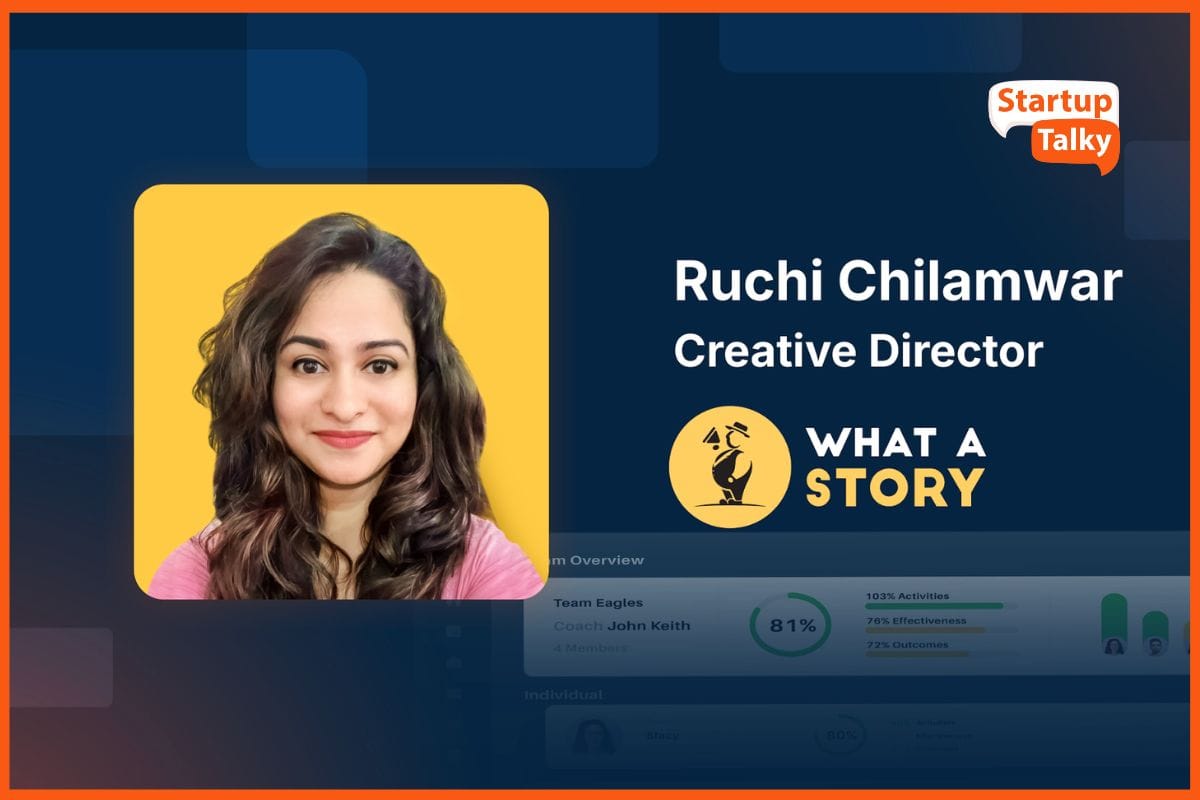
In this edition of Recap’25, StartupTalky interacts with Ruchi Chilamwar, Creative Director at What a Story, a creative video and animation agency known for simplifying complex products through compelling storytelling.
Ruchi shares how the team uses animation and video to solve product confusion for brands, especially in the SaaS space, by creating content that is clear, engaging, and results-driven. The conversation explores shifting video trends, the rise of fast-turnaround content, the role of AI in creative workflows, and why human-led storytelling remains critical. She also discusses building custom creative teams, balancing client expectations, and shifting from standalone videos to full-funnel visual growth engines.
StartupTalky: What is What a Story all about, and how do you use video and animation to bring brand stories to life?
Ms. Ruchi Chilamwar: We are basically in the business of curing ‘Product Confusion Syndrome’. To put it simply, we help companies explain what they do without boring people to death. A lot of businesses, especially in SaaS, have really complicated products or services that are hard to describe in a few sentences. So we at What a Story use storytelling and animation to break those ideas down into something visual and easy to digest. It’s not just about making things look pretty, it’s about making sure that by the end of a 60 or 90-second video, the viewer actually gets it and knows why they should care.
StartupTalky: When you started What a Story, what gap or opportunity in the creative video space were you trying to address?
Ms. Ruchi Chilamwar: When we started in 2015, we noticed two extremes: you either had massive agencies that charged a fortune and took forever to deliver, or you had cheap freelancers where the quality was a total gamble, and they just simply gave you a generic template that looked like everyone else's.
We saw a gap for a Premium Middle Ground as there wasn’t really anyone in the middle who could deliver high-end, creative work at the speed a growing company actually needs. We wanted to be the agency that was easy to work with, fast on our feet, and obsessed with making videos that actually work. Honestly, we just wanted to kill the Boring Corporate Video trend that had dominated the market back then!
StartupTalky: Looking back at 2025, which types of video projects excited your team the most, and what trends did you notice in how clients are using video to connect with their audiences?
Ms. Ruchi Chilamwar: 2025 was interesting because we saw a huge shift toward speed. We also noticed that clients are moving away from just having one "big" video on their homepage. Now, they want shorter, punchier clips for LinkedIn, sales emails, and even internal training. People have shorter attention spans than ever, so our job has been to get to the point faster. Clients aren't just using video for "About Us" pages anymore, they’re using them as 24/7 sales reps on LinkedIn, in cold DMs, and even in investor pitch decks. And our FastTrack service, where we deliver a video in just 12 days, really took off. It showed us that companies are tired of waiting months for content.
But what really got the team’s gears turning was our experiment with AI-enhanced storytelling. In an AI-saturated world, audiences are craving human-centric, punchy content. So the team focused their industry expertise in storytelling and utilised AI to carry out all the other tedious tasks, which tremendously decreased our turnaround time making our FastTrack service a huge success.
StartupTalky: Every project gets a tailored team of creatives. How does this approach influence the final output, and why do you think it works better than a one-size-fits-all model?
Ms. Ruchi Chilamwar: I’ve always thought the ‘factory’ approach to creativity is a mistake. A one-size-fits-all model is great for socks, but terrible for storytelling. You wouldn't ask a chef who specialises in sushi to grill you a steak just because they both use knives, right?
If you use the same three people for every project, eventually every video starts to look the same. By hand-picking the team for each client, we can match the right skills to the right problem. If we’re working with a fun startup, we bring in an animator with a high-energy style. If it’s a serious healthcare company, we pick a scriptwriter who knows how to handle sensitive topics. It keeps the work fresh and ensures the client gets something that actually fits their brand.
StartupTalky: Creative work often comes with unexpected challenges. How does your team balance client expectations with creative freedom and innovation?
Ms. Ruchi Chilamwar: We handle this with what I call Strategic Directness. It’s all about being honest, but also playing smart while doing it.
If a client wants to put 500 words of text on a single frame, we don’t just say "No." We explain why it will kill the viewer's attention span. Sometimes a client comes to us with an idea that they love, but we know it won't actually work for their audience. Instead of just saying "yes" to keep them happy, we try to act as consultants. We’ll say, "I hear you, but here’s why this other approach will get you more clicks." Most of the time, clients appreciate this honesty because they’re paying us for our expertise, not just to be order-takers.
It’s a partnership, not just a transaction.
StartupTalky: What was the toughest challenge your team faced in 2025, be it on a project, with clients, or in scaling operations, and how did you overcome it?
Ms. Ruchi Chilamwar: The rise of DIY AI tools in early 2025 was a real moment. There was this fear that anyone could click a button and make a video now. We had to prove that while a tool can generate an image, it can’t understand a business strategy or tell a story that connects with a human being. We overcame it by strengthening the "human" side of our work, focusing on the strategy, the humour, and the specific nuances that make a brand unique.
And instead of running from AI, we leaned into it. We automated the grunt work, the tedious parts of our production pipeline. This gave our artists more time to think about the concepts. We used the new tech to speed up our process, but we kept the "thinking" human.
StartupTalky: From your experience producing videos and animations, what is one key lesson or tip you would share with other founders or creative professionals?
Ms. Ruchi Chilamwar: Keep it simple. It sounds easy, but it’s actually the hardest thing to do. Founders often want to cram every single feature and benefit into one video, and that’s the quickest way to make people tune out. My advice is to find the one thing you want people to remember and build everything around that. If you try to say everything, you end up saying nothing.
And if you have multiple features that you want to talk about, always go for shorter versions, a separate video for a specific feature. This way, you will not overwhelm the viewers with a lot of information and will have enough time to explain each feature without missing the details. It’s also a great way to keep the socials active.
StartupTalky: As you look toward 2026, what new types of content, technologies, or approaches do you plan to explore to keep your storytelling fresh and impactful?
Ms. Ruchi Chilamwar: We are shifting the conversation from 'Video Production' to 'Visual Growth Engines.'
First, on the Technology front, we have fully integrated Generative AI into our pipeline, not just to speed things up, but to elevate quality.
We pioneered this by producing the World’s First AI Explainer Video for a B2B Brand, proving that AI can deliver commercial-grade aesthetics without the six-figure live-action budget.
This tech stack allows us to deliver broadcast-quality assets in 7 days, not 7 weeks. In the SaaS world, speed of execution is the ultimate competitive advantage.
Second, our Approach has moved entirely to a 'Full Funnel' mindset. In the past, clients wanted 'one fancy explainer' for their homepage. That doesn't work anymore.
Now, we build entire Growth Engines.
We don't just hand over a video file; we provide the hero asset, the short ads for LinkedIn, the static creatives for retargeting, and the onboarding walkthroughs for retention.
We are stopping the cycle of 'Random Acts of Video' and helping SaaS founders build a cohesive visual strategy that actually drives revenue.
Explore more Recap'25 interviews here.
Must have tools for startups - Recommended by StartupTalky
- Convert Visitors into Leads- SeizeLead
- Website Builder SquareSpace
- Run your business Smoothly Systeme.io
- Stock Images Shutterstock