

Why Omnichannel Messenger Integration and Mobile Workflows Are Now Critical for Customer-First Businesses
companies
Think about your own habits: how often do you email a company versus just sending a quick WhatsApp or Instagram message? Today, the answer is clear. Consumers overwhelmingly favor instant messaging over traditional email or phone calls.
In one survey, about 67% of people said they prefer to contact companies via chat (SMS, WhatsApp, social media) rather than email or a call. Another study found 69% of customers are more likely to buy from a brand that’s reachable on WhatsApp.
In short, most customers expect to talk with businesses on their terms, by texting or DM, not by waiting in an email queue. This massive shift has huge implications for customer-first companies.
Customers Have Shifted to Messaging First: Not Email or Calls Anymore
The Hidden Chaos of Scattered Conversations Across Multiple Apps
Why Businesses Now Need a Single Inbox for All Messenger Channels?
How a Unified Messaging Hub Improves Context, Tracking, and Team Efficiency?
Why Mobile-First Workflows Are Now Essential for Fast Customer Response?
Real-World Scenarios Where Mobile CRM Access Saves Time and Leads
What Businesses Gain: Faster Replies, Higher Conversions, and Happier Customers
Customers Have Shifted to Messaging First: Not Email or Calls Anymore
Without integration, this chat revolution can become a nightmare.
Imagine this scenario:
A customer messages you on Instagram, then follows up on WhatsApp, then calls the office. Each conversation lives in a different app with no connection between them. Unsurprisingly, 56% of customers end up repeating themselves because support channels aren’t connected.
Agents lose context and miss details. In fact, disconnected channels create “blind spots” where support reps miss important messages, and those lost threads often mean lost sales or bad reviews.
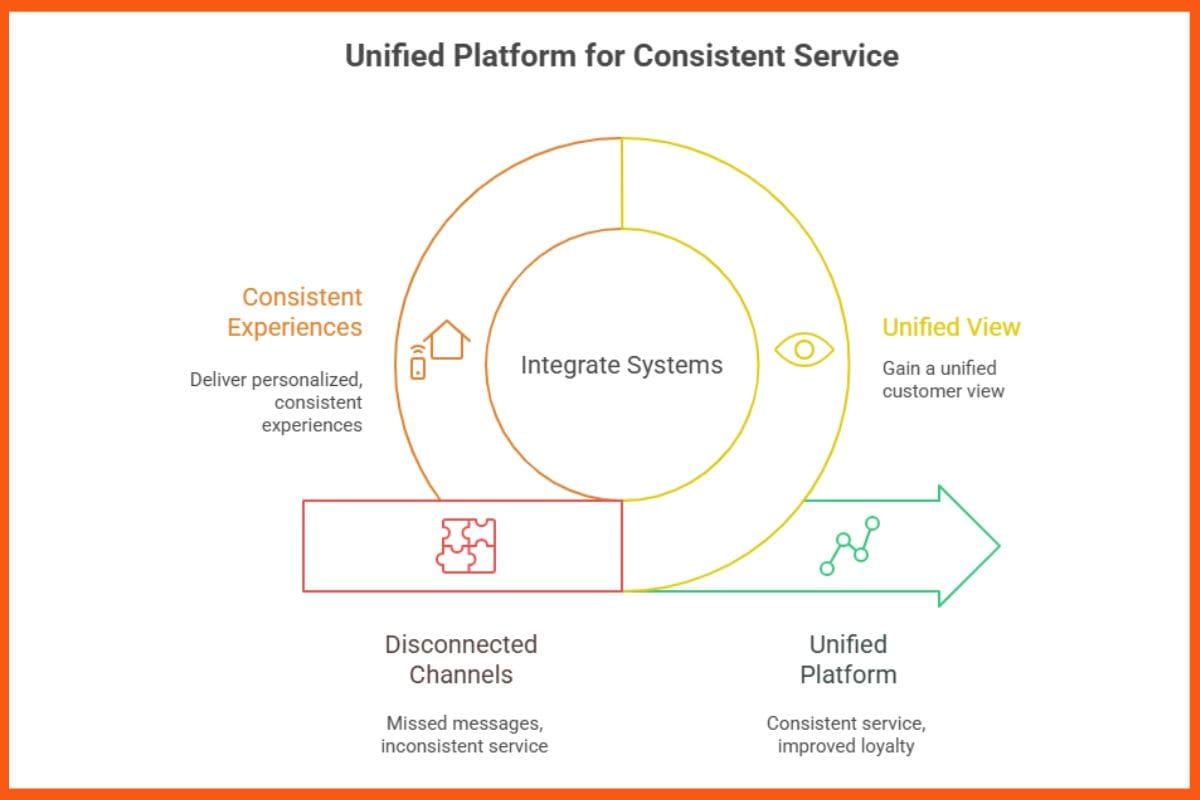
Fragmented systems also make service inconsistent. A CMSWire analysis warns that disconnected platforms keep brands from gaining “a unified view of their customers,” making it “nearly impossible” to deliver personalized, consistent experiences.
This leads to real problems:
- Repeat questions: 56% of customers report having to repeat information due to disconnected support channels.
- Missed messages: Sales and support teams can “miss WhatsApp messages” or get out of sync, leading to lost leads and damaged loyalty.
- Broken trust: When data is siloed, responses feel generic. CMSWire notes that without integrated data, brands can’t anticipate needs, so interactions feel impersonal.
- Inconsistency: Aircall points out that “without a unified interface, supervisors can’t easily maintain quality standards across all channels,” and customers quickly notice these gaps.
The Hidden Chaos of Scattered Conversations Across Multiple Apps
All of this fragmentation hurts the customer experience and chews away loyalty. The solution is to unify all channels into one platform. Instead of juggling WhatsApp, Instagram, Facebook Messenger, email, and SMS in separate places, companies need a single inbox for all conversations.
Why Businesses Now Need a Single Inbox for All Messenger Channels?
Industry experts call this true omnichannel service: “unified messaging that syncs WhatsApp, voice, SMS, email, and more”. When an agent opens the system, they see one continuous thread of chats and calls, no matter which app the customer used.
Providers like Aircall and 8×8 emphasize that the fix is simple: bring everything together. As Aircall explains, “unify all your communication channels into one intuitive platform… then supervisors gain visibility into agent performance across all channels.” With a single inbox, training is faster, and teams stay on the same page.
How a Unified Messaging Hub Improves Context, Tracking, and Team Efficiency?
For example, Bitrix24 supports marketplace apps (like Wazzup or Message.help) that hook WhatsApp, Instagram, Telegram, Viber, and more directly into the CRM. In practice, this means any new message, from any app, appears in one feed where any agent can reply. All customer chats are tracked together.
This unified approach gives agents instant context. Aircall notes that an omnichannel platform “pulls calls, SMS, and chat into a single inbox,” so agents instantly see the full history. Similarly, a Bitrix24 integration promises “all conversations are stored in CRM, never lost,” even when team members change roles.
In other words, your team can stop digging through scattered apps and spreadsheets. They have the full customer story at their fingertips, in real time. That means problems get solved faster.
According to Aircall, platforms that sync in real time give agents “a full view of the entire customer journey the moment it happens, speeding up resolution and improving customer satisfaction”.
No more bouncing a customer from chat to phone and back. The customer says one thing, and every agent sees it and responds.
Why Mobile-First Workflows Are Now Essential for Fast Customer Response?
Of course, a unified inbox is only half the battle. In today’s world, work happens everywhere. Tech teams, sales reps, and support agents are often on the go. Mobile workflows are essential so that agents never miss a ping.
Leading experts note that giving teams mobile access yields huge efficiency gains. For instance, Front explains that a good customer service mobile app “allows teams to support their customers from just about anywhere,” giving them the flexibility to work remotely.
Insightly adds that when agents carry their CRM on their phone, “real-time access means faster responses and better customer experiences”.
Real-World Scenarios Where Mobile CRM Access Saves Time and Leads
Putting these ideas together, think of a field technician or a sales rep at a café: with mobile-first tools, they carry the full conversation history and customer info in their pocket. Bitrix24’s own mobile app highlights this: “Working in Bitrix24 requires neither desk nor desktop.
All of your tasks, chats, and documents are always right there at your fingertips”. In practice, an agent can reply to a WhatsApp question from a bike or answer an Instagram DM from a showroom floor.
Integrations keep everything in sync: even on a small screen, the agent sees new tickets, chat threads, and CRM notes together. Wazzup’s Bitrix24 app promises: “Respond from anywhere, office or mobile” and that every conversation’s “full history is accessible from any device.” That means customers get near-instant answers, no matter where your team is.
What Businesses Gain: Faster Replies, Higher Conversions, and Happier Customers
All this effort pays off in real business results. Customers notice when you’re fast and organized. In fact, 90% of buyers say a quick response is important, and many define “quick” as under 10 minutes!
When channels are connected and mobile-friendly, companies see big improvements. Omnichannel support drives satisfaction far higher: one report found smooth omnichannel service yields a 67% CSAT score versus just 28% when channels are siloed.
Firms with integrated messaging enjoy more revenue and loyalty, roughly +15% more sales and +35% more repeat business. Each message captured is a lead saved.
For example, Bitrix24’s integration even auto-creates leads from new chats, so no inquiry slips through the cracks. And agents collaborating from any device can slash wait times: connected tools have been shown to cut support wait times by 39%.
Conclusion
Modern customers literally expect you on messaging apps and on mobile. A customer-first business can’t afford to answer only emails or miss chats on social media. Using an omnichannel messenger platform (one inbox for WhatsApp, Facebook, Instagram, Telegram, etc.) plus a strong mobile app means faster replies, fewer dropped leads, and happier customers.
 Sanvi Barjatya
FAQs
What is a unified inbox and why do businesses need it?
A unified inbox brings WhatsApp, Instagram, email, SMS, and calls into one single dashboard. This allows agents to see the full conversation history in one place, making support faster, clearer, and more consistent.
How does an omnichannel messaging platform improve customer experience?
Omnichannel platforms sync all customer interactions across channels into one continuous thread. This eliminates repeated questions, reduces miscommunication, and significantly improves customer satisfaction scores.
What are the benefits of real-time synced conversations?
Agents instantly see full customer history, leading to quicker resolutions and consistent communication.