

7 Best Marketing Automation Tools for Growth Teams
Collections 🗒️
Marketing automation is no longer a nice-to-have for growth teams. It has become infrastructure. The global marketing automation market is projected to reach $13.71 billion by 2030, and 78% of marketers already use automation tools actively, according to Salesforce's State of Marketing report.
The conversation has shifted, too. What used to be "email marketing software" has evolved into omnichannel orchestration covering email, SMS, push notifications, and in-app messaging. And right now, AI integration is table stakes across every platform on this list, not a premium feature reserved for enterprise tiers.
This guide is for founders, growth marketers, CMOs, and RevOps teams who are either evaluating their first marketing automation platform or considering a switch. We cover seven tools across different segments: all-in-one platforms for enterprises, specialists for eCommerce and SaaS, and budget-friendly options for startups. Each recommendation includes verified pricing, specific feature strengths, and honest assessments of limitations.
The criteria? Feature depth in workflow building, AI maturity, integration ecosystem quality, pricing transparency, and scalability from startup to enterprise.
How We Selected the Best Marketing Automation Tools
To make this comparison useful rather than another feature checklist, we evaluated each platform against a consistent set of criteria.
Feature depth: Does the workflow builder support complex branching logic, lead scoring, and multi-channel capabilities? Or is it limited to basic email sequences?
AI maturity: Every platform mentions AI now. The question is what the AI actually does, whether that is content generation, predictive analytics, send-time optimization, or automated workflow suggestions.
Integration ecosystem: How many native integrations exist? What is the API quality? Does it connect via Zapier or Make if native integrations are missing?
Pricing transparency: Clear tier-based pricing versus "request a demo" opacity. We prioritized platforms where you can calculate costs before committing.
Scalability: Can the platform grow with you from the startup stage to enterprise, or will you need to migrate within two years?
Ease of use: Visual workflow builders, onboarding documentation, and learning curve all factor in. The best tool is the one your team will actually use.
Our sources include official product pages, Gartner Peer Insights ratings, and hands-on evaluation of each platform's capabilities.
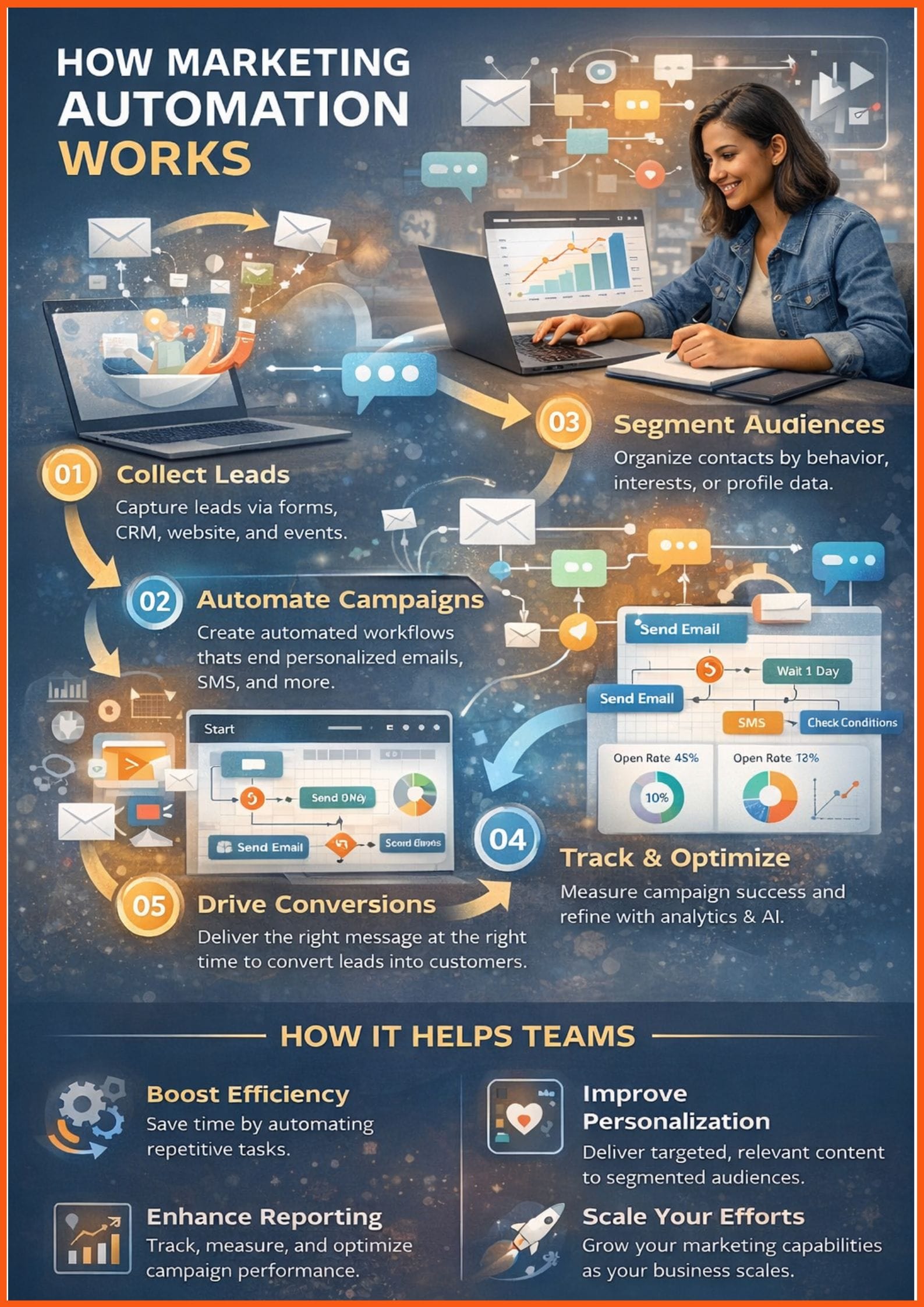
Quick Comparison: Best Marketing Automation Tools At a Glance
| Tool | Best For | Starting Price | AI Features | Key Strength |
|---|---|---|---|---|
| HubSpot | All-in-one CRM + automation | $800/mo (Professional) | Breeze AI suite | 1,500+ integrations |
| ActiveCampaign | Sales + marketing alignment | $15/mo | AI automation builder | 900+ workflow templates |
| Klaviyo | eCommerce retailers | $20/mo | Predictive CLV | Best drag-and-drop builder |
| Brevo | Budget-conscious SMBs | $9/mo | AI content generation | Email volume pricing (unlimited contacts) |
| Customer.io | SaaS product teams | $100/mo | Event-based AI | Native Segment.com integration |
| Mailchimp | Email-first beginners | $13/mo | Basic AI | Easiest to start |
| Ortto | Analytics-focused teams | $169/mo | AI segmentation | Revenue attribution |
List of the Best Marketing Automation Tools
HubSpot Marketing Hub
Best for: All-in-one CRM + marketing automation for B2B growth teams
HubSpot Marketing Hub remains the benchmark for unified marketing platforms. With a 4.4/5 rating across 2,172 Gartner reviews (the highest review volume among platforms we evaluated), it combines CRM, marketing automation, content management, and sales tools in a single ecosystem. Notable customers include Reddit, Casio, and Monday.com.
The 2026 version includes Breeze AI, HubSpot's AI suite that handles content generation, predictive lead scoring, and automated workflow suggestions. The Blog Research Agent (currently in beta) generates content ideas based on top-performing posts, while the Breeze Customer Agent captures visitor interest and guides prospects to relevant resources.
Pricing:
| Plan | Price | Contact Limit | Key Features |
|---|---|---|---|
| Free | $0 | 2 users | Basic forms, email, live chat; 10 automated actions |
| Starter | $15/mo | 1,000 contacts | Remove branding, simple automation, ad retargeting |
| Professional | $800/mo | 2,000 contacts | 3 seats included, unlimited automation actions, omni-channel, custom reporting |
| Enterprise | $3,600+/mo | 10,000 contacts | 5 seats, multi-touch attribution, journey automation, 1,000 workflows |
Note: Professional tier requires $3,000 one-time onboarding. Enterprise requires $7,000. These are mandatory.
What it does well:
- Unified platform eliminates data silos between marketing, sales, and service
- Visual workflow builder with unlimited actions on Professional+
- 1,500+ native integrations plus bi-directional Salesforce sync
- HubSpot Academy provides free certifications and training
Where it falls short:
- Advanced automation starts at $800/month (Professional tier minimum)
- Event-based behavioral triggers locked behind Enterprise at $3,600+/month
- Contact-based pricing becomes expensive as your database grows
- Overkill for teams only needing email automation
 Vivek Dev Jacob
ActiveCampaign
Best for: Sales-driven teams needing advanced automation without enterprise pricing
ActiveCampaign offers the deepest automation capabilities in the mid-market segment. With 900+ pre-built workflow templates and a visual automation builder that handles complex if/then branching logic, it bridges the gap between simple email tools like Mailchimp and enterprise platforms like Marketo.
The built-in CRM eliminates the need for a separate sales tool, making it particularly strong for B2B companies with sales teams who need marketing and sales data in one place. Native support for 13 languages makes it suitable for global teams.
Pricing:
| Plan | Price (Annual) | Contact Limit | Key Features |
|---|---|---|---|
| Email (Lite) | $9/mo | 1,000 | Email marketing, basic automation, landing pages |
| Email (Plus) | $49/mo | 1,000 | CRM, lead scoring, basic segmentation |
| Email (Professional) | $79/mo | 1,000 | Active Intelligence AI, advanced segmentation, predictive sending |
| Enterprise | Custom | 1,000+ | Dedicated account team, custom integrations, 5 users |
Pricing scales with contact volume. At 10,000 contacts, expect $50-100/month depending on tier.
What it does well:
- Most powerful workflow builder in its price range with complex branching and scoring conditions
- 900+ templates accelerate implementation significantly
- AI-powered Active Intelligence suggests workflow improvements
- CRM built-in reduces total tool count and eliminates sync issues
Where it falls short:
- Learning curve for advanced features requires dedicated training time
- Email template editor feels dated compared to Klaviyo
- Missing native integrations for Stripe, Segment.com, and Shopify (requires Zapier workarounds)
- Less specialized for eCommerce than purpose-built alternatives
Muskaan Kapoor
Klaviyo
Best for: eCommerce brands needing email + SMS automation with deep Shopify integration
Klaviyo has become the default choice for eCommerce marketing automation. Its drag-and-drop builder consistently wins praise for usability, and native integrations with Shopify, WooCommerce, and BigCommerce make it the go-to platform for online retailers.
The platform includes 60+ pre-built eCommerce flows (abandoned cart, welcome series, post-purchase) that get merchants live quickly. Predictive Customer Lifetime Value scoring identifies your most valuable customers for targeted campaigns, and product recommendation engines personalize content based on purchase history.
Pricing:
| Plan | Price | Contact Limit | Key Features |
|---|---|---|---|
| Free | $0 | 250 contacts | 500 emails/month, basic segments, single user |
| $20/mo | 500 contacts | Full builder, 60+ flows, A/B testing, 5 users | |
| Email + SMS | $35/mo | 500 contacts | SMS automation, messaging flows |
| At scale | $100+/mo | 5,000+ contacts | Pricing increases with contact volume |
At 5,000 contacts, expect $100+/month. At 10,000+, significantly more.
What it does well:
- Drag-and-drop builder is genuinely the most intuitive in the industry
- 60+ pre-built eCommerce flows mean you can launch campaigns on day one
- Predictive CLV scoring identifies high-value customers automatically
- Deep Shopify integration with automatic product sync and native app
Where it falls short:
- Focused specifically on eCommerce, limited value for B2B or SaaS use cases
- Gets expensive quickly as the contact database grows
- Free tier capped at 250 contacts (restrictive for testing)
- Advanced workflow branching is not as robust as ActiveCampaign
Brevo
Best for: Budget-conscious startups needing multi-channel automation
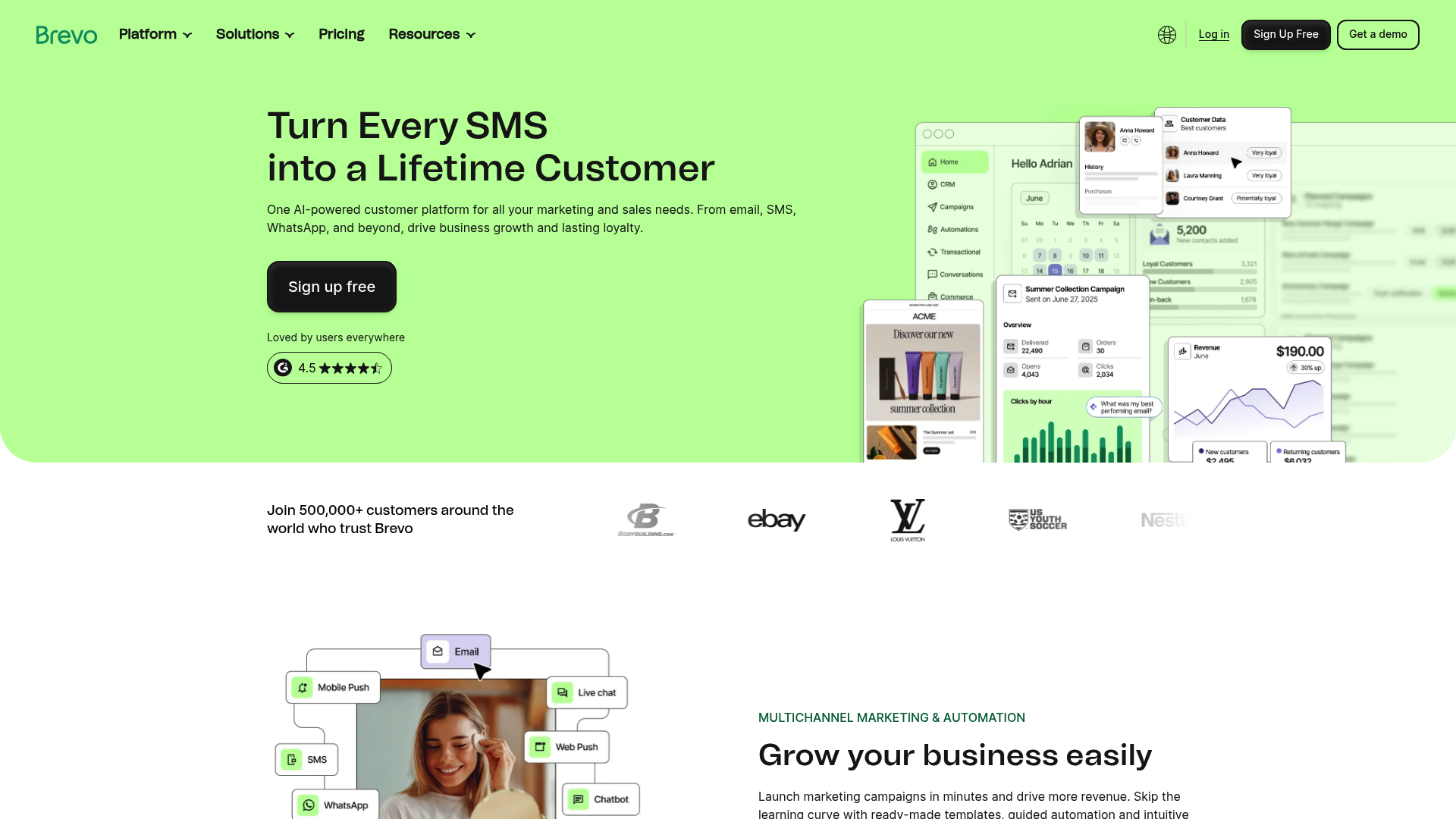
Brevo (formerly Sendinblue) offers the best value in marketing automation for SMBs. With a 4.8/5 Gartner rating (the highest among platforms we reviewed), it combines email, SMS, and WhatsApp marketing in one affordable package.
The unique selling point? Pricing based on email volume rather than contacts. This means you can have unlimited contacts on every tier, including free. For startups with large lists but lower sending frequency, this model saves significant money compared to contact-based platforms.
Pricing:
| Plan | Price | Email Limit | Key Features |
|---|---|---|---|
| Free | $0 | 300 emails/day (unlimited contacts) | Basic email, SMS, WhatsApp, CRM |
| Starter | $9/mo | Unlimited | Remove branding, multi-user, basic segmentation |
| Business | $18/mo | Unlimited | A/B testing, send-time optimization, landing pages |
| Premium | $360/mo | Unlimited | Dedicated manager, phone support, API access |
What it does well:
- Email volume pricing (not contact-based) makes large lists affordable
- Multi-channel in one platform: email, SMS, WhatsApp, plus CRM
- Generous free tier with 300 emails/day and unlimited contacts
- Built-in transactional email support eliminates the need for a separate service
Where it falls short:
- Fewer advanced triggers and conditions than ActiveCampaign or HubSpot
- Smaller integration ecosystem compared to market leaders
- A/B testing and landing pages require the Business tier ($18+)
- Template quality is less polished than Klaviyo
Rishi Mundra
Customer.io
Best for: SaaS companies with product-led growth needing event-based messaging
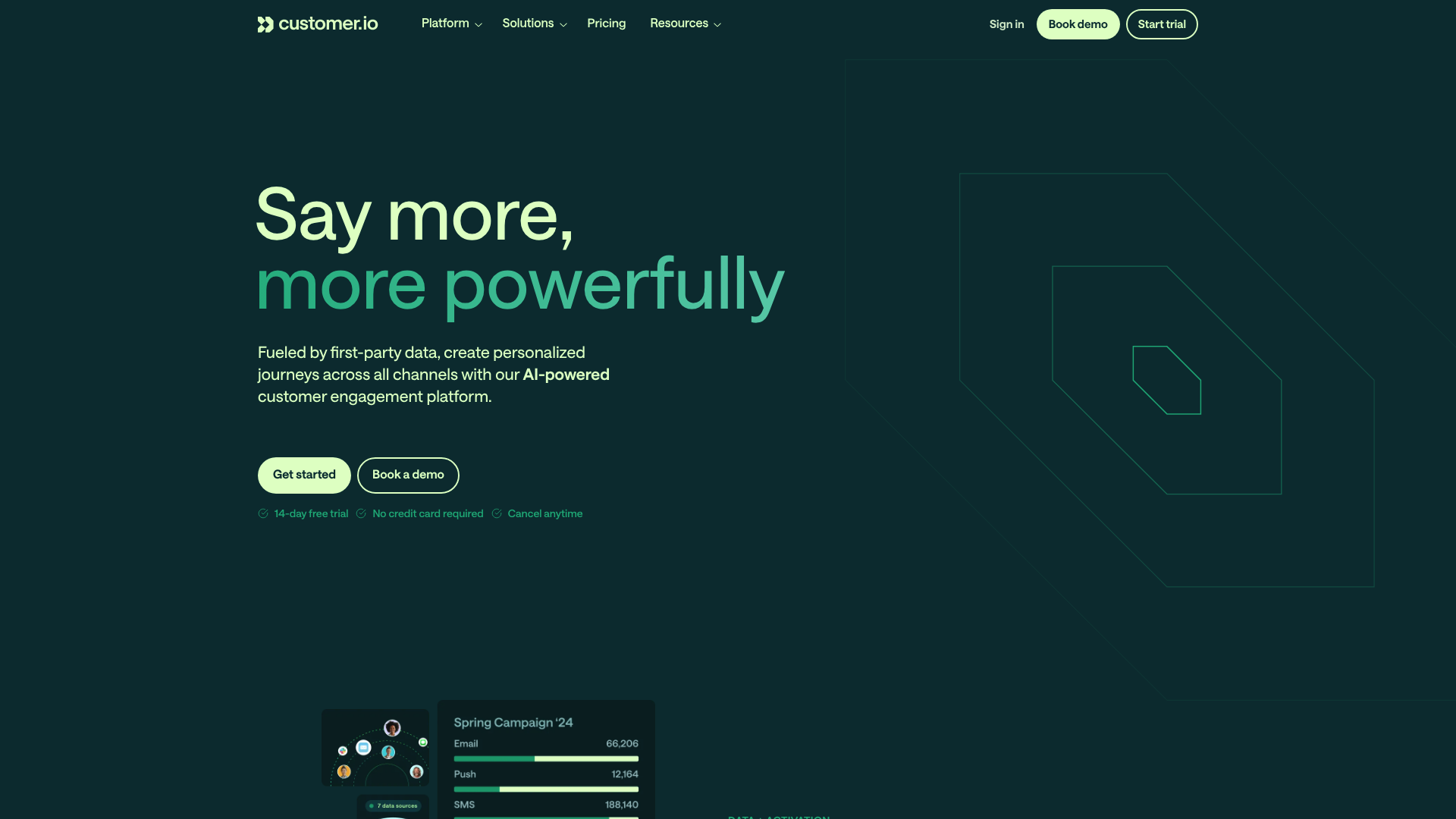
Customer.io is built specifically for SaaS and product-led growth companies. Unlike platforms that measure email engagement, it triggers messages based on what users actually do in your product. Feature adoption, trial actions, churn signals, these are the triggers that drive automation here, not open rates.
The native Segment.com integration makes it the platform of choice for data-mature SaaS teams who already have product analytics infrastructure in place. With omnichannel delivery across email, SMS, push, in-app, and webhooks, it covers the full spectrum of product messaging.
Pricing:
| Plan | Price | Profile Limit | Key Features |
|---|---|---|---|
| Free | $0 | 10,000 profiles | Email, SMS, push; single journey; 500 emails/month |
| Essentials | $100/mo | 5,000 profiles | Event-based automation, omnichannel, A/B testing (up to 8 variations) |
| Premium | $1,000/mo | Advanced | Higher volume limits, priority support |
| Enterprise | Custom | Custom | SLAs, dedicated support |
What it does well:
- Event-based segmentation triggers on product behavior, not just email engagement
- Omnichannel native: email, SMS, push, in-app, webhooks, all in one platform
- Deep Segment.com integration critical for SaaS data infrastructure
- A/B testing supports up to 8 variations (more than most competitors)
Where it falls short:
- $100/month entry point is significantly higher than alternatives
- Requires developer involvement for event tracking setup
- No native CRM integration with HubSpot or Salesforce
- Limited value without mature product analytics feeding behavior data
Mailchimp
Best for: Beginners needing simple email automation with a minimal learning curve
Mailchimp remains the most recognized name in email marketing, with 14,000 new users joining daily. While competitors have surpassed it in automation sophistication, it still serves as an accessible starting point for businesses new to marketing automation.
The platform prioritizes simplicity over power. Good-looking templates, an easy email builder, and a minimal learning curve make it ideal for solo founders or very small teams just getting started.
Pricing:
| Plan | Price | Contact Limit | Key Features |
|---|---|---|---|
| Free | $0 | 500 contacts | 1,000 emails/month, basic campaigns, 2 users |
| Essentials | $13/mo | 500+ | Remove branding, audience export, deliverability tools |
| Standard | $20/mo | 500+ | Automation builder, behavioral targeting, A/B testing |
| Premium | $350/mo | 500+ | Advanced analytics, API access, 5 users, priority support |
What it does well:
- The easiest platform to get started with for complete beginners
- Professional email templates out of the box
- Brand recognition and trust from decades of market presence
- 300+ pre-built integrations cover the most common tools
Where it falls short:
- Limited automation: no visual workflow builder on free/essential tiers
- The segmentation interface is frequently cited as clunky and unintuitive
- Growing teams typically outgrow it within 6-12 months
- The platform feels dated compared to modern alternatives like Klaviyo
Ortto
Best for: Marketing teams prioritizing analytics and revenue attribution
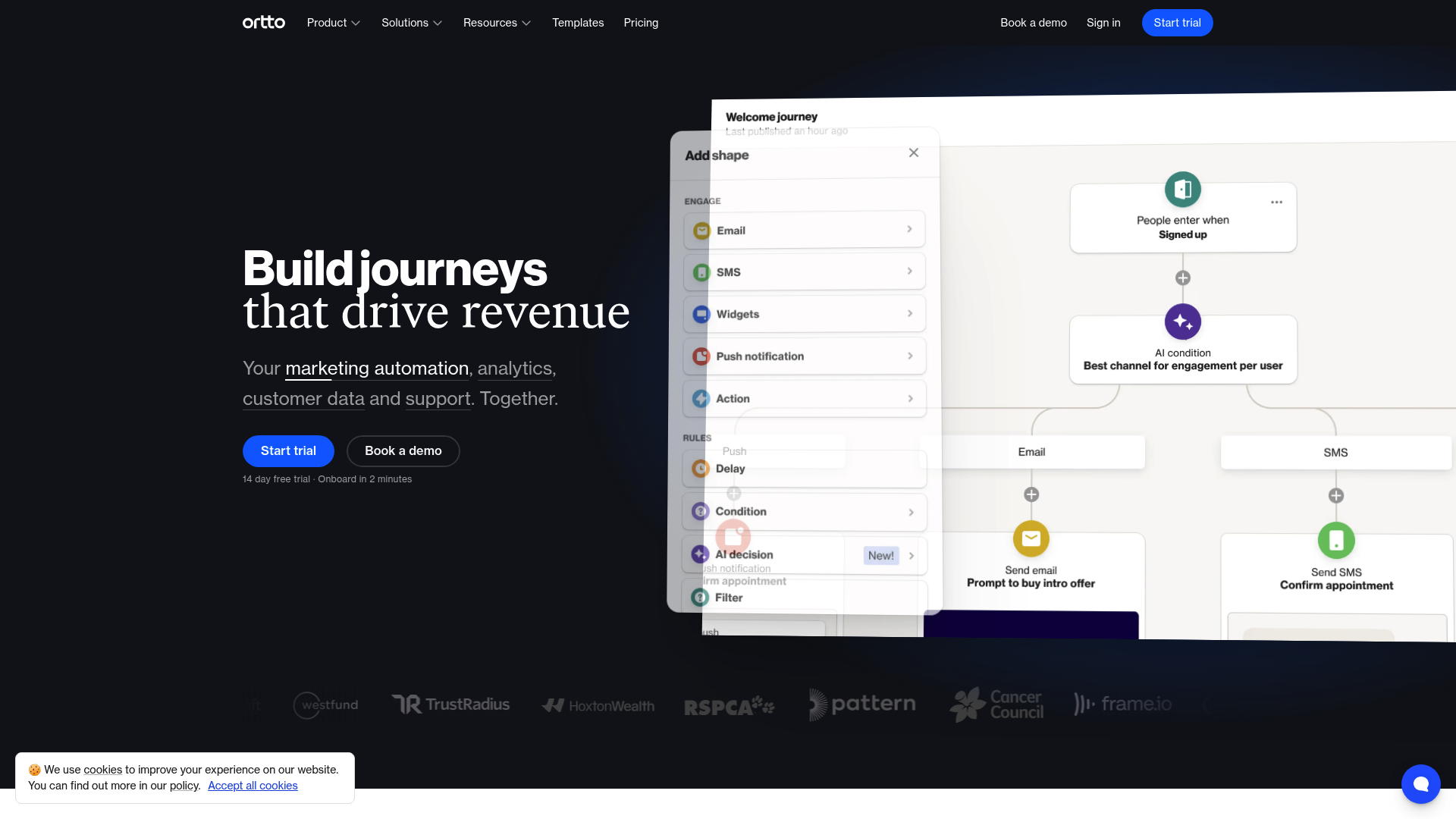
Ortto (formerly Autopilot) positions itself as the analytics-first marketing automation platform. With 60+ preset activity tracking options, custom dashboard builders, and native revenue attribution, it appeals to marketing teams that need to prove ROI to leadership.
The platform tracks which campaigns and touchpoints drive actual revenue, not just clicks or opens. For mid-market companies where marketing budget justification is critical, this attribution capability is the core differentiator.
Pricing:
| Plan | Price | Contact Limit | Key Features |
|---|---|---|---|
| Starter | $169/mo | Entry-level | Basic automation, email, SMS, lead scoring |
| Professional | $199/mo | 10,000 contacts | Advanced segmentation, revenue attribution, revision history |
| Business | $299/mo | Advanced | Enhanced support, higher limits |
| Enterprise | Custom | Custom | Dedicated support, custom integrations |
What it does well:
- Revenue attribution tracks which campaigns actually drive money
- Custom dashboard builder creates reports without coding
- 60+ preset activity types capture detailed customer behavior
- Revision history tracks all journey changes for compliance and analysis
Where it falls short:
- $169/month entry point is steep, nearly 17x more than Brevo's $9 starting price
- Smaller integration ecosystem than HubSpot or ActiveCampaign
- Newer platform with less community support and documentation
- Learning curve for custom dashboards and analytics features
How to Choose the Right Marketing Automation Tool
Match the tool to your business model
Selecting a marketing automation platform is not about finding the "best" tool. It is about matching capabilities to your specific business model and growth stage.
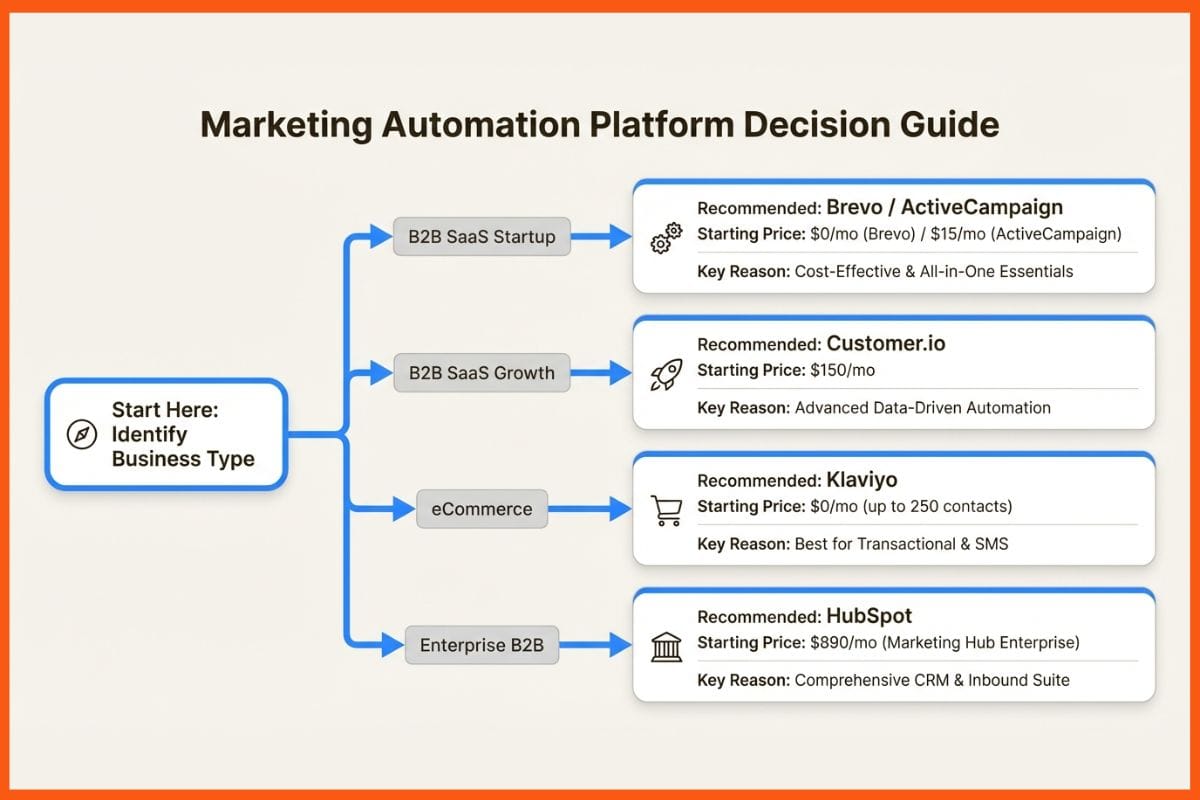
If you are a B2B SaaS company:
- Startup stage (pre-$1M ARR): Brevo or ActiveCampaign provide affordable entry points ($9-15/month) with room to grow
- Growth stage with product-led motion: Customer.io justifies its $100/month entry with event-based triggers and Segment integration
- Enterprise with sales team: HubSpot delivers CRM + marketing alignment, budget for Professional tier minimum
If you are an eCommerce brand:
- Starting out: Brevo or Mailchimp offer affordable testing ground
- Scaling (100+ orders/month): Klaviyo, with its Shopify integration and predictive analytics, becomes essential
- Multi-brand or high volume: Consider adding SMS automation to your Klaviyo setup
If you are an agency:
- HubSpot provides client management and white-label reporting
- ActiveCampaign offers the most flexible automation for diverse client workflows
Common Mistakes to Avoid
Choosing based on features you will not use. An $800/month platform is overkill if your actual use case is weekly newsletters. Start with what you need today, not what you might need in two years.
Ignoring integration requirements. Before committing, verify your CRM, payment processor, and analytics tools connect natively or via Zapier. Missing integrations create data silos that undermine automation effectiveness.
Underestimating migration costs. Switching platforms takes 2-4 weeks of setup time and carries data loss risks. The "right" tool today should ideally serve you for 2-3 years minimum.
Skipping the free trial. Every platform on this list offers trials. Test with real workflows before committing budget, not just feature tours.
Questions to Ask Vendors Before Committing
- What is the total cost at 10,000 contacts? At 50,000 contacts?
- How does event-based automation work, and what tier includes it?
- What is the typical implementation timeline for teams our size?
- Can I export my data and workflows if I decide to switch?
Start Building Your Marketing Automation Stack
Marketing automation is not about finding one perfect tool. It is about matching capabilities to your actual business model and growth stage.
For most startups: Brevo or ActiveCampaign provides the best balance of capability and cost. You can start for under $20/month and grow into advanced features as you scale.
For eCommerce: Klaviyo's Shopify integration and predictive analytics justify the premium for any serious online retailer. The 60+ pre-built flows mean you can launch campaigns on day one.
For product-led SaaS: Customer.io's event-based segmentation is worth the $100/month entry if you have the product analytics infrastructure to feed behavior data.
For all-in-one enterprise needs: HubSpot remains the benchmark, but budget for the Professional tier ($800+/month) to access real automation capabilities.
The best tool is the one your team will actually use. Start with a free trial, build one workflow that solves a real problem, and scale from there.
FAQs
What are the best marketing automation tools for startups?
For startups on a budget, Brevo offers the best value with email volume-based pricing starting at $9/month and unlimited contacts. ActiveCampaign provides more sophisticated workflow automation starting at $15/month. Both scale effectively as your business grows.
Which marketing automation tools work best for eCommerce businesses?
Klaviyo is the standout choice for eCommerce, with native Shopify integration, 60+ pre-built flows (abandoned cart, post-purchase), and predictive customer lifetime value scoring. Brevo is a budget alternative for stores just starting out.
How much do the best marketing automation tools cost?
Entry-level pricing ranges from $9/month (Brevo Starter) to $169/month (Ortto Starter). Mid-market tools like ActiveCampaign and Klaviyo run $15-100/month depending on contact volume. Enterprise features from HubSpot start at $800/month for the Professional tier.
What features should I look for in marketing automation tools?
Prioritize visual workflow builders with branching logic, multi-channel capabilities (email, SMS, push), lead scoring, native integrations with your existing stack, and AI features like send-time optimization. Pricing transparency and scalability are equally important for long-term planning.
Which marketing automation tools offer the best AI features?
HubSpot's Breeze AI suite leads with content generation, predictive lead scoring, and automated workflow suggestions. Customer.io offers event-based AI learning from product behavior. ActiveCampaign's Active Intelligence suggests workflow improvements automatically.
Are there free marketing automation tools worth using?
Yes. Brevo's free tier includes 300 emails/day with unlimited contacts. HubSpot offers a free CRM with limited automation. Mailchimp provides 500 contacts and 1,000 emails/month. Customer.io recently launched a free tier with 10,000 profiles. These are viable for testing and very early-stage needs.
How do I choose between marketing automation tools for B2B versus B2C?
B2B companies typically need CRM integration, lead scoring, and sales handoff features, making HubSpot or ActiveCampaign strong choices. B2C eCommerce brands benefit from product-focused tools like Klaviyo with purchase behavior triggers. SaaS companies with product-led growth should consider Customer.io for event-based messaging tied to product usage.